"The progressive personal income tax, the corporate income tax, and the capital gains tax all operate in essentially the same way as the inheritance tax. They are all paid with funds that otherwise would have been saved and invested. All of them reduce the demand for labor by business firms in comparison with what it would otherwise have been, and thus either the wage rates or the volume of employment that business firms can offer. For they deprive business firms of the funds with which to pay wages.
"By the same token, they deprive business firms of the funds with which to buy capital goods. This, together with the greater spending for consumers’ goods emanating from the government, as it spends the tax proceeds, causes the production of capital goods to drop relative to the production of consumers’ goods. In addition, of course, they all operate to reduce the degree of capital intensiveness in the economic system and thus its ability to implement technological advances. […] [T]hese taxes, along with the inheritance tax, undermine capital accumulation and the rise in the productivity of labor and real wages, and thus the standard of living for everyone, not just of those on whom the taxes are levied. ...
"Of course, many people will the line of argument I have just given as the 'trickle-down' theory. There is nothing trickle-down about it. There is only the fact that capital accumulation and economic progress depend on saving and innovation and that these in turn depend on the freedom to make high profits and accumulate great wealth. The only alternative to improvement for all, through economic progress, achieved in this way, is the futile attempt of some men to gain at the expense of others by means of looting and plundering. This, the loot-and-plunder theory, is the alternative advocated by the critics of the misnamed trickle-down theory."~ George Reisman from his book Capitalism: A Treatise on Economics (pp. 308-310.) Hat tip Per-Olof Samuelsson, who observes: "The productive rich (think Rockefeller, Carnegie, Ford, Bill Gates, Steve Jobs, etcetera, etcetera) actually flood the rest of us with wealth (and themselves become wealthy in the process). Taxing or expropriating them simply means to dam this flood. And this may make it appear 'trickle-down' – because governments and politicians will only allow a small portion of this wealth to trickle down to us; the rest of it lands in their own pockets."
Showing posts with label Trickle Down. Show all posts
Showing posts with label Trickle Down. Show all posts
Monday, 9 September 2024
Wealth taxes = loot + plunder


Thursday, 31 August 2017
You can’t fix poverty with loot-and-plunder economics
Anti-poverty campaigners in general exhibit little understanding of what it would take to actually relieve poverty.
They claim, for example, that high taxes and a so-called “living wage” will alleviate poverty and raise general wealth, without realising that it is the goods and services those wages buy (that must first be produced) that constitute the real wage by which everyone is finally paid – that production of these goods and services, this wealth, cannot be raised simply by legislative fiat.
They fail to grasp that it is actually poverty that is mankind’s natural state, and that it is past wealth production (not redistribution) that has been rescuing people from poverty worldwide in ever-expanding numbers – the great (but almost unheard) story of our era -- but the campaigners’ own knowledge of (and interest in) the process whereby all this wealth is produced is less than that of a small child – and their efforts to simply legislate higher wages by law amounts to little more than a “loot and plunder” approach to economics.
The science of wealth production (which used to be called political economy) begins with the observation that one person alone can barely produce enough to satisfy a small percentage of their wants, as George Reisman explains:
A man can do the labour of one but would like to benefit from the labor of many. Thus labour is scarce and needs to be made more productive.
Unemployment is not the result of a lack of work to do, but of wages that are too high and a capital supply that is too low.
A fall in money wages and increase in capital supply can quickly achieve full employment, and at rising real wages [i.e., at increased amounts of goods and services able to be purchased with a given money wage].
But our contemporaries think that prosperity can be achieved by forcing up wages and taxing away additions to capital. These beliefs, which are held by most of the educators and journalists who shape public opinion, are responsible for mass unemployment. People just don’t know that wealthier capitalists and more capital translates into a larger supply of products and greater demand for labour.
Minimum wage laws violate the freedom of opportunity. They deprive people of the opportunity for employment by making money wages too high. The higher are wages, the smaller is the number of opportunities for employment offered in the market.
For example, at a minimum wage of $15 per hour, all the jobs that would have been offered at wages below $15 are prohibited. All those employment opportunities are wiped out. A rising minimum wage traces a path of declining job opportunities. A free labour market [by contrast] reates employment opportunities equal to or greater than the number of workers seeking employment.
Advocates of minimum-wage laws are both profoundly ignorant and implicitly advocates of physical force. Only the threat of physical force is what makes employers pay the minimum wage. Advocates of minimum wages know nothing of economics and want the government to use physical force to raise wages.
The fundamental policy tools of statist politicians are clubs, guns, and prisons... What allows statist politicians to conceal the fact that they’re thugs is the belief that they have a special account with Santa Claus. As though Santa Claus, rather than extortion, were the source of the funds extorted by the politicians.
The statist politicians and the leftist “intellectuals” dismiss the teachings of sound economics by calling it “trickle down.” They do not allow themselves to see that their theory of economics is the loot and plunder theory. They propose to enrich the country by plundering its capital through ever higher taxes and reducing the buying power of what remains..
Wednesday, 5 February 2014
“Trickle down”

Here’s Thomas Sowell at his best. A slice (but do read the whole column):
Years ago, this column challenged anybody to quote any economist outside of an insane asylum who had ever advocated this “trickle-down” theory. Some readers said that somebody said that somebody else had advocated a “trickle-down” policy. They could never name that somebody else and quote them, though.
Mr. de Blasio is by no means the first politician to denounce this nonexistent theory. Back in 2008, presidential candidate Barack Obama attacked what he called “an economic philosophy” that “says we should give more and more to those with the most and hope that prosperity trickles down to everyone else.”
Let’s do something completely unexpected: Let’s stop and think. Why would anyone advocate that we “give” something to A in hopes that it would trickle down to B? Why in the world would any sane person not give it to B and cut out the middleman? All this is moot, however, because there was no trickle-down theory about giving something to anybody in the first place. [Hat tip Cafe Hayek]
But Thomas Sowell is wrong. “Trickle down” does exist.
It emanates from government.
It emanates from government in the form of favours, and of subsidies and of welfare social. Perhaps the best place to see it in action was Labour's 2008 Welfare for Working Families package: the govt takes some large part of your money, waste a large portion of it (fiscal drag, you see), and then dole out some small proportion of it back to a selected class of voters (for which those voters are supposed to be pathetically grateful). That's trickle-down for you, as administered by the residents of an insane asylum. (And, since the electoral effect of each tranche of trickle is short-lived, that’s the same sort of “trickle down” proposed for this election by the current Labour leader in the form of his baby bonus election bribe.)
Trickle down also emanates from government, and in ever-larger gobs in recent years, from the likes of central bankers. Here’s newly-appointed Federal Reserve Chairthingy Janet Yellen, making it explicit in her defence of The Fed’s programme of Quantitative Easing:
You know, a lot of people say, this is just helping rich people. But it’s not true. Our policy is aimed at holding down long-term interest rates, which supports the recovery by encouraging spending. And part of it comes through higher house and stock prices, which causes people with homes and stocks to spend more, which causes jobs to be created throughout the economy and income to go up throughout the economy.

You want to find the failing apostles of trickle down? You’ll find them in big government.
Friday, 12 October 2012
This is what trickle down really looks like
Capitalism is frequently tarred as “trickle down” economics.
Because if you really want to see trickle down in action, consider government. They take money from you, by force, and give it to … who?
To people like the heads of government departments who, in the depths of recession while all around them are tightening their belts (not the least reason being to pay their frigging tax bills), have enjoyed this:
- the head of the Ministry of Foreign Affairs and Trade John Allen was given a $40,000 pay rise despite drastic cutbacks at the Ministry, given $620-630,000 this year, up from $580-590,000 last year
- Head of Treasury Gabriel Makhlouf was given $540-549,999 this year
- Secretary for Education Lesley Longstone was given $320-329,00
- the highest paid individual in the public sector is chief executive of the Guardians of New Zealand Superannuation Adrian Orr, who was handed $730-739,000
- shamed former head of the Department of Building and Housing (DBH) Katrina Bach was paid out $81,105 in entitlements when she left the job earlier this year
- Corrections Department chief executive Barry Matthews was paid $41,529 in entitlements when he left the job at the end of 2010. Matthews' replacement, Ray Smith, is given $420 to 429,999
- Housing New Zealand chief executive Lesley McTurk went from $460-469,999 last year up to $480-489,999 this year
- Ministry for Culture and Heritage boss Lewis Holden climbed from $330-339,999 last year up to $350-359,999
- the head of chronic failure ACC was given $570-580,000 from July to September last year, and for good measure another $390,000 to $400,000 from then to June this year
- The head of the Alcohol Advisory Council, who pays for all those dodgy “studies,” pulled down $370-380,000.
The amounts doled out to the head of KiwiRail, now worth one dollar, and to the chairman of NZ Post Michael Cullen, who bought the dog for the taxpayer, are not reported. But we can be sure they haven’t personally lost money this year.
Thank goodness then for those few among them taking an involuntary cut, among them the poor Education Review Office chief executive Graham Stoop, who went from $330,000 to $339,999 last year down to just $320,000 to $329,999.
"We want to attract, retain, and motivate suitable, highly competent chief executives,” said State Services Commissioner Ian Rennie, whose salary was also not included in the report.
This of course is bullshit. The only place these folk can pull down these kind of numbers is in the bureaucracy. If you paid the whole bloody bureaucracy less, as you should anyway in a recession, they’d have nowhere else to go.
Indeed, if you paid them based on the value they produce, how much do you think any of them would get?
Wednesday, 22 October 2008
The dictatorship of the middle class
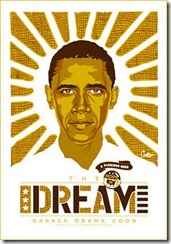 While unreconstructed leftists like the losers at The Double-Standard talk blithely about "trickle down economics," they appear blithely unaware that perhaps the best example of "trickle down" currently in operation is Labour's Welfare for Working Families -- the govt takes money taken from you by force, clips the ticket and gives a small portion back, in return for you showing your gratitude in the appropriate way: in the voting booth.
They're also unaware that their American hero Barack Obama -- who Oprah Winfrey calles "The One" and John McCain calls "that one" -- has now moved on to something new: Trickle Up Economics. Michael Hurd explains:
Sen. Barack Obama's philosophy of wealth creation should be called "trickle-up" economics. He believes, and states over and over again, that the worker - and the middle-class employee - is the central unit of economic activity. Karl Marx had a name for this idea. It was called the labor theory of value.
Marxists and Obama liberals believe that the little guy creates wealth and that the rich (i.e., those making more than $200,000 a year) steal that wealth from the little guy. Obama liberals see their mission as one of returning that wealth to the little guy. Incredibly, they not only see this as morally just; they see it as economically feasible and desirable. They actually believe this is the way to create and expand wealth.
The next time you hear Mr. Obama say, "Let's spread the wealth around," this is what he means. It means he ignores the indispensable contribution of the innovator, the risk-taking entrepreneur and the capitalist. You ignore them at your peril because these are the originators of wealth. Without them, there will be less and less wealth for Mr. Obama to redistribute.
The politicians don't care if there's less wealth around. But you should.
Saturday, 3 March 2007
'Trickle down' again
One or two bloggers have erupted in consternation over Idiot/Savant's discussion of co-called 'trickle-down' economics, but none that I've seen has gone to the heart of his characterisation of 'trickle-down economics,' in my view between them succeeding only in throwing more heat than light on the subject -- and I suspect I/S is a man who responds better to the latter than the former. Let me see if I can succeed in throwing some light, with perhaps a little appropriate heat to follow swiftly on its heels.I/S began his discussion in this way:
"Remember “trickle-down economics”? That was the lie the Revolutionaries told us in the 80’s and 90’s to justify tax cuts for the rich. The idea was that they would get richer, but that some of their gains would “trickle down” to the rest of us, thus making everyone better off. It didn’t work - instead, the rich got richer, and the rest of us got poorer in real terms."Leave aside for the moment I/S's claim that we all got poorer, but according this somewhat naive view of economics, capitalism is supposed to be characterised by the poor getting the crumbs that have trickled down from the top tables of the rich. The eminently naive John Kenneth Galbraith characterised it thus: "If you feed the horse enough oats, the sparrow will survive on the highway."
But no sane economist has ever advocated such a view. For a long time now, the eminently sane Thomas Sowell has been inviting anyone -- anyone -- to prove him wrong in that assertion:
A year ago this column defied anyone to quote any economist -- in government, academia, or anywhere else outside an insane asylum -- who had ever argued in favor of a 'trickle down theory'... a stock phrase on the left for decades and yet not one of those who denounce it can find anybody who advocated it. The tenacity with which they cling to these catchwords shows how desperately they need them, if only to safeguard their vision of the world and of themselves.Frankly, if you want to see "trickle-down" in action -- that's the literal trickle-down as described by I/S and the naive but quotable John Kenneth -- the only place you're going to see it is in Government. In fact, that's precisely where the phrase came from: it was being used to describe the New Deal's quasi-fascist Reconstruction Finance Corporation. It can be seen today in all its Clark Government glory in Labour's Welfare for Working Families programme -- a very model of "trickle down": they take your money, pour a very large portion of it down various departmental drains (boosting 'consumption,' property prices and bar bills around central Wellington), and then dole out a small proportion of it back to some voters (for which these voters are expected to be pathetically grateful).
And you are, aren't you? You're happy to get anything back.
That's trickle-down for you, as administered by the residents of the country's pre-eminent insane asylum, the Beehive.
Now, I suspect that I/S won't agree with me on that point. His loss. (And there are others who won't agree either, some of whom claim the late Wolfgang Rosenberg as a mentor.) But he did make the point, if you recall, that "in the 80's and 90's ... that not everyone shared in the country's growth." This point of his, which is probably the one on which he would wish to stand, I haven't seen anyone address (please let me know if I've overlooked someone -- I make no claim to omniscience on that score), and it is a point on which he assembles a fine array of statistics in support of the claim.
I'll only comment in passing of the unsuitability of undue reliance on changes in the number of people in 'poverty,' since the official poverty figure changes with the seasons. But let's allow him his point. Let's agree that inequality increased after the New Zealand economy, described by David Lange as being like "a Polish shipyard" -- and that in the days when Polish shipyards were less likely to make ships than revolutions -- was freed up, at least to some extent. (We've talked before about how the Douglas years were far from the revolution they were claimed to be -- scroll down to the rocketing tax graph for the chat.) Let's agree that there are many more rich people now than there were when Muldoon had laws that specifically prohibited rich people, excepting those who donated to the Muldoon campaign for subsidies and re-election.
But to concede I/S's point is not to concede the problem. More rich people means more inequality. It's obvious. If Bill Gates, Warren Buffett and Ted Turner were to move themselves and their disposable income here, the country would at once be wealthier, and so too would the 'income gap' have increased. It would only be very few who would call this is a problem, and those few are named Bradford, Kedgley and Trotter.
I doubt however that this point will be convincing enough, since it doesn't quite address the substantial point. The substance of I/S's claim is that the poor have got poorer over recent years, even as the economy has been 'freed up.' This isn't supposed to happen. As it happens, economist Paul Krugman (today's John Kenneth Galbraith) pointed out the same thing in the American context not so long ago. And as it happens, George Reisman (today's Ludwig von Mises) agreed with him. But he and and his mentor Ludwig von Mises pointed out three things that Galbraith, Krugman and I suspect I/S and his critics have overlooked:
- Neither the American nor the New Zealand economies have been 'freed up.' Look again at that graph of NZ tax rates in the post linked to above, and contemplate too the points made in Lindsay Perigo's speech 'In the Revolution's Twilight,' delivered to an international audience, on the revolution that New Zealand didn't have in the eighties and early nineties.
- Rich people who like to remain rich do not consume the majority of their wealth on champagne, caviar, nights out with Paris Hilton and large donations to global warming deniers -- more's the pity -- instead they invest their money, producing new capital goods. Explains Reisman:
The truth, which real economists, from Adam Smith to Mises, have elaborated, is that in a market economy, the wealth of the rich—of the capitalists—is overwhelmingly invested in means of production, that is, in factories, machinery and equipment, farms, mines, stores, and the like. This wealth, this capital, produces the goods which the average person buys, and as more of it is accumulated and raises the productivity of labor higher and higher, brings about a progressively larger and ever more improved supply of goods for the average person to buy.
- What make wage rates higher in richer countries is, in a word, investment. Explained Ludwig von Mises, back when Krugman was just a boy:
The average standard of living is in this country higher than in any other country of the world, not because the American statesmen and politicians are superior, but because the per-head quota of capital invested is in America higher than in other countries — because up to now the institutions and laws of the United States put fewer obstacles in the way of big-scale capital accumulation than did those foreign countries.
This point is frequently overlooked, but it is at the heart of any mature understanding of wage rates and productivity. Explained simply, this means that if we're being paid to move a mountain of dirt and all we have is a shovel, we're going to be significantly worse off than the chap who has a steam shovel; the other chap's wages will be commensurate to the greater productivity brought about by the greater capital investment, as will ours, with the lesser investment.
A simple point when understood, but let's attack that "in general" point above, since we haven't yet quite finished making our point, have we?
If greater capital accumulation in general means higher wages, then (if we concede I/S's stats) why haven't we seen that happen in recent years? Once again, Reisman has the answer, and since it goes for a few paragraphs and, since I believe it goes right to the point of answering I'S's specific objection, you might want to get a drink ready so as to savour it properly. The answer, says Reisman, is "suggested, surprisingly enough, by Krugman himself, when he referred to 'power relations' in contrast to 'market forces'.”
“Power relations”—i.e., the use of physical force by one person or group against another—are present in all forms of government intervention in the economic system. There is no law, regulation, ruling, edict, or decree whose enforcement does not rest on the threat of sending armed officers to arrest and imprison violators, and, if they resist, to kill them if necessary...Make sense? I'll leave you to savour your drink and decide for yourself, thinking it all through perhaps as the liquid in that drink trickles down your throat, and you perhaps reflect that that's the only kind of 'trickle down' that really makes complete sense.
Government intervention in the economic system is the use of force not against common criminals, who have previously initiated its use, but against peaceful citizens engaged in production and voluntary exchange and whose only “crime” is that they have done something the government has decided it does not like. This force serves to prevent people from doing what they judge to be in their interest to do and to compel them to do what they judge to be against their interest to do.
In all cases of this kind, the government’s force operates to make people worse off than they could have been. And the more extensive the government’s intervention becomes, the greater becomes the gap between the life that people must live and the better life they could have lived had the government not stood in their way. At some point government intervention becomes sufficient to cause people to live not only worse than they might have lived, but worse than they actually did live in the past.
This last is what has been happening to the American people since the era of the “New Frontier” and the “Great Society.” Since that time, the weight of government intervention has become sufficient to stop or nearly stop economic progress for large numbers of Americans and to cause actual economic decline for many.
Inflation, Social Security, and Medicare [and we might add to this Working for Families] undermine the incentive to save and accumulate capital. Vast government budget deficits absorb large amounts of the savings and capital that do exist and divert them from business investment to financing the government’s consumption [as of course do equally vast government surpluses]. More recently, the government-engineered housing boom, built on the foundation of [easy credit] imposed by the Federal Reserve, has operated in a similar way and diverted further vast sums from business investment to housing purchases. And before the housing boom, the dot-com bubble, also created by the Federal Reserve, created the illusion of vast wealth and capital that served to squander substantial portions of the capital that did exist.
Inflation has also played a major role in enlarging the highest incomes in the economic system. This has been the case insofar as inflation (understood in terms of an increase in the quantity of money) entered the economic system in the form of new loans that served to drive up securities prices and thus the value of stock options. Take this away, and the rise in the highest incomes over the period that Krugman complains about would be much less, if it existed at all.
But there is more. The last forty years or so have seen the imposition of environmental legislation and consumer product safety legislation, and numerous other government programs that serve to increase the costs of production. The great majority of people assume that the higher costs simply come out of profits and need not concern them. But the fact is that the general rate of profit in the economic system remains more or less the same, with the result that increases in costs show up as increases in prices, or as decreases in other costs, notably, wages.
The real wages of the average American [and New Zealander] are stagnating in large part because the higher real wages he could have had—precisely on the foundation of the work of today’s great businessmen and capitalists—have instead been used to pay for the cost of environmental and safety regulations. Money that might have been paid as higher wages has instead been used to buy equipment, materials, and components required to be in compliance with these regulations. Larger supplies of goods that might have come into existence and driven down prices or at least prevented inflation from raising them as much as it has, have been prevented from coming into existence, especially by environment regulations.
This is the answer economic theory gives to Krugman and to the hordes of other intellectual dilettantes whose writings and lectures on the subject of economic inequality proceed in ignorance and thus end up amounting to just so much clutter—clutter irrespective of the prestige attached to the venues in which it accumulates.
LINKS: Answer to Krugman on economic inequality - George Reisman, George Reisman blog
Capital supply and economic prosperity - Ludwig von Mises, Mises Institute
In the 'Revolution's' twilight - Lindsay Perigo, The Free RadicalTrickle-down in action - Not PC (June, 2006)
Do the rich really make us all poorer? - Not PC (March, 2006)
The 'Trickle Down' left: Preserving a vision -Thomas Sowell
Statistics - Idiot/Savant, No Right Turn
'Trickle down' fails again - Idiot/Savant, No Right Turn
RELATED POSTS ON: Economics, Nonsense, NZ Politics, US Politics
Subscribe to:
Posts (Atom)