"Q: Sixty million American readers here fascinated by one thing—success. That is the aim of every American. Is there a recipe for it?
"A: ... I think it is a mixture of having a flair for the thing that you are doing; knowing that it is not enough, that you have got to have hard work and a certain sense of purpose....
"[N]atural feelings are never enough. You have got to marry those natural feelings and tendencies—to marry them with really hard work—but the hard work comes more easily when you are doing things that you want to do ... You must be fundamentally attracted towards it."~ Margaret Thatcher in a 1986 interview with Parade magazine
Showing posts with label Margaret Thatcher. Show all posts
Showing posts with label Margaret Thatcher. Show all posts
Tuesday, 4 August 2026
Q: Is there a recipe for success?


Friday, 24 July 2026
The UK is apparently nostalgic … for the 1970s?

"If all that’s holding the United Kingdom back is the country’s mood, then the arrival of Andy Burnham as prime minister might improve its prospects. Briefly. If the remedy also requires some particle of coherence and clarity about what the government needs to do, the prognosis is grim. The contradictions and absurdities that he’s ventured so far are remarkable even by the standards of modern British politics.
"To start with the most bewildering, Burnham is apparently nostalgic … for the 1970s? He was alive in 1979, when Margaret Thatcher came to power — but nine years old at the time, perhaps not paying close attention. A slightly older cohort recalls the immediate pre-Thatcher years as an unparalleled disaster, which helps explain why her party won that election and the three that followed.
"The nadir was the 'winter of discontent': strikes in response to the Labour government’s efforts to curb inflation, shortages of food and fuel, trash piled 10 feet deep in London’s squares (Leicester Square was known as Fester Square; you could smell it from Downing Street), more strikes, pickets blockading hospitals, corpses stored here and there while gravediggers pressed for better terms, more strikes. Returning from a little downtime in Barbados, Labour Prime Minister James Callaghan sealed his party’s fate by saying he was puzzled by all the talk of crisis.
"This was apparently the golden time that preceded the unforced errors of the 1980s and the following decades, when a global plague of market fundamentalism brought the country low and destroyed the dreams of working families.
"Admittedly, despising Thatcher and her works will always be an article of faith for the British left. Burnham is hardly unusual in this respect. What’s more surprising, especially for a leader who says he means to unite the country and overcome factionalism in his party, is to extend much the same contempt to the pragmatic centre-leftists led by Tony Blair, who resuscitated Labour after two decades of humiliating defeat and set the country on a more moderate, popular, social-democratic course. It isn’t just Thatcherism that Burnham aims to reverse, but 'four decades of neoliberalism.'
"Bring back council estates, cheap buses and organised labor. Nationalise a few industries. Maybe reopen some mines (though, obviously, people wouldn’t be allowed to burn the coal)."~ Clive Crook from his column 'Andy Burnham’s ’70s Show Will Need a Little Work' [hat tip Samizdata]
"Since you [also] mentioned the 1980s, @andyburnham, here’s a reminder of what was achieved:• Top rate of income tax: 83% → 40%• Savings income taxed at up to 98% in 1979 — surcharge abolished• Basic rate: 33% → 25%• Inflation: 21.9% peak (1980) → 2.4% (1986)• Days lost to strikes: 29.5 million (1979) → 1.9 million (1990)• Real take-home pay for the average earner: up by a third• Right to Buy: over a million council tenants became homeowners• Home ownership: 55% → 67%• Individual shareholders: 3 million → 11 million — one in four adults• Foreign holidays: roughly doubled• Homes with a telephone: two-thirds → nearly nine in ten• Pensioners’ average incomes: up around 30% in real terms• Infant mortality: down almost 40%• Real GDP: up by almost a third• GDP per head outgrew France, Germany and Italy in the 1980s• Manufacturing productivity: slowest growth in the G7 in the 1970s → fastest in the 1980s• Self-employed: 1.9 million → 3.5 million• Nissan to Sunderland, Toyota to Derby, Honda to Swindon• Britain became a net oil exporter• London restored as the world’s financial capital in 1986• Budget surpluses three years running — Britain repaid debt, 1987–90• National debt: 47% of GDP → 28%• State spending: ~45% of GDP → ~39%• The civil service: 732,000 → 565,000• Corporation tax: 52% → 35%; the small firms’ rate: 42% → 25%• Personal tax allowances: up more than 25% in real terms• Higher rates of income tax: nine → one• Death duties: fourteen rates → one• Exchange controls scrapped after 40 years• 40+ nationalised businesses privatised — 600,000 employees moved to the private sector• The 33 big state industries: took ~£500m from taxpayers in 1980 → paid £8.4bn to the Exchequer by 1987• British Steel: world-record loss-maker (1980/81) → £733m profit (1989/90)• BT, 1984: the largest share offer the world had ever seen• “Tell Sid” broke the record again in 1986• British Airways: nationalised loss-maker → profitable, private, “the world’s favourite airline”• The Channel Tunnel launched and entirely privately financed."Over to you."~ Eamonn Butler, Adam Smith Institute
"[L]iving standards stalled not because of neoliberalism but because Britain stopped being a free market economy, drifting into a more heavily controlled and interventionist system well before the pandemic accelerated the trend."~ Is Britain Actually Neoliberal? The Spectator's Michael Simmons - INSTITUTE OF ECONOMIC AFFAIRS
RELATED: "... the worst year in modern British political history..."
... and ...
Thursday, 14 May 2026
Triumph of the dumb-arses: "The Right returned culturally, but with an intellectual vacuum at its centre"
“This ... has come to define much of the New Right across the West. And ultimately, it is a problem of ideas. The return of the Right in 2016 and again in 2024 was not an intellectual revival. It was not driven by theory or political philosophy, but by visibility and reach: Jordan Peterson debating feminists, Charlie Kirk confronting campus socialists, Donald Trump dominating the podcast circuit. The Right returned culturally, but with an intellectual vacuum at its centre: most notably, a lack of serious economics.
For classical liberals looking back decades from now, this revival of the Right is unlikely to inspire them in the way Thatcher and Reagan still do today. The politicians of the 1980s were what George Will called ‘conviction politicians’: figures who entered politics with a coherent social creed. Politics for them was not merely about remaining in power, but about pursuing a broader mission of prosperity. That mission was not to control the economy toward a collective goal, but to empower individuals to make their own decisions.
Today’s Right, by contrast, is dominated by political entrepreneurs: figures highly skilled at attracting attention and mobilising voters. By nature, they are populists, and populism is the direct translation of public emotion into government policy. Without intellectual grounding, politics becomes purely oppositional. Today, lacking any clear sense of direction in economics, the Right is often effective at identifying problems but incapable of solving them.”~ Mani Basharzad from his article 'Has the Right given up on economics?' [hat tip Samizdata]
Wednesday, 11 June 2025
"A movement that changed a country." Peacefully.
It's been risible watching statists here struggling over recent months to get their heads around the Atlas Network think tank—and what exactly think tanks do.
What troubles them most perhaps is the word "think" in the description. Many have forgotten how to.
Nonetheless, to help them understand, the think tank Students for Liberty sets out to explain what they do.They begin by asking: "Why is the President of Argentina wearing THIS pin while announcing major policy changes?"
The story goes back to 1945, when a war hero wanted to save his country—and a Nobel Prize winner told him to forget about politics.
This isn't just about a pin. It's about how ideas travel from university classrooms to presidential palaces. And why every student needs to understand this journey—because you're living through it right now.
In 1945, World War II just ended. F.A. Hayek, teaching at the London School of Economics, meets Antony Fisher—a combat aviator and war hero. Fisher had read Hayek's The Road to Serfdom and was terrified about Britain's socialist direction. "I want to enter politics," Fisher declared.
Hayek stopped him cold. "The political battle isn't won in the political arena," he explained. "It's fought—and ultimately won—by intellectuals." Politicians follow public opinion. But intellectuals? They shape it.

Fisher listened. Instead of running for political office, he founded the UK's Institute of Economic Affairs. For decades, IEA scholars published papers, hosted debates, and educated a generation about free markets. The result? Britain elected Margaret Thatcher.

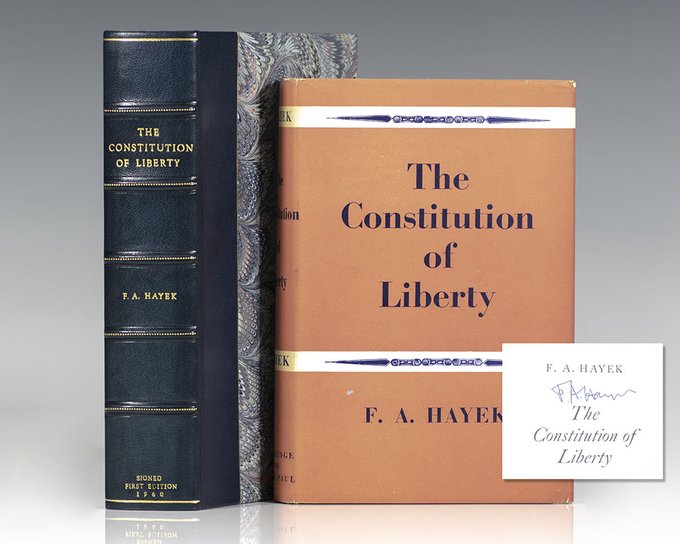
Legend has it that in her first Cabinet meeting, Thatcher slammed down Hayek's book Constitution of Liberty—published by the IEA—and declared: "This is what we believe!" Ideas had become policy. Intellectuals had changed a nation.
This wasn't an accident. Hayek had studied how ideas spread. It's like a pyramid:
Scholars develop ideas ...
... Intellectuals* spread them
... Media amplifies them
... Politicians adopt them
Every revolution starts at the top of that pyramid.

Now look at American universities today (and this is fairly universal everywhere):X Professors teaching government as the solution to everythingX Students defending socialism (70% of Gen Z consider voting socialist)X 53% of graduates feel unqualified for jobs in their fieldX Ideology of resentment toward achievementOur Local Coordinators host events, educate peers, and develop as leaders worldwide.In 2024 alone: 3,881 events reaching 150,000+ people.One person who helped SFL in Argentina? An economist named Javier Milei.Milei didn't just wear our pin—he partnered with us.He attended our events, explained our mission on TV, and mentored pro-liberty students across Argentina.Why? Because he understood: to change politics, you first have to change culture.


Take Ethan Yang. Started with "no leadership experience, no professional skills. Just a small libertarian club that met in the basement of our dining hall."As a Students for Liberty coordinator, his Freedom of Information Act request helped halt the Biden administration's social-media censorship. The case reached the Supreme Court.A federal judge called the Biden Administration's collusion with/threats to Big Tech "the most massive attack against free speech in US history."Stopped by one student. One request. Supreme Court case.That's the power of the pyramid when it works for liberty.

Here's what every student needs to understand:You're not just getting a degree.You're being shaped by ideas that will define the next fifty years.The question isn't whether ideas will spread from campus—it's which ideas will spread.Milton Friedman explains the point: "Our basic function is to develop alternatives to existing policies, to keep them alive until the politically impossible becomes the politically inevitable."Before Milei became president, he was attending SFL events.That pin? It represents a movement that changed a country.Tired of feeling outnumbered, silenced, or lost in campus groupthink?The College Survival Kit is your first step into this global movement.Learn how real change begins—with students who refuse to stay silent: DOWNLOAD YOURS HERE.


Monday, 22 April 2024
Israel + Gaza: What Would Thatcher Do Today? (WWTDT?)
"For a party that has failed to escape [Margaret] Thatcher’s long shadow, ... perhaps what is most remarkable is how far the current [U.K.] Conservative Party’s aspiring populist wing diverges from Thatcher’s own approach to the conflict. Following [Israel']s invasion of Lebanon in 1982, a disaster that she correctly foresaw would birth new and harder threats to both the Western order and Israel’s own security, Thatcher placed an embargo on British weapons sales to Israel, a policy that was not lifted until 1994. Her rationale, as she told ITN, was that Israeli troops had 'gone across the borders of Israel, [to] a totally independent country, which is not a party to the hostility and there are very very great hostilities, bombing, terrible things happening there. Of course one has to condemn them. It is someone else’s country. You must condemn that. After all, that is why we have gone to the Falklands, to repossess our country which has been taken by someone else.'...
"For Thatcher — perhaps counterintuitively, viewed through the prism of today’s Conservative party — the 'plight of the landless Palestinians' was a major foreign-policy concern. ... Striving to find a workable peace, Thatcher asserted the only possible solution to the conflict was an approach which balanced 'the right of all the states in the region — including Israel — to existence and security, but also demanded justice for all peoples, which implied recognition of of the Palestinians’ right to self-determination.' Writing of her visit to Israel in 1986, the first by a British prime minister, Thatcher remarked that 'The Israelis knew… that they were dealing with someone who harboured no lurking hostility towards them, who understood their anxieties, but who was not going to pursue an unqualified Zionist approach.' Instead, she 'believed that the real challenge was to strengthen moderate Palestinians, probably in association with Jordan, who would eventually push aside the… extremists. But this would never happen if Israel did not encourage it; and the miserable conditions under which Arabs on the West Bank and in Gaza were having to live only made things worse.' ...
"To Thatcher, peace would entail not an independent Palestinian state — she thought this unviable, and most probably undesirable — but the incorporation of the West Bank and Gaza under the rule of Jordan’s Anglophile King Hussein. Yet when Thatcher signed on to an European Community declaration of support for Palestinian statehood, just days after the PLO confirmed its commitment to the destruction of Israel, and was condemned for this by the Labour leader Jim Callaghan — British attitudes on the conflict were yet to assume their present form — Thatcher responded in robust terms. “The words in the communiqué I support entirely,” she told the House. “They concern the right of the Palestinian people to determine their own future. If one wishes to call that ‘self- determination’, I shall not quarrel with it. I am interested that the Right Hon. Gentleman appears to be attempting to deny that right. I do not understand how anyone can demand a right for people on one side of a boundary and deny it to people on the other side of that boundary. That seems to deny certain rights, or to allocate them with discrimination from one person to another.”
"Strikingly, Thatcher condemned Israel for its annexation of the Golan Heights from Syria, for its attack on Saddam Hussein’s Osirak nuclear power plant, and for its seizure of Palestinian land for settlements, including the housing of Soviet Jewish refugees: as she told the House in 1990, 'Soviet Jews who leave the Soviet Union – and we have urged for years that they should be allowed to leave – should not be settled in the Occupied Territories or in East Jerusalem. It undermines our position when those people are settled in land that really belongs to others.' Indeed, as she later remarked in her memoirs, 'I only wished that Israeli emphasis on the human rights of the Russian refuseniks was matched by proper appreciation of the plight of landless and stateless Palestinians.' With such sentiments, it is doubtful that today’s self-proclaimed Thatcherites would find a prominent place for Thatcher herself in their nascent faction."~ Aris Roussinos, from his article 'What Thatcher can teach the pro-Israel Right'

Wednesday, 16 November 2022
'Politicians are not agents of positive change, but thermometers that measure the temperature of public opinion.'
"Libertarians should treat politicians, not as agents of positive change, but as thermometers that measure the temperature of public opinion.
'Change the temperature,' wrote Leonard Read, 'and there will be a change in what’s out front—naturally and spontaneously. The only purpose in keeping an eye on the thermometer is to know what the temperature is. If the underlying influential opinion—the temperature—is interventionist, we’ll have interventionists in public office regardless of the party labels they may choose for their adornment and public appeal.”
'If,' on the other hand, as Read continued, 'the underlying influential opinion—the temperature—is libertarian, we’ll have spokesmen for libertarianism in public office. Nor will all the king’s horses and all the king’s men be able to alter the reading of the political thermometer one whit'.”~ Jess Gill quoting Leonard Read, from her article 'Why Liz Truss Failed While Margaret Thatcher (Partly) Succeeded'
Wednesday, 4 December 2019
Subscribe to:
Posts (Atom)