"[M]ost people hold, explicitly or implicitly, that without regulation, markets could, and sometimes would, spin off into disastrous excesses of one form or another.
"The operative image of economic regulation is that of a huge truck without steering or brakes. 'We have to have those instruments of control, or the truck will go careening off the side of a cliff.'
"The truth is that government regulation is precisely the cutting of the brake lines and the seizing up of the steering column.
"The actual alternative is: government regulation vs. market regulation---which means coercive rule by political appointees vs. freely negotiated prices.
"On a free market, when price relationships begin to diverge from economic reality, they are brought back in line because of greed. Speculators, arbitrageurs, and other "profiteers" swoop in to profit from any misalignment.
"Their activity acts to eliminate the very misalignment with reality that created the profit opportunity. ... Whenever prices, including interest rates, diverge from economic reality, there is money to be made in correcting the prices by the appropriate buying and selling.
"And here's the best part: those with the best judgment of economic reality are the ones who make the most money, which means they have the most influence on the market. It is the buying and selling of the Warren Buffets (and their more speculative counterparts) that keep the economy aligned with the facts. ...
"But ... [t]o the extent there is government intervention, the minds of the profit-seekers are thwarted and rewards go not to the Warren Buffets but, at first, to the ward heelers and power brokers, then as the system devolves, power over the economy goes increasingly to those who are better at conning the public. Then, they are replaced by those more willing to use compulsion. The ruthless displace the relatively timid punks, and destruction reigns.
"So, people have it backwards. 'Unregulated' means reason sets the terms and 'regulated' means reason is quashed by political power."
~ Harry Binswanger from his post 'One contradiction in the fear of laissez-faire'
Tuesday, 11 August 2026
Economic regulation: coercive rule by political appointees vs. freely negotiated prices


Friday, 2 May 2025
CUE CARD ECONOMICS: Economic Harmonies, and The Miracle of Breakfast
Unfortunately, all he proved to most readers was that Hell is reading Jean Paul Sartre books.
A century earlier his countryman Frederic Bastiat discovered, argued and helped to prove something very different; that other people are the very opposite of hell. Said Bastiat in his own magnum opus Economic Harmonies:
“All men’s impulses, when motivated by legitimate self-interest, fall into a harmonious social pattern.”
This is the big lesson that economics can give to philosophers: that the world is not made up of the “fundamental antagonisms” between people that some philosophers find everywhere; antagonisms alleged to be ...
Between the property owner and the worker.
Between capital and labour.
Between the common people and the bourgeoisie.
Between agriculture and industry.
Between the farmer and the city-dweller.
Between the native-born and the foreigner.
Between the producer and the consumer.
Between civilization and the social order.And, to sum it all up in a single phrase:
Between personal liberty and a harmonious social order.
What economics can teach philosophers (and what Bastiat can still teach economists) is that other human beings need neither be a burden nor a threat, neither a hell nor a horror but a blessing.
This is the greatest lesson economics can teach: that in a society making peaceful cooperation possible we each gain from the existence of others.
What a great story to tell!
TO START TO TELL THIS long story, a story that all of economics really serves to show, let’s begin with a short story—an excerpt, from a short story by a great short story writer: O. Henry. As his characters sit down in their wilds to break their fast with something “composed of fried bacon and a yellowish edifice that proved up something between pound cake and flexible sandstone,” they begin to reflect on The Perfect Breakfast:

Such a breakfast, they sigh, might only be possible in New York. "It's a great town for epicures,” they say. As is virtually every city. We take for granted now that in virtually every cafe in every city in the country we can sit down to the perfect breakfast. We reach over to Brazil or Kenya for our coffee and down to Christchurch for our mushrooms and rolls; to Pokeno, or Vermont, for our bacon and head further down to the Waikato to dig a slice of butter out of a Te Rapa urn and then turn over a beehive near a manuka patch in Nelson for our honey.
This is the Miracle of Breakfast: that we can eat like the gods for the cost only of a few dollars thanks to the freedom to trade, the division of labour and the 'invisible hand' of the market. And we take this for granted. We take it so much for granted that, rather than celebrate sharing the meal that gods eat on Olympia, we complain if our eggs are too cold.
And we don’t need long arms to enjoy it: we need the arms and minds of other people who are free to produce, free to trade, free to enjoy the fruits of their own labour by trading those fruits with others.
This is the lesson integrated by all of economics: that when you remove force and fraud people are a blessing rather than a curse. Thanks be to the freedom to trade, the division of labour and the 'invisible hand' of the market that makes it possible.
This is the great lesson of Economic Harmonies hinted at by Adam Smith, made explicit by our friend Frederic Bastiat, and developed in specific areas by the likes of Friedrich Hayek and Ludwig Von Mises. Bastiat first noticed it in a visit to Paris. Paris gets fed, he observed, yet no-one celebrates the miracle:

A light we term self-interest. It is this, says Bastiat, that is at the root of all the Harmonies.
Think about it. On our own we can produce barely anything in a single day. If we were to permanently endure self-sufficiency or life in the wilds not only would the meal of ambrosia perpetually elude us, our lives would be one long round of much labour for very little reward. (That's the point of Robinson Crusoe if you remember.) We need others to keep us supplied as we now take for granted—with food, with drink, with iPods, iPads and the very roofs over our head—but how to enlist those others in our aid? Simple: we rely on trading with those others. On voluntary cooperation. In short, we offer them their own profit in return for ours.
We appeal, in short, to their own self-interest, a point made by Adam Smith in the part of his famous book where he invokes his most famous metaphor:

And so we do. By pursuing our own self-interest, through our production, our trade, our enterprise, we ensure “Paris gets fed.”
But there is no central planner here. That is the second part of this miracle: the “resourceful and secret power that governs the amazing regularity of such complicated movements” is not the result of government planning but the opposite: it is a naturally developed “spontaneous order” regulated by this “inner light” of self-interest and the power of free exchange. That power, that light, “is so illuminating, so constant, and so penetrating, when it is left free of every hindrance” it produces the order we take so much for granted.

This, Bastiat’s great lesson of spontaneous order, was taken up by Friedrich Hayek, observing society relies on the spontaneous order arising out of our voluntary cooperation.

This great miracle can only happen when each of us is free to follow our own road, to make use of our unique knowledge and circumstances to pursue our self-interests, so promoting that of the society more effectually than when we really intend to promote it.

- Free exchange
- Self-interest
- Spontaneous order
Or in one idea:
“That the legitimate interests of mankind are essentially harmonious.”
This, then, is the great lesson integrated by economics, if we are willing to hear it:
- That human interests do not require acts of sacrifice…
- That bettering the condition of one person does not necessitate the worsening of someone else’s…
- That one person’s wealth does not necessitate another person’s poverty….
- That the creation of wealth requires only that everyone mind their own business and get the hell on with it. ...
- That the interests of all members of society are harmonious if and insofar as private property rights are respected; or, in modern parlance, that the unhampered market can operate independent of government intervention.
Mind you, it takes all of economics to prove the point. And most philosophers are unable to read, or integrate, that much.
But so too are so many of today’s economists.
* * * *
* Reposted from 2012, based on a post from 2005. The title comes from a lecture by the late John Ridpath.
Wednesday, 22 February 2023
"Managed Retreat"?
 |
| Folk resting beside Ancient Egypt's Nile. (Annual flooding not shown.) |
SO IMAGINE YOU'RE AN ancient Egyptian. You know: pharaohs, camels, mummies, pyramids, the Nile flooding every year....
Every. Damn. Year!
Or ... you're an ancient resident of the banks of the Tigris, or the Euphrates -- these places where civilisation began. And these rivers that feed your crops and bring down life-giving nutrients from the mountain streams also occasionally, you discover, bring you floods.
Yes, you'd get a bit sick of it after a time. So after a time you could do one of two things.
1, you could adapt to nature and organise a "managed retreat." Nature knows best, you might say.
Or, 2, you could invent hydraulic engineering, tame the rivers (adapting nature to yourselves, you might say) and so put us on the path to human progress that got us to where we all are today. Relatively prosperous.
 |
| Man v Dragon |
There was a time when it was widely accepted that it was a good thing to adapt nature for our own ends. Indeed, that's the only way we humans can survive. Nature has dragons; left unprotected from them, and they will devour us.
And on our own, compared to nature's power, we human beings are weak. Left exposed and naked and without the food, shelter and technology produced by our adaptation of nature, if we merely settled for adapting ourselves to nature's dragons then ever single one of us would struggle for survival. But adapt nature to ourselves -- make it more humane and set nature's processes and nature's bounty working for us rather than agin us-- and then as a species we're off to the races.
This path -- adapting nature to ourselves -- was the path of centuries of human civilisation and flourishing, starting all the way back in settlements around the Euphrates, the Tigris and the Nile where floods were tamed and used to produce abundant wealth from the enormously fertile soil.
This is not the view nowadays however. Not so much.
THE PREDOMINANT VIEW NOWADAYS is that protecting ourselves from nature is wrong. That "the environment" trumps human beings. That nature must take its course. That natural processes have rights, but human beings don't.
If sand dunes move and the sea threatens, in a more rational time men built protection from dunes and from sea. Nowadays however the call is for people to just move away from the coast.
If rivers or drainage systems silt up or threaten, in a more rational time men built stop banks and better drainage systems -- and they cleared up the silt. Nowadays instead the call is to let nature take its course, and we hear folk from the Prime Minister on down call for "a debate" about whether townships and horticultural producers should simply move away from the hazard. Or be forced to.
This is not a climate problem or an engineering problem. It's an attitude problem. It's an attitude borne of bad philosophy: of the ethics that says that Gaia comes first, and humans a far distant second.
We didn't always think this way, or we would never have come so far as a species.
However it's now a notion that's philosophically entrenched in present generations, and in most government departments (central and local). It's also legally entrenched in the RMA (which gives rights to the "intrinsic value of ecosystems," but not to humans wishing to protect themselves from the often dangerous natural processes inflicted upon us by ecosystems). And don't think David Parker's various replacement bills for the RMA will improve things either -- to read those legislative tributes to Gaia is to understand they will only make things harder all round.Just imagine if this attitude was predominant around the Nile in the times of the pharoahs; if instead of taming the Nile and its regular floods to produce abundant crops, invent hydraulic engineering and to build a civilisation the Egyptians ran away instead. As a culture they'd now be deservedly lost to history. As would all the cultures and civilisations (i.e., ours) that built upon those first beginnings in Egypt and Mesopotamia.
And that goes for any culture that opts out of the ongoing battle against the dragons of nature -- and it goes for us too.
 |
| Folk dig out after the 1938 Esk Valley flood |
CIVILISATIONS HAVE BUILT OTHER solutions too since pharaohs controlled things and simply ordered people around. We've built and understood things like common law and property rights too, and inventions for managing risk like insurance. And when they're allowed to work (which things like he RMA make more difficult) they developed organic processes of their own that create a kind of spontaneous order. So, for example, instead of having a nationwide debate about whether "we" as modern-day pharaohs should "allow" folk to build on flood- or slip-prone land, why not allow these organic processes to work?
Economist Eric Crampton suggests we can, and has a starter proposal for how. It looks like this:
1. People should be able to build where they want.
2. Insurers should be able to set premiums to reflect risk. EQC could make that safer for private insurers by leading the way. They have decades of claims history.
3. Councils should reserve the right to discontinue services in places that are too expensive or difficult to maintain. In such cases they could offer existing residents a choice:a. Special ratings district that imposes a differential higher levy reflecting higher costs of providing council services in those areas, and a promise that there will be no cross-subsidies from safer places, reminding that that means that if their road washes out and they want it reinstated, the levy will have to go up;4. Ability to set those special purpose local boards should be extended more broadly, such that a group of farmers could set one to take on the debt that funds flood protection works and finances that debt through a levy on protected properties, on approval of those properties’ owners.
b. Setting of a special purpose local board that becomes the owner of local infrastructure, governed by its residents, and able to set its own levy on properties for service. Councils would need to sharply reduce rates for those properties to reflect that council is no longer providing those services.
5. EQC to recognise mitigation works when setting premiums. Private insurers would do similarly so long as that market is sufficiently competitive.
6. Make damned sure that there aren’t regulatory barriers unduly hindering insurance entry, including provision of parametric insurance products.
7. Land values in high-risk places no longer cross-subsidised by low-risk places would drop. If government worries about the equity implications of that, it could provide a one-off payment in compensation. Ideally it would set a cap on such compensation because it will disproportionately go to rich people living in unsafe places who have been cross-subsidised by poorer people living in safer places for ages. (On this point, remember the 2018 Motu work that said that cross-subsidies in current insurance through EQC mainly run to the benefit of richer neighbourhoods.) ...
Seems simple enough. No need for government or council to decide who's allowed to live where. If you want to live in a risky place at your own expense, that should be up to you.
As it should be.
Tuesday, 29 October 2019
"Since only situations which have been created by human will can be called just or unjust, the particulars of a spontaneous order cannot be just or unjust: if it is not the intended or foreseen result of somebody’s action … this cannot be called just or unjust." #QotD
"If we apply the terms [just or unjust] to a state of affairs, they have meaning only in so far as we hold someone responsible for bringing it about or allowing it to come about ...
"Since only situations which have been created by human will can be called just or unjust, the particulars of a spontaneous order cannot be just or unjust: if it is not the intended or foreseen result of somebody’s action … this cannot be called just or unjust."
~ F.A. Hayek, from his book The Mirage of Social Justice.
Monday, 29 August 2016
Clinton’s attack on the alt-right, and 7 differences between them and libertarians
Who or what is the “alt-right”? Answer to that very soon, but to the delight of that antediluvian bunch of self-described white nationalists previously confined to the more fetid parts of the internet, the Republican nominee has been forthrightly spreading their memes [read here for background] and in a major speech last week the Democratic nominee has now put them firmly on the map.
Clinton’s attack on this movement she says has “taken over” the Republican Party is “in no small part part, aimed at telling moderate Republican voters and GOP-leaning independents that their values aren’t truly represented by the nightmare ideology otherwise known as Trumpism.”
He may be the GOP nominee, but he has perverted and distorted Republicanism into something so twisted and horrifying, so unlike anything else we’ve seen in modern times, that they shouldn’t feel bound by party loyalty or political habit to stand by him.
The attack is calculated to drive a wedge between these traditional Republicans and the candidate and his team whom they would otherwise be beholden to support.

Hoping to collect votes from both Republicans and Democrats appalled at their party’s respective nominees is Libertarian nominee Gary Johnson, who’s been running a very strong “I’m-the-sane-candidate” strategy against the loony tunes winging their way either side of him.
Confusingly however, many commentators mistake libertarians for these alt-right meatheads focussed on “white identity politics, many nascent libertarians themselves have found themselves seduced by the siren songs, and “more than a few” alt-rightists even claim some relationship to libertarianism – or once had one before sadly shedding their libertarianism later on.
What are the differences in outlook between alt-right ideology and libertarianism? Jeffrey Tucker reckons they come down to five – five different views on history, humanity, order, on trade & migration, and on emancipation & progress:
1. The Driving Force of History
Every ideology has a theory of history, some sense of a driving theme that causes episodic movements from one stage to another. Such a theory helps us make sense of the past, present, and future…
Ayn Rand argued that what drives history most fundamentally is ideas, of which reason and liberty are the most potent, but are by no means inevitable.
There is only one power that determines the course of history, just as it determines the course of every individual life: the power of man’s rational faculty—the power of ideas. If you know a man’s convictions, you can predict his actions. If you understand the dominant philosophy of a society, you can predict its course. But convictions and philosophy are matters open to man’s choice. There is no fatalistic, predetermined historical necessity.

The alt-right reject this outright. On the question of liberty versus power, they come down completely on the side of power.
The movement inherits a long and dreary tradition of thought from Friedrich Hegel to Thomas Carlyle to Oswald Spengler to Madison Grantto Othmar Spann to Giovanni Gentile to Trump’s speeches. This tradition sees something else going on in history: not liberty vs. power, but something like a more meta struggle that concerns impersonal collectives of tribe, race, community, great men, and so on.
Whereas libertarianism speaks of individual choice, alt-right theory draws attention to collectives on the move. It imagines that despite appearances, we all default in our thinking back to some more fundamental instinct about our identity as a people, which is either being shored up by a more intense consciousness or eroded by a deracination and dispossession from what defines us. To criticise this as racist is often true but superficial. What’s really going on here is the depersonalisation of history itself: the principle that we are all being buffeted about by Olympian historical forces beyond our control as mere individuals. It takes something mighty and ominous like a great leader, an embodiment of one of these great forces, to make a dent in history’s narrative.
Hence the union of white identity politics (an inversion of the identity politics of their political opponents) and the wistful longing for their “man on horseback” to wall out the barbarian hordes.
2. Harmony vs. Conflict
A related issue concerns our capacity to get along with each other. Frédéric Bastiat described the free society as characterised by a “harmony of interests.” In order to overcome the state of nature, we gradually discover the capacity to find value in each other. The division of labour is the great fact of human community: the labour of each of us becomes more productive in cooperation with others, and this is even, or rather especially, true given the unequal distribution of talents, intelligence, and skills, and differences over religion, belief systems, race, language, and so on.
And truly, this is a beautiful thing to discover. The libertarian marvels at the cooperation we see in a construction project, an office building, a restaurant, a factory, a shopping mall, to say nothing of a city, a country, or a planet. The harmony of interests doesn’t mean that everyone gets along perfectly, but rather than we inhabit institutions that incentivise progress through ever more cooperative behavior. As the liberals of old say, we believe that the “brotherhood of man” is possible.
The libertarian believes that the best and most wonderful social outcomes are not those planned, structured, and anticipated, but rather the opposite.
To the alt-right mind, this all seems ridiculous. Sure, shopping is fine. But what actually characterises human association is deep-rooted conflict. The races are secretly at war, intellectually and genetically. There is an ongoing and perpetual conflict between the sexes. People of different religions must fight and always will, until one wins. Nations fight for a reason: the struggle is real.

The libertarian understands that when force is barred from human interaction and all human interaction is voluntary, that each other individual is a net benefit to us, For the alt-righter however, every other human being is a threat, especially those who are “not like us.”

Hence for them society is irretrievably divided “vertically” on racial lines, over which each tribe is determinedly in conflict. Ludwig von Mises captures this parallel brilliantly in his identification that, “Nationalist ideology divides society vertically; the socialist ideology divides society horizontally.”
As Tucker observes, “Here, as with many other areas, the far right and far left are strangely aligned.”
3. Designed vs. Spontaneous Order
The libertarian believes that the best and most wonderful social outcomes are not those planned, structured, and anticipated, but rather the opposite. Society is the result of millions and billions of small acts of rational self interest that are channelled into an undesigned, unplanned, and unanticipated order that cannot be conceived by a single mind. The knowledge that is required to put together a functioning social order is conveyed through institutions: prices, manners, mores, habits, and traditions that no one can consciously will into existence. There must be a process in place, and stable rules governing that process, that permit such institutions to evolve, always in deference to the immutable laws of economics.
Again, the alt-right mind finds all of this uninspired and uninspiring. Society in their conception is built by the will of great thinkers and great leaders with unconstrained visions of what can be. What we see out there operating in society is a result of someone’s intentional and conscious planning from the top down.
If we cannot find the source, or if the source is somehow hiding, we imagine that it must be some shadowy group out there that is manipulating outcomes – and hence the alt-right’s obsession with conspiracy theory. The course of history is designed by someone, so “we” might as well engage in the great struggle to seize the controls – and hence the alt-right obsession with politics as a contact sport.
Oh, and, by the way, economics is a dismal science.4. Trade and Migration
Of course the classical liberals fought for free trade and free migration of peoples, seeing national borders as arbitrary lines on a map that mercifully restrain the power of the state but otherwise inhibit the progress of prosperity and civilisation. To think globally is not a bad thing, but a sign of enlightenment. Protectionism is nothing but a tax on consumers that inhibits industrial productivity and sets nations at odds with each other. The market process is a worldwide phenomenon that indicates an expansion of the division of labor, which means a progressive capacity of people to enhance their standard of living and ennoble their lives.
The alt-right is universally opposed to free trade and free migration. You can always tell a writer is dabbling in alt-right thought (or neoreactionary or Dark Enlightenment or outright fascism) if he or she has an intense focus on immigration or international trade as inherently bad or fraudulent or regrettable in some sense. To them, a nation must be strong enough to thrive as an independent unit, an economic or cultural sovereignty unto itself.
Today, the alt-right has a particular beef with trade deals, not because they are unnecessarily complex or bureaucratic (which are good reasons to doubt their merit) but because of their meritorious capacity to facilitate international cooperation. And it is the same with immigration. Beginning at some point in the late 19th century, migration came to be seen as a profound threat to national identity, which invariably means racial identity.

5. Emancipation and Progress
The libertarian celebrates the profound changes in the world from the late Middle Ages to the age of laissez faire, because we observed how commercial society broke down the barriers of class, race, and social isolation, bringing rights and dignity to ever more people. Slavery was ended. Women were emancipated, as marriage
evolved from conquest and dominance into a free relationship of partnership and consent. This is all a wonderful thing, because rights are universal, which is to say, they rightly belong to everyone equally. Anything that interferes with people’s choices holds them back and hobbles the progress of prosperity, peace, and human flourishing. This perspective necessarily makes the libertarian optimistic about humanity’s potential.
The alt-right mind can’t bear this point of view, and regards it all as naive. What appears to be progress is actually loss: loss of culture, identity, and mission. They look back to what they imagine to be a golden age when elites ruled and peons obeyed. And thus we see the source of their romantic attachment to authority as the source of order, and the longing for authoritarian political rule. As for universal rights, forget it. Rights are granted by political communities and are completely contingent on culture. The ancients universally believed that some were born to serve and some to rule, and the alt-right embraces this perspective. Here again, identity is everything and the loss of identity is the greatest crime against self anyone can imagine.

It should be obvious from Tucker’s analysis that where libertarians view each of us individuals with the power to think and choose, the Alt-Right views each of us instead as part of a “tribe,” our identity irretrievably given us at birth and needing “leadership” to be grafted into its proper whole.
So while libertarianism is indivualistic, the alt-right is demonstrably collectivist. This on its own should stop the mainstream media from lumping us all together. (Yeah right.) And make no mistake, says Tucker: the alt-right knows exactly who its enemies are, and we libertarians are among them.
To Tucker’s five main differences I would add two more: two contrasting views on The Power of Reason and The Impotence of Evil.

The Alt-Right however consciously reject this thesis. For them it is not man’s mind that has power in the world but his blood. They repair instead to the notion that “intelligence,” culture and all values are simply a product of race, over which none of us has any control; and they see themselves as the true guardians of “white culture,” which is beset on all sides by evil hordes who cannot be reasoned with yet who somehow possess the power and the means to destroy us.
Evil itself has power therefore, and humanity itself becomes our enemy.(“Humanity as a whole is still sub-human” says one former NZ Objectivist, who desperately need to be “wiped out” by some “intervening cataclysm” so that “we” can start over.)
The irony is that in talking up the power of those forces they feel are arrayed against them, so powerful that they must be banned, barred, wiped out and walled out, they implicity stress both power of evil and the impotence of reason to address its challenges; they argue for the power of the culture they damn and the weakness of the culture with which they identify to stand up to those forces. In other words then, the culture they protect they view implicitly as weak and cowardly, and the “intelligence” that they so fitfully measure has no power for them to ultimately move the world.
In that then, the alt-right is not just a racist movement of un-reason, it is one of irredeemable cowardice.
UPDATE:
Objectivist Amy Peikoff discusses the Alt-Right with Stuart Hayashi, who’s recently been analysing Stefan Molyneux’s brand of “race realism”:
.
Monday, 23 November 2015
Sea level hazards: You can’t repeal risk, but you can repeal section 71
Ask Parliamentary Commissioner for the Environment Jan Wright why, with the money made by peddling his warmist mantra, Al Gore purchases and enjoys sea-level property--despite his own claims that the apartments thereon will be rapidly underwater--and I’ll wager she’ll have no idea.
Nonetheless, this from last Friday’s news:
NZ urged to act on rising sea levels – RADIO NZ
Entire communities may need to be uprooted due to rising sea levels and the Minister of Finance should start preparing for the financial impact now, says the Parliamentary Commissioner for the Environment Jan Wright.
The commissioner's latest report 'Preparing New Zealand for rising seas: Certainty and Uncertainty' identified at least 9000 New Zealand homes that lie less than 50cm above spring high tides.
There was no doubt sea levels were rising and it was certain the frequency of coastal flooding would increase as the sea level rises, Dr Wright said. …
A standard process for council engagement with coastal communities should be included in central government direction and guidance on sea level rise, Dr Wright said. …
Councils' planning for sea level rise was problematic … [so] the government was recommended to put direction on planning for sea level rise into a National Policy Statement, such as one envisaged for dealing with natural hazards.
Officials were urged to address the issues the report raised in the upcoming revision of the 2008 MfE Guidance Manual - which provided direction and guidance to councils on how they should deal with sea level rise.
Here’s my own recommendation for “officials” providing “direction and guidance to councils on how they should deal with sea level rise”:
Direct them to keep the hell out of the way.
You may think that’s a frankly frivolous thing to say, but hear me out.
Let’s grant her claim that sea levels are rising and coastal flooding will increase. Let’s assume that she’s not just another one not letting a good climate crisis go to waste. Let’s agree with her that at least 9000 New Zealand homes are “at risk” when that happens. But let’s recognise that it’s about this point that Ms Wright begins wringing her hands and talking about “sending people letters” and uprooting entire communities –and that people are taking that prescription seriously.
But me ask you this: is this massively increased coastal flooding going to happen this week? Next month? Next year?

No other possibilities appear to be contemplated other than snail-paced action from officials to tell property-owners what action they must take.
But, well, let me just ask you: Do you know of any means whereby folk could sort out for themselves the risks associated with sea-levels threatening their property, and deal with it as expeditiously as they think necessary?
Think you there might be some process for engagement that didn’t require either central government “direction and guidance” or the bullying and bureaucracy that comes with it?
Any idea of some solution that might spontaneously emerge when folk go about their daily risk-taking business?
Yes, I know, it wholly eludes Ms Wright, council officials and all, none of whom appear to have heard of the phenomena for which Nobel Prizes are awarded, but the process by which supposedly marginal homes can so peacefully and undramatically end up in the hands of those who are satisfied the risk of ownership is worth it—and out of those whose hands are wringing wet with worry mark—is precisely the market process that deals with risks like this every day. A process whereby those who discount risks in favour of perceived value can outbid and help compensate those who truly fear the worst.
Another way to say this is that the former pick up a bargain from the latter. But if we’re speaking freely, and by this stage of the game we surely are, then how many existing property-owners would really and truly take Ms Wright’s views that seriously they would want to leave their paradise at a knock-down rate. (And putting it the other way, wouldn’t those who are convinced she is right, as well as Wright, be thinking they were the ones stealing from their buyers, since in their minds it is the buyers who are going to miss out—and soon!)
So. Simple.
Problem is that there are only two ways whereby this simple, free and peaceful process could be made to not work, and both are either contemplated or already exist today:
- either public action to ban private action; or
- laws to ensure that councils rather than land-owners assume the risk for any alleged natural hazards, and may bully land-owners into compliance with whatever “plans” for their property council sees fit, up to and including the effective nationalisation of their land for beachfront reserve.
Ms Wright proposes the former. The Building Act and Resource Management Act already enforce the latter.
I therefore suggest that the only public action necessary in the face of this alleged threat is to remove the sections of these two acts imposing the resulting risk on ratepayers.

But all that’s really necessary is the repeal of one simple section of the Building Act, section 71.
I can guarantee you’ve heard of this section before, or at least its results.
You heard about it a lot after the Christchurch earthquakes, often associated with red-zoned land.
You surely heard of its results when council goons trued to evict stroppy old Joe Bennett from his Lyttleton home because they were “concerned for his safety” after the Christchurch earthquakes because of two risky rocks they thought were threatening his home (the risk being entirely in the eyes of the councils'’ beholders):
Last August two goons marched up the drive and slapped a sticker on my house. The sticker threatened me with enormous fines if I didn't leave. I didn't leave. …
In August, Mr Democracy Services issued a press release saying that the council was concerned for the safety of people in red-stickered houses. Nice of him, but irrelevant. My safety is not the council's concern, just as theirs isn't mine.
As I said on radio at the time, I don't need another mother. The decision to live in my house was mine to make, and mine alone. And the consequences were for me to accept, and me alone.
If the council considered my place to be dangerous, they could put a sign outside saying so. Duty done. The truth is that the council never cared about my safety. It cared only about its own legal liability.
Remove Section 71 and the council will have no legal liability, and then between ourselves and our insurance companies we can all safely (or at least peacefully) plan our own futures and look after our own risk. Even if it does mean a sign outside your house—or a tag on your certificate of title—saying that in council’s opinion, which we should all be free to express, the sky is about to fall on us.
That way, the council nannies don’t need to cover their arses.
You see, in the face of risks or alleged risks, Section 71 and its related sections do essentially make council wholly responsible for damage to your property, mandating a policy of “managed retreat” should “natural processes” impinge or appear to infringe upon some unlucky person’s land.
What that retreat means might be summed up in that sticker slapped on Joe’s house by the goons: Enormous fines if you don't leave. Except that in some places now the goons just refuse you your right to build on your own land because, they say, of the risk.
This means that in some parts of the country where the tides, sea levels sand dunes are alleged to be moving in such a risky fashion that almost the entire coastline is said to contain “natural hazards” (bucolic old Tauranga being one such place) you may not build at all in those parts of your land so designated by mother; you may build on other parts differently designated only if you have another site on which to move your house; and if a sand dune is blown within a certain specified distance of your house, then mother says you may not even take out a shovel to move it – instead, you must move your house to that other site you’ve been keeping for that very purpose all these years.
New Zealand, this is your future under Jan Wright and her recommendations – and, while largely being unspoken about, it has been our present for at least the last twenty years. As I wrote way back in 2002, under the District Plans written in conformity with this policy, beachfront properties are essentially already being nationalised in order to create unpaid-for beachfront reserves.
You see -- trees, rocks, sand dunes and “natural processes” all have rights under the Building and Resource Management Acts. Human beings do not.
Repeal the section that makes it so, however, and you too can live like Al Gore.
Although maybe without the huge nest egg that allows him to purchase sea-level San Fran condos.
Monday, 2 November 2015
The World Bank Threatens Free Markets
The World Bank is not a friend of capitalism, as it is demonstrating in Peru where, thanks to enterprising Peruvians who ignore the regulatory state, Peru continues to see growth in the standards of living of its citizens. Unfortunately, says Simon Wilson in this Guest Post, the global elites behind the World Bank are determined to regulate and "modernise" Peru until this entrepreneurial spirit is destroyed...
The World Bank Threatens Free Markets in Peru
One has to wonder whether this taxpayer-funded financial elite
would recognise a free market if one were staring them in the face
Guest post by Simon Wilson
 Peruvians were pleasantly surprised, if a little bewildered, by the news that on the 8th of October they were to receive an extended weekend holiday. The reason for the impromptu vacation was the arrival of the “international community” in Lima for the IMF and World Bank’s annual board of governors meeting. Peru’s president, Ollanta Humala (enjoying a brief respite from an ongoing scandal involving his wife’s embezzlement of state funds), encouraged Peruvians to take pride in the fact that the leaders of international finance would deign to choose Peru as the venue for their conference and suggested that it “demonstrates to the whole world, the excellent stewardship of the Peruvian economy and the secure climate in which investment can be made” under his auspices.
These comments are interesting because Peru is indeed an undeniable economic success story. If you want a casebook example of markets lifting people out of poverty, look no further than Peru. However, what Humala skipped over is the fact this transformation took place long before his presidency and also that its causes are rooted not so much in wise statecraft, but rather Peru’s long and venerable tradition of state incompetency which has left it up to individuals to provide for themselves.
Fifteen years ago, the economist Hernando de Soto in his provocative book The Mystery of Capital wrote at length about the byzantine workings of Peruvian bureaucracy where registering titles to property or incorporating a business involved jumping through expensive administrative hoops and waiting not months but years for the right approvals. De Soto lamented the fact that this lack of legal recognition prevented the poor collateralising and leveraging what were in reality quite considerable assets. However, his analysis overlooked the important question of whether, in the presence of an efficient Western-style regulatory state, ordinary Peruvians would have been able to accumulate the wealth to leverage in the first place.

If you want a house, you can go to the outskirts of a city as millions of other Peruvians have done, take a piece of land and build one. If you want a business just start trading, on the street. If you want a garment factory just start one, in your house. Ditto if you want to set up a restaurant or even a school. It may be the case, as de Soto pointed out, that on paper it takes twenty-six months to officially recognise a bus route, but that did not stop enterprising individuals setting their vans or converted school buses on the road, marking out the beginnings of what are now the surprisingly efficient (if crowded) bus routes that carry passengers to almost every imaginable nook of Peru’s sprawling capital, for a fraction of a dollar. The successful bus and van enterprise is a remarkable display of spontaneous order in action.
In Peru there is no need to pay a consultation fee to a gatekeeper to authorise a medical procedure: blood analyses, endoscopies, and radiograms can be purchased on the spot from an array of sole proprietor clinics. All kinds of generic drugs can be bought under the counter. If in need of some entertainment, on nearly every street you can purchase a hi-resolution pirated DVD of the latest Hollywood blockbuster.
It’s not like Peruvians have never heard of title deeds, contracts, regulatory permits, taxes, professional licensing, zoning laws, patent protections and so forth; they exist in a statute book somewhere, but they are largely abstract concepts, which, for most of the time can be safely ignored. Everything is for sale and barriers to entry are virtually non-existent..
The result of this serendipitous meeting of the cavalier Latin spirit with an apathetic state apparatus is a resilient civil society where low-cost privately-provided health and education are available to al,l and people enjoy nutritional- and life-expectancy levels that sit high on the World Bank’s own development indices.
However, this achievement is only inadequately recorded in GDP statistics and is certainly not being celebrated by Peru’s president or the dignitaries at the World Bank. Indeed, rather than recognise informal and small enterprises as the true instantiation of free market principles and the quintessence of liberty, the Bank quite openly decries its existence.
For the World Bank, absence of regulation automatically equates to underdevelopment. For the Bank, “development” is the attainment of specified metrics in consumption and social spending, years of state education, and implementation of legal provisions like minimum-wage entitlements. The problem is that realisation of these development indicators rather conveniently entails a populace in wage-labour, working for regulated businesses (corporations), where they can be taxed at the source. These taxes then are used to fund an array of social programs manned by "poverty professionals" who dedicate their efforts to finding out why everyone is strangely depressed once no-one is allowed to make a living that’s not mediated by state institutions or their corporate vassals.
This unimaginative development model also does nothing to detract attention from the questionable manner in which the Bank — and more specifically its private lending arm — the International Financial Corporation (IFC), work to bring people out of poverty. Peruvians are now quite aware of just how sincere the IFC’s motto of “creating opportunity where it’s needed most” really is.
For instance, one flagship project to provide access to high-quality health care saw the IFC provide a $120 million loan for the construction of the palatial Clínica Delgado now sitting in the middle of Lima’s exclusive Miraflores district. Lima’s residents can now enjoy consultations there for around $150.
Another needy Peruvian the IFC was happy to help was Peru’s richest man, Carlos Rodriguez Pastor, whose Intercorp group received $164 million dollars to expand its financial services divisions. Not to be outdone was Grupo Romero (owned by Peru’s wealthiest banking family) which received $180 million to renovate two vegetable oil processing plants, and Grupo Gloria which received a $25 million loan to build a factory that would solidify their total monopoly on dairy processing in Peru.
The IFC has also extended its influence into Peru’s tourist industry which attracts millions each year and provides a sizeable income to small companies, local tour operators, and indigenous communities that run it. Despite this success story, the IFC evidently thinks that there are still some Peruvians who could use a helping hand, like the plucky “Peru Holding de Turismo” group and its partner the “Orient Express” hotel chain who own and manage some of Peru’s most lucrative real estate. They received a $40 million loan to refurbish a number of luxury hotels in the Cusco region, catering to precisely the kind of jet-setting international elite sitting on the board of the IFC. One can only assume that the planners at the World Bank would like Cusco to become the Latin American Davos, all part of a poverty reduction strategy to assure Peruvians bright futures in hospitality, catering, and adult entertainment.
The examples go on and on as indeed does the story which can be retold from any other country in the “developing” world. The only thing that changes are the names of the domestic elites and some of the western corporations in receipt of this lucrative form of international state patronage.
The thousands of Peruvians who turned out to protest the conference are probably right to be suspicious of the motives of the bureaucrats and directors of the international institutions whose plans and economic models would, if realised, remove real competition, deaden entrepreneurship, and curtail their freedoms.
As the conference came to a close, the sun came out and some of the informal street vendors, who had been rounded up and pushed outside the conference area before it commenced, began making their way back. If they looked hard enough they might have recognized Christine Lagarde, Jim Yong Kim, et al., speeding away in their blacked-out government cars. One had to wonder, whether this taxpayer-funded financial elite would recognize a free-market, even if were staring them in the face.
 Simon Wilson is a qualified wealth manager with a degree in economics and philosophy from the University of York in the United Kingdom. He currently resides in Peru where he teaches business in a British school.
This post first appeared at the Mises Daily.
Thursday, 22 October 2015
Housing: Penny, the Productivity Commission & price signals
The Productivity Commission suggests using price signals to help solve the housing unaffordability problem—rising prices in rural land, for example, being rezoned residential once a certain price point it triggered.
It’s not stupid. If you must zone people from the top-down (and for that particular imbecility there’s no decent argument), then this is one way of alleviating some of the top-down control that’s restricting land supply—and a surprisingly supple one.
Auckland Council deputy mayor Penny Hulse however is “cool” on the idea.
She does not want the council to lose power over large-scale planning, and is worried about the potentially patchy nature of development.
"We can't have random areas looked at to say, look, the difference between zoned land on the urban boundary and the farm next door, it's suddenly reached such a high threshold that we want you to rezone it.
"That's kind of crazy and the cost of random growth like that would be huge. I don't think that's what the Productivity Commission were envisaging."
She said using price as a single trigger to re-zone rural land for development did not make sense.
"It sounds like a pretty blunt instrument to me, and the subtleties and the complexities of what drives cost and land value, particularly in a high-growth area like Auckland, is huge, and to simply look at when land reaches over a certain amount of value to trigger development in that area I think misses the point entirely."
Subtleties. Complexities. “Blunt instruments.” There are certainly blunt instruments being presently applied that ignore the subtleties and complexities of an organic city—one huge one being the imposition of top-down zoning, of which Ms Hulse is such a fan.
Yet the use of price signals, were she to understand them, is precisely the opposite of a blunt instrument. They are a prodigiously fertile means by which a market easily and simply puts resources to their best, most highly-valued use—as measured by those who actually do value them—just as long as people are left free to exercise it.
In a dispersed division-of-labour economy, price signals are the preeminent form of conveying important information right across a market: for those who are alert to them they convey the information, from moment to moment, of what is most highly valued by buyers—and they offer the extra profits that encourage more sellers to supply more of what is most demanded most, and less of what is demanded least…
This is the “prodigiously ingenious mechanism” of spontaneous order by which people's wants are supplied and great cities are fed and watered, a process which to some people still appears to be a miracle. If it is, it’s a miracle that is the product of human action, not of human design.
Price signals themselves embody all the subtleties and complexities of life in a division-of-labour society—they embody them, and build them in, offering both information and an incentive.
When prices of a piece of land rises to significant levels, that’s a clear signal that land is highly valued. And should be highly sought after. Far from being random, this the product of human action, not of human design.
If she were to understand anything about price signals, she might try to understand that much.
Mind you, if the first sentence in the report above is correct (and it is, you can check the audio), it’s possible she does understand them, and has another reason to object:
She does not want the council to lose power…
NB: There is much more to be said about the Productivity Commission’s proposals to alleviate Auckland’s unaffordability problem, not all of it good. But not right now.
Tuesday, 28 July 2015
Are enterprise zones finally “a thing”?
So it's encouraging to see the Government is at least entertaining the idea floated publicly this week by Local Government New Zealand (LGNZ) [and for many years by many others] for 'Special Economic Zones.' It shows the Government may be relaxing its more purist and laissez faire approach from before the Northland election and looking at some more pragmatic ideas.
The reason the thinking in that quoted paragraph is so confused is because it’s written by the frequently befuddled Bernard Hickey (an idiot who seems to think the best thing about a Special Economic Zone is the cut the government gets!), but the story he reports is still a good-news one.
A 'special economic zone' could allow a struggling region such as the Manawatu/Wanganui or Northland or the East Coast to trial the relaxation of either national or local laws or revenue raising measures to see if it might kick-start economic growth. Any local Government in that region would in exchange for relaxing the law then get to share in the benefits of economic growth, possibly through some sort of income tax or GST sharing arrangement.
Clearly, Hickey shares the idiot-focus with LGNZ.
LGNZ did not spell out exactly how they might work or who might use them [if central Christchurch isn’t screaming out to you right now as the obvious first candidate that can only be because your brain is switched off], but the idea is out there now and, unusually, has not been rejected outright as other regional development suggestions have been in the past.
The idea was initially run up the flagpole in New Zealand last September by NZ Initiative Head of Research Dr Eric Crampton after a visit to Hong Kong. China has used special zones extensively to try out new ideas on relaxing taxes and other regulations, and with great success, especially across the border from Hong Kong. He also pointed to a special zone used in Honduras to allow free trade and different types of government. Dr Crampton suggested local Governments could relax Resource Management Act (RMA) rules in such a zone.
And so they could. And much more besides.
The NZ Initiative has since circulated more detailed economic zone ideas amongst policy makers in Wellington and received a positive reception from all sides. Another suggestion was for rules restricting overseas investment to be relaxed for a specific region.
LGNZ President Lawrence Yule then included the idea in the association's 10 point plan for local government funding reform released at this week's conference in Rotorua. He later said such a zone could include minimising RMA rules or fast-tracking consents, or even the potential for tax or rates relief.
LGNZ also suggested in its funding reform plan that the central Government share the fruits of any extra economic growth generated by such a zone, to provide an incentive for Councils to 'go for growth'. That could include granting Councils a share of income taxes or GST generated in their region from the extra growth.
The lack of incentives for growth in many regions is more of an issue than many think.
And this, really, is all that encourages Hickey and LGNZ and, no doubt, the likes of Looney Len to get excited. They read a proposal containing the words “granting Councils a share of income taxes or GST generated in their region” and they simply start frothing at the mouth.
Mind you, at least in that same proposal we also have the words “the fruits of any extra economic growth generated by such a zone,” which is the most recognition you’ll ever get from bloviating blowflies like Bernard that liberty and spontaneous order might just be better for humanity’s progress than regulation and central planning.
And if it takes a bit of rates/income tax ju-jitsu from Dr Crampton and the Initiative to get the grey ones on board, so be it.
Wednesday, 1 April 2015
Why is the Angry Left so angry?

Why are so many leftists so often so angry?
Say something that upsets religious conservatives, and they pray for you. Upset the left, and you get angry, personal denunciations. Why the the difference? Why is the Angry Left so angry? …
Robert Tracinski has a theory. His answer is surprisingly simple. Whereas the religious nut has his focus on his imaginary utopia upstairs, to change the world your secular leftist needs to change you, and you’re refusing to cooperate. You arsehole!:
For the secular leftist, the end state is social and necessarily political. It is all about getting everybody else on board and herding them into his imagined utopia. There are so many “problematic” aspects of life that need to be reengineered, so many vast social systems that need to be overthrown and replaced. But the rest of us are all screwing it up, all the time, through our greed, our denial, our apathy, our refusal to listen to him banging on about his tired socialist ideology…
If the whole focus of your life is on getting everybody else to agree with you on every detail of your politics and adopt your plans for a perfect society, then you’re setting yourself up to be at war with most of the human race most of the time.
Which means an awful lot for the Angry Left to get angry about.
Commenting on Tracinski’s post, Jason Monaghan reckons the even deeper truth is that
their "ultimate truth" doesn't just put them at endless conflict with the non-conforming elements in society, it puts them at war with reality itself. Their ideas are beyond reproach so it is clearly human nature and the world around them that must be at fault.
“It's not just that their hoped-for Revolution depends on other people,” agrees Tim Sandefur,
it's that their whole reality depends on other people. They think that the evil in the world is the result of social structures (everything in [their] world is the result of social structures) that are ultimately within our control if only we'll exercise sufficient will power. Yes we can! sounds inspiring, only until it turns into Why won't you?! And it always does.
For example, crime or discrimination are the result, for the leftist, of institutions, not spontaneous orders, and therefore are caused by somebody's sin. If you don't act to change things, therefore, you're part of the problem. Poverty? We can cure it by raising the minimum wage. Because poverty is caused by greedy people being stingy. And if you oppose us, you're helping cause poverty!
But as Sandefur says, if your whole political theory is essentially a classist conspiracy theory arguing human nature is endlessly at fault – “if you think politics is ultimately a conspiracy of the evil Koch Brothers against the People's True Path to equality -- then naturally you're going to be angry” –
if you're ignorant about justice and think inequality or unfairness are the same thing as injustice, then you're going to think that nature itself is unjust, since nature distributes her gifts unequally. If you go through life believing that reality is ultimately about other people instead of being ultimately about your interaction with nature, then you're going to think all the bad stuff is ultimately caused by other people, and that's going to make you hate other people, even while you profess to love humanity in the abstract.
Yet because their idea that reality is ultimately about changing people instead of changing things in reality—“what Rand called "social metaphysics" or "second-handedness"” – the leftist revolt against bourgeois virtues is ultimately futile.
Your goal as a leftist, then, is ultimately the transformation of all of actual society into something “equal” and “fair,” but since this is impossible and even meaningless [and ignores that human prosperity must actually be created], it's a perpetual exercise in futility. The leftist, understandably given his basic assumptions, assumes that this failure is caused by lack of faith. Yes we can! so Why haven't we?! Because we're evil, that's why.
Thursday, 22 May 2014
The Chimera of Inequality and the Capitalist Villain
Guest post by Joel D. Hirst
We hear it a lot more these days: the word inequality. It has become the panacea by which people — both rich and poor, powerful and weak — pretend to express their solidarity with those less fortunate. “It’s not about money” they insist; “it’s really about its distribution. There’s plenty for everybody,” they go on, “if only there were just less inequality” — the word spoken with sufficient heartfelt drawl that the assertion leaves no room for challenge.
They then turn their lazy eyes upon the “villain” — capitalism and the capitalist countries — ostensibly because we have more. They rail against corporate pay; the desperately poor making common cause with the accidentally rich in denouncing tycoons and masters of industry or those who have built for themselves great wealth. They lobby for central plans which — at the point of a gun — take from some to give to others; with the only real beneficiaries being the intermediaries of this theft.
The truth is that this analysis is the result of tunnel vision and a stunning lack of retrospection.
I recently returned from a trip to Vienna, where I spent the evenings wandering through the old parts of town; passing in front of the palaces and churches and mansions of the imperial overlords of old: massive structures of arrogant opulence built not by those who created but by those who believed that their condition of birth gave them the right to take. Wealth seized for the few at the expense of the masses. That world was a world of inequality.
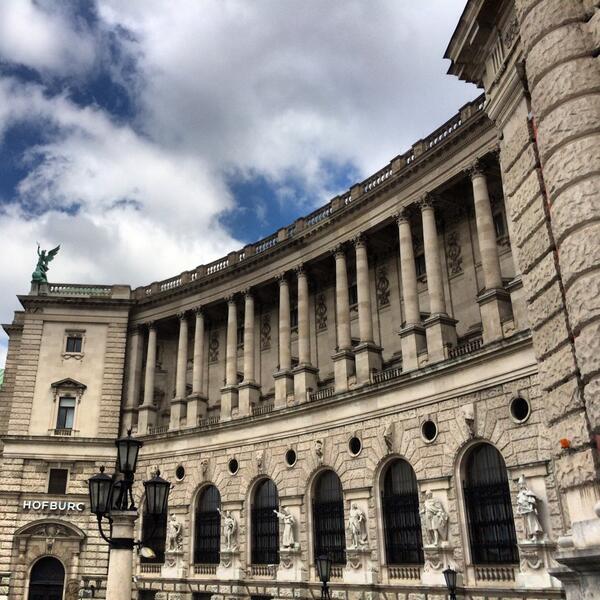
Most of us forget that in the past wealth was usually obtained by the subjugation of others or the theft of their goods. All the elites in the empires of old built their fortunes by taking land, enslaving peasants, and sacking the bounty of wealthy neighbours. Inequality was said to be ordained by God and preserved by blue blood and one’s condition at birth.
Capitalism changed all this.
Now these old places, once the frolicking ground of privilege, are museums and tourist attractions for the pleasure of those of us who in the past would have been vassals; men who have finally become lords not of others but of our own destinies, empowered by capitalism.
Capitalism has allowed people to become tremendously wealthy simply through dedicated service to others. Figure out what they like to eat, what they like to read, what they like to wear, what they like to listen to, how they prefer to spend their vacations, and fulfil their wishes with your best and most ingenious efforts. Make their lives easier and they will gladly and freely hand you tremendous wealth.
This simple idea spurred the industrial revolution which brought the greatest advancement in terms of quality of life in human history. It heralded the building of new empires — empires of the mind that were as powerful and as fragile as each subsequent idea. Empires that required only the voluntary participation of others, built upon service to them. And it created a bounty producing the greatest middle class the world has ever known.
This is the capitalism that those who complain about inequality attack. Not understanding the source of equality, and wealth, they pull a bait and switch by attacking the solution as the problem. And worse, so much worse, those who seek political power to rule — not economic power by service — use the chimera of inequality to justify their power grab. And in doing so, they create yet another nobility. Their cynicism knowing no bounds, they call for a new class of overlords who seek to rule by controlling those “capitalists” who produce. And not content to simply control, they demand the consent of the victim; those men of the mind who are forced to acknowledge that this control is in fact for the public good, because it is the public that must be protected against them — against those who serve.
To be sure this does not mean that things are going swimmingly. The increasingly oligarchical nature of western society, as the economic becomes commingled with the political, is creating such inequalities that it is threatening to return the world to a time of lords and serfs, of nobles and vassals. In other countries the process has already been completed, and the poor have again been permanently cemented in their misery.
Now is the time for the men of courage to stand and carefully explain that the solution to this challenge, like most solutions, comes not from what those who seek political power say, but instead from principles firmly grounded in history and economics. The solution comes not with less capitalism, but with greater freedom, greater creativity, and greater opportunity which are sure to create greater prosperity.
But in order for this to work, we must trust the spontaneous order that governs human interactions and believe that the disaggregated benefits of people seeking to prosper by serving each other will lead to the greater good.
And for those of us who object to falling prey to the chimera of inequality, let it be known that it is not because we are children of privilege. We do not hate the poor. We do not idolise the oligarchies, old or new. It is in fact for the opposite reason that we dissent. Those of us who are not men with loud last names and long lineages know the only way to our own advancement and the alleviation of poverty, and most often the only way we can defend ourselves is our stalwart adherence to the values and institutions of a free society.
Because it is we, more than anybody else, who have everything to lose if we do not.
 Joel D. Hirst is a political analyst, activist and novelist, author of the novel The Lieutenant of San Porfirio (and its Spanish version El Teniente de San Porfirio: Cronica de una Revolucion Bolivariana), and the non-fiction The Alba: Inside Venezuela's Bolivarian Alliance.
He holds a master's degree from Brandeis University and is the cofounder of a consulting firm in Washington, DC. Joel has worked with USAID and World Vision in several countries, including Pakistan, Chad, Kosovo, Honduras, Nicaragua, Democratic Republic of Congo, and Uganda.
This article first appeared at Joel’s blog Blog.JoelHirst.com, and has been reposted from the blog of the PanamPost.