Showing posts with label Bernard Darnton. Show all posts

Monday, 30 September 2019

50 years of climate hysteria


Perhaps one reason older folk are more sanguine about the prospects for our climate future is that we've heard many of the climate scare stories before. We've heard them, and we've noted that they never came to pass ...

  • Demographers agree almost unanimously on the following grim timetable: by 1975 widespread famines will begin in India; these will spread by 1990 to include all of India, Pakistan, China and the Near East, Africa. By the year 2000, or conceivably sooner, South and Central America will exist under famine conditions....By the year 2000, thirty years from now, the entire world, with the exception of Western Europe, North America, and Australia, will be in famine.
    --Peter Gunter, a professor at 
    North Texas State University. Spring 1970 issue of ‘The Living Wilderness.’
  • Scientists have solid experimental and theoretical evidence to support…the following predictions: In a decade, urban dwellers will have to wear gas masks to survive air pollution…by 1985 air pollution will have reduced the amount of sunlight reaching earth by one half….” 
    --‘Life’ Magazine, January 1970
  • Civilization will end within 15 or 30 years unless immediate action is taken against problems facing mankind.--George Wald, Harvard Biologist, Earth Day, 1970
  • It is already too late to avoid mass starvation.
    --Denis Hayes, chief organiser for Earth Day, 1970
  • …some scientists estimate that the world's known supplies of oil, tin, copper, and aluminium will be used up within your lifetime.
    --1990s school textbook The United States and Its People, quoted by Ronald Bailey in testimony to US House Subcommittee on Energy and Mineral Resources, 
    Feb 4, 2004
  • The period of global food security is over. As the demand for food continues to press against supply, inevitably real food prices will rise. The question no longer seems to be whether they will rise, but how much.
    --Worldwatch Institute founder Lester Brown, 1981
  • The world's farmers can no longer be counted on to feed the projected additions to the world's population.-- Worldwatch Institute founder Lester Brown, State of the World Report, 1994
  • The continued rapid cooling of the earth since WWII is in accord with the increase in global air pollution associated with industrialization, mechanization, urbanization and exploding population.
    —Reid Bryson, “Global Ecology; Readings towards a rational strategy for Man”, (1971)
  • The battle to feed humanity is over. In the 1970s, the world will undergo famines. Hundreds of millions of people are going to starve to death in spite of any crash programs embarked upon now. Population control is the only answer.
    —Paul Ehrlich, in The Population Bomb (Ballantine Books 1968)
  • I would take even money that England will not exist in the year 2000.
    —Paul Ehrlich in (1969)
  • In ten years all important animal life in the sea will be extinct. Large areas of coastline will have to be evacuated because of the stench of dead fish.—Paul Ehrlich, Earth Day (1970)
  • Before 1985, mankind will enter a genuine age of scarcity…in which the accessible supplies of many key minerals will be facing depletion.
    —Paul Ehrlich in (1976)
  • Dr. S. Dillon Ripley, secretary of the Smithsonian Institute, believes that in 25 years, somewhere between 75 and 80 percent of all the species of living animals will be extinct.
    --Sen. Gaylord Nelson, 1970
  • There are ominous signs that the earth’s weather patterns have begun to change dramatically and that these changes may portend a drastic decline in food production—with serious political implications for just about every nation on earth. The drop in food production could begin quite soon… The evidence in support of these predictions has now begun to accumulate so massively that meteorologist are hard-pressed to keep up with it… This [cooling] trend will reduce agricultural productivity for the rest of the century.
    --Science writer Peter Gwynne writing in ‘The Cooling World,’ ‘Newsweek’ magazine, April 28, 1975
  • This cooling has already killed hundreds of thousands of people. If it continues and no strong action is taken, it will cause world famine, world chaos and world war, and this could all come about before the year 2000.
    —Lowell Ponte in his book The Cooling, 1976 (which was endorsed by US Senator Claiborne Pell and Bush adviser on global warming Stephen Schneider)
  • At the present rate of nitrogen buildup, it’s only a matter of time before light will be filtered out of the atmosphere and none of our land will be usable... If present trends continue, the world will be about four degrees colder for the global mean temperature in 1990, but eleven degrees colder by the year 2000. … This is about twice what it would take to put us in an ice age.
    —Kenneth E.F. Watt on air pollution and global cooling, speaking on Earth Day 1970. Watt is Editor in Chief, Encyclopaedia of Human Ecology Advisory Board Member, Center for the Study of CO2 and Climate Change
  • By the year 2000, if present trends continue, we will be using up crude oil at such a rate…that there won’t be any more crude oil. You’ll drive up to the pump and say, `Fill ‘er up, buddy,’ and he’ll say, `I am very sorry, there isn’t any.’ 
    -- Kenneth Watt, again
  • Indeed, when we wake up 20 years from now and find that the Atlantic Ocean is just outside Washington, D.C., because the polar icecaps are melting, we may look back at this pivotal election.
    --New York Times foreign affairs columnist Thomas Friedman, writing in NY Times, 
    Dec 8, 2000.
  • Frostban -- a harmless bacteria genetically engineered to protect plants from freezing temperatures -- "could irreversibly affect worldwide climate and precipitation patterns over a long, long period of time.
    -- Founder and president of the Foundation on Economic Trends, Jeremy Rifkin, 1986
  • The economic impact of BIV (Bovine Immunodeficiency Virus) on the beef and dairy industries is likely to be devastating in the years to come.
    --Jeremy Rifkin, Beyond Beef 1992
  • Biotech crops will "run amok"; they will create "super bugs"; they will lead to farmers using "greater quantities of herbicides."
    --Jeremy Rifkin, 1999 
    Boston Globe
  • The use of biotechnology might "risk a fatal interruption of millions of years of evolutionary development? Might not the artificial creation of life spell the end of the natural world? ... cause irreversible damage to the biosphere, making genetic pollution an even greater threat to the planet than nuclear or petrochemical pollution?”
    -- Jeremy Rifkin, The Biotech Century 1999
  • Current estimates that a flu pandemic could infect 20% of the world's population and cause 7.5 million deaths are "among the more optimistic predictions of how the next pandemic might unfold.”
    --
    Osterhaus et al. Nature May 2005
  • The next flu pandemic could kill as many as 150 million people.
    --
    Dr. David Nabarro. WHO spokesman Sept 2005.
  • As many as 142 million people around the world could die if bird flu turns into a "worst case" influenza pandemic and global economic losses could run to $4.4 trillion - the equivalent of wiping out the entire Japanese economy for a year.
    --
    Report entitled Global Macroeconomic Consequences of Pandemic Influenza, from the Lowy Institute in Australia. Feb 2006.
  • The seven atmospheric scientists predict a global warming of ''almost unprecedented magnitude'' in the next century. It might even be sufficient to melt and dislodge the ice cover of West Antarctica, they say, eventually leading to a worldwide rise of 15 to 20 feet in the sea level.
    -- New York Times report, 1981
  • If the current pace of the buildup of these gases continues, the effect is likely to be a warming of 3 to 9 degrees Fahrenheit [between now and] the year 2025 to 2050…. The rise in global temperature is predicted to … caus[e] sea levels to rise by one to four feet by the middle of the next century.”
    — Philip Shabecoff, “Global Warming Has Begun.” New York Times, June 24, 1988.
  • We've got to ... try to ride the global warming issue. Even if the theory of global warming is wrong ... we will be doing the right thing anyway in terms of economic policy and environmental policy.
    --Senator Timothy Wirth, 1988
  • We have to offer up scary scenarios, make simplified, dramatic statements, and make little mention of any doubts we might have. ... Each of us has to decide what the right balance is between being effective and being honest.
    -- environmentalist and presidential adviser, Stephen Schneider, in an interview with Discover magazine, 1989

  • UNITED NATIONS (AP) _ A senior U.N. environmental official says entire nations could be wiped off the face of the Earth by rising sea levels if the global warming trend is not reversed by the year 2000. Coastal flooding and crop failures would create an exodus of ″eco- refugees,′ ′ threatening political chaos, said Noel Brown, director of the New York office of the U.N. Environment Program, or UNEP. He said governments have a 10-year window of opportunity to solve the greenhouse effect before it goes beyond human control. As the warming melts polar icecaps, ocean levels will rise by up to three feet, enough to cover the Maldives and other flat island nations, Brown told The Associated Press in an interview on Wednesday. Coastal regions will be inundated; one-sixth of Bangladesh could be flooded, displacing a fourth of its 90 million people. A fifth of Egypt’s arable land in the Nile Delta would be flooded, cutting off its food supply, according to a joint UNEP and U.S. Environmental Protection Agency study. ″Ecological refugees will become a major concern, and what’s worse is you may find that people can move to drier ground, but the soils and the natural resources may not support life.."
    -- Senior U.N. environmental official, Noel Brown, in 1989

  • [Within] as little as 10 years, the world will be faced with a choice: arable farming either continues to feed the world’s animals or it continues to feed the world’s people. It cannot do both.
  • --environmentalist George Monbiot, writing in The Guardian in 2002
  • On June 23, 1988, NASA scientist James Hansen testified before the House of Representatives that there was a strong "cause and effect relationship" between observed temperatures and human emissions into the atmosphere. At that time, Hansen also produced a model of the future behaviour of the globe’s temperature, which he had turned into a video movie that was heavily shopped in Congress. That model predicted that global temperature between 1988 and 1997 would rise by 0.45°C. Ground-based temperatures from the IPCC show a rise of 0.11°C, or more than four times less than Hansen predicted. The forecast made in 1988 was an astounding failure, and IPCC’s 1990 statement about the realistic nature of these projections was simply wrong.
    --Patrick Michaels testifying before Congress in 2000
  • In a 2007 case on auto emissions, [James Hansen] stated in his deposition that most of Greenland’s ice would soon melt, raising sea levels 23 feet over the course of 100 years. Subsequent research published in Nature magazine on the history of Greenland’s ice cap demonstrated this to be impossible. Much of Greenland’s surface melts every summer, meaning rapid melting might reasonably be expected to occur in a dramatically warming world. But not in the one we live in. The 'Nature' study found only modest ice loss after 6,000 years of much warmer temperatures than human activity could ever sustain. 
  • -- Patrick Michaels summarising another Hansen prediction 
  • We have at most ten years—not ten years to decide upon action, but ten years to alter fundamentally the trajectory of global greenhouse emissions.
    --James Hansen, scaremongering again in 2007 
  • According to Dr David Viner, a senior research scientist at the climatic research unit (CRU) of the University of East Anglia, within a few years winter snowfall will become "a very rare and exciting event” … “Children just aren’t going to know what snow is,” he said.
    -- Independent (UK) report, March, 2000
  • Rising sea levels, desertification and shrinking freshwater supplies will create up to 50 million environmental refugees by the end of the decade...
    -- Janos Bogardi, director of the Institute for Environment and Human Security at the United Nations University in Bonn, 2005
  • The Scottish skiing industry has no more than 20 years left.
    -- 
    Adam Watson, from the Centre for Ecology and Hydrology in Banchory, Aberdeenshire, 2004
  • Unless drastic measures to reduce greenhouse gases are taken within the next 10 years, the world will reach a point of no return, Gore said. He sees the situation as "a true planetary emergency."
    --Al Gore in 2006, promoting his Oscar-winning film called, without irony, The Inconvenient Truth
  • Some of the most memorable images from Al Gore’s movie, An Inconvenient Truth, are the graphics that show how rising ocean levels will dramatically alter our planet’s coastlines. As Greenland’s ice sheets collapse, Gore predicts that our shores will be flooded and sea-bordering cities will sink beneath the water leaving millions of people homeless. His narration tells the audience that, due to global warming, melting ice could release enough water to cause at 20-foot rise in sea level “in the near future.”
    --
    2008 review of Al Gore's 2006 movie
  • More efforts than ever before must be exerted to enable poor countries to prepare for impacts because it had been estimated that there would be between 50 million and 200 million environmental migrants by 2010.
    -- 
     President of the UN General Assembly Srgjan Kerim, opening the General Assembly debate on global warming, 2008
  • In 2020, the UN has projected that we will have 50 million environmental refugees.
    -- University of California, Los Angeles professor Cristina Tirado said at the 2011 meeting of the American Association for the Advancement of Science
  • The Oceans will begin to boil...
    --James Hansen in 2010, on so-called "runaway" global warming
  • In 2007, 2008 and 2009, Gore publicly and very hysterically warned that the North Pole would be ‘ice-free’ by around 2013 because of alleged ‘man-made global warming.’ Citing ‘climate’ experts, the government-funded BBC hyped the mass hysteria, running a now-embarrassing article under the headline: ‘Arctic summers ice-free ‘by 2013’.’ Other establishment media outlets did the same.”
  •  A team of international climate scientists and researchers at NASA claims the Arctic summer will be ice-free in 2013.
    -- report in German online national daily Die Welt

                                     
  • “We’re toast if we don’t get on a very different path,” [said James] Hansen and his fellow scientists [who] saw a tipping point occurring right before their eyes and that the Arctic was melting exactly the way they said it would.. 
     
    Hansen added that the Arctic would be ice-free in 5 to 10 years.
    -- report on James Hansen et al, from June 23, 2008
  • "[The Arctic is] melting at a brutal speed ... 
     
     Already last October I was predicting that the Arctic could be ice-free this summer” and “In August or September we will be seeing people cruising in sailboats up there.
    -- 
     
    researcher Olav Orheim of the Norwegian Research Council, reported in 
    Der Spiegel 
    in 2008
  • Sydney's dams could be dry in as little as two years because global warming was drying up the rains, leaving the city "facing extreme difficulties with water."
    --Tim Flannery, Australian mammalogist, palaeontologist, environmentalist; Australia's leading conservationist, explorer, and global warming activist, speaking to ABC in 2005
  • The water problem is so severe for Adelaide that it may run out of water by early 2009.
    --Tim Flannery, speaking to the ABC, 2008
  • Brisbane will never again have dam-filling rains, as global warming has caused "a 20 per cent decrease in rainfall in some areas" and made the soil too hot, "so even the rain that falls isn't actually going to fill our dams and river systems ... "
    --Flannery again, speaking to the ABC in 2007
  • We only have four years to save the world. If “there’s no action before 2012, that’s too late... What we do in the next two to three years will determine our future. This is the defining moment,” he said.
    --Rajendra Pachauri, the former head of the Intergovernmental Panel on Climate Change, reported in 2007
  • We have hours to act to avert a slow-motion tsunami that could destroy civilization as we know it.. Earth has a long time. Humanity does not. We need to act urgently. We no longer have decades; we have hours. We mark that in Earth Hour on Saturday.
    -- 
    Elizabeth May, leader of the Canadian Greens, writing in 2009
  • Brown warned there was only “50 days to save the world from global warming,” the BBC reported. According to Brown there was “no plan B.”
    -- British Prime Minister Gordon Brown, 2009
  • Capitalism and consumerism have brought the world to the brink of economic and environmental collapse, the Prince of Wales has warned in a grandstand speech which set out his concerns for the future of the planet. The heir to the throne told an audience of industrialists and environmentalists at St James's Palace last night that he had calculated that we have just 96 months left to save the world... Delivering the annual Richard Dimbleby lecture, Charles said that without "coherent financial incentives and disincentives" we have just 96 months to avert "irretrievable climate and ecosystem collapse, and all that goes with it."
    -- Prince Charles in 2009, as reported by The Independent (UK)
  •  Obama’s second term is “the last window of opportunity” to impose policies to restrict fossil fuel use. Wirth said it’s “the last chance we have to get anything approaching 2 degrees Centigrade,” adding that if “we don’t do it now, we are committing the world to a drastically different place.”
    -- United Nations Foundation President Tim Wirth speaking to 'Climatewire' in 2012
  • "Over the past 50 years, southern Australia has lost about 20 per cent of its rainfall, and one cause is almost certainly global warming ... In Adelaide, Sydney and Brisbane, water supplies are so low they need desalinated water urgently, possibly in as little as 18 months."
    --Flannery yet again, speaking in 2007, the year he was named Australian of the Year
  • "We have 500 days to avoid climate chaos.”
    -- French Foreign Minister Lauren Fabius, meeting with John Kerry in 2014

Remember ...


.

Saturday, 16 March 2019

"It is absurd that a man should be ashamed of an inability to defend himself with his limbs, but not ashamed of an inability to defend himself with speech and reason." #QotD


"It is absurd that a man should be ashamed of an inability to defend himself with his limbs, but not ashamed of an inability to defend himself with speech and reason." 
          ~ Aristotle, On Rhetoric 

[Hat tip Bernard Darnton (whose graphic that is above) from his superb presentation 'From Informative to Persuasive']
.


Thursday, 13 December 2012

NOT PJ: One Chance

This week, Bernard Darnton is taking his chances. But not on shopping for handbags.

image“We’ve got one chance to get this right,” is the catch-cry of the Christchurch rebuild. Based on this one sentence it’s easy to conclude: we’re fucked.

If we’ve only got one chance to get it right, the plan needs to be perfect. No person, mayor, or czar, no committee, council, or cabinet can possibly know enough to synthesize the needs and hopes of hundred of thousands of citizens into the perfect city plan. Therefore, the plan won’t be perfect. Therefore, we’re fucked.

A city isn’t a set of drawing, or a spreadsheet. It is an organism. It can’t be planned from the top down; it has to be built from the bottom up, evolving as the result of a million experiments. Much like the robust and varied natural world, a city is the result of generations of trial and error, of failure and improvement. One problem with grand plans is that planners double down on bad bets whereas evolution clears them away and tries something else.

The idea that we’ve only got one chance to get this right is a self-fulfilling prophecy. CERA, the City Council, the Central City Development Unit, don’t have the ability to get it right in one go—no one does. But the plan must be conformed to and if we can’t get it right then, damn it, we’ll just have to get it wrong.

To get an idea of how wrong, you just have to listen to the cheerleaders. Apparently the key to Christchurch’s future economic success is “high-end retail”. Someone has gone round the great cities of the world and decided that what they all have in common are traffic problems and fancy handbag shops, perhaps failing to notice that these are symptoms of economic success, not causes. So Christchurch is going to get narrow, 30 km/h streets and shops selling shiny, brand-named tat.

The plan is to grass over half the city and build small amounts of expensive office space on the rest. The theory is that Christchurch was failing economically before the earthquakes and so if we triple the cost of office space, that will attract “high end tenants.”

For the record, “high end tenants” means outfits like Inland Revenue, which gives you a good idea of where the planners think that money comes from. Never mind, also, that Inland Revenue has signed a nine-year lease on an office out near the airport.

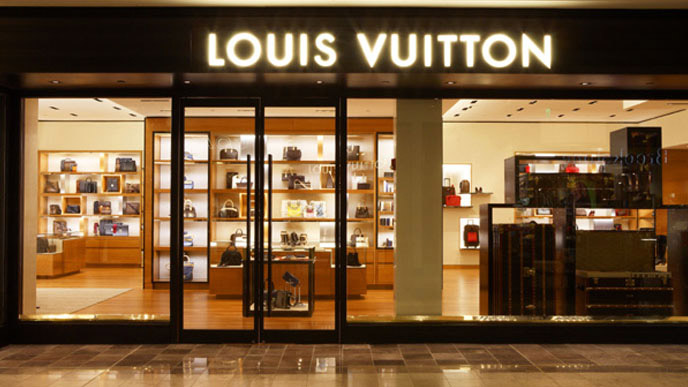
The ground floors of these expensive office buildings will be filled with “high end retail.” Louis Vuitton has been name-dropped. I have no idea if Louis Vuitton has been informed of their critical role in the rebuild. So the fool-proof “one chance” plan for Christchurch’s economic success revolves around Inland Revenue call centre staff spending their lunchtimes buying Louis Vuitton handbags.


Artist’s impression of central Christchurch. (Inland Revenue employees on their lunch hour not shown.)

The citizens of Christchurch would like to thank, in advance, New Zealand’s taxpayers for their unstinting support.

A rare insight into the planner’s mind came to me at a recent party. I suggested that Christchurch’s rebuilding would be clipping along much better if people were allowed to build whatever they liked on their own land. This was unacceptable said the planner because so much time has been put into the planning. If people just did what they wanted to, they might not conform to the plan (!) and then all that effort would be wasted!!

Even armies, who can shoot people who get in the way, understand that no plan survives contact with the enemy.

When I suggested that maybe they could save all that effort by not doing the unwanted planning in the first place, all I got was sputtering. Many good arguments evoke sputtering. “B … B … But … but … then everyone would die of typhoid!!!”

I bowed to my audience and took the win. To be fair, that response probably owed more to excessive alcohol consumption that to departmental policy, but it provides insight. It’s not that far from in vino veritas to in vino dumb-ass.

The planners know that planning is valuable. What they don’t understand is that the plans themselves are useless. The value comes from thinking about the possibilities, not from the mindless execution of the plans (and those who get in the way).

If Christchurch is only given one chance to get to get it right, the city will die.

If the plan is to build a “high-end” cargo cult and hope that wealth appears magically over the horizon, we will be miserably disappointed.

Christchurch doesn’t need one chance, it needs a thousand chances. It needs CERA and the CCDU, who have suffocated the city for two years, to make way for the thousands of individuals who will experiment, and iterate, and evolve the city into something marvellous._BernardDarnton

* * * * *

Bernard Darnton is Not PJ O’Rourke, but you can’t blame him for that.
Read his other posts here.

Thursday, 14 July 2011

NOT PJ: The Labour of Subdivision

_BernardDarntonThis week Bernard Darnton looks for a new house and discovers that Christchurch is a handyman's dream.

People think I’m mad to be looking for a house in Christchurch at the moment. But the entire property market’s just been thrown up in the air - literally - and it might be possible to grab a bargain from a “motivated vendor.”

We looked at a property that may meet that criterion over the weekend. It has large rooms, plenty of outside space, and fields either side. It’s zoned “Rural 5” and the barbeque area has a serene country outlook, populated by a few happy lambs.

CaptureCloser inspection of the District Plan reveals that “Rural 5” is whimsically nicknamed “Airport Influences”. If there’s one thing I like more than serenity it’s being on the final approach for lumbering military transports returning from Antarctica.

I reckon it’s a reminder of man’s ability to build lumbering military transports that return from Antarctica.

I have nothing but gobsmacked admiration for the extraordinary, distorted-reality world-view of real estate agents. I cannot imagine matching the incredible heights of optimism they reach, where it’s always sunny and the air’s a bit thin. One place we looked at fronted onto State Highway 1. When I expressed some concern about ever being able to get in or out of the driveway, the agent told me that the good news was that the road was being widened from two lanes to four, which would make access easier because I’d have more lanes to choose from.
Apparently there has never been a better time to buy. In fact, we should buy every property we look at - right now. According to one agent, I absolutely have to buy a place in the next month because after that all the houses in the red zone are going to be demolished and the government is going to tip hundreds of millions of dollars into the property market. I’ll be competing with ten thousand other people for every sale.

Fortunately, I am also counter-assured by Christchurch’s silky-tongued mayor Bob Parker that there’s nothing to worry about because there are 20,000 sections around Christchurch ready to be built on. Well, almost 20,000. Almost ready. By “20,000” he means maybe up to 10,000. At a push. And by “almost ready” he means stuck in an endless loop of consents, notifications, objections, consultations, hearings, and reports.

Even where development is almost certain to occur there are still conditions to be met. And often those conditions are conditions the developers can’t meet because they’re waiting for - guess who - the council. The Prestons Road development can’t go ahead until a new sewer main is built - a council job. Part of Wigram Skies is waiting on the completion of the Western Interceptor (another sewer line) and the Southern Corridor (a road). These last two are at least under construction. Other developments are frozen in similar states.

Even when the critical infrastructure eventually comes into existence, the council forces developers to develop things that nobody wants. Zoning rules set a minimum density for new developments meaning that, for every 600 square metre section that somebody wants, developers also have to provide a 300 square metre section that’s much harder to sell. It’s deeply unfashionable for chickens to live too close together but allowing humans free range in the suburbs is a no-no.

The question of whether my house-buying plans are thwarted by displaced hordes from the Eastern suburbs probably comes down to two things. First: who has the slower bureaucracy? Central government, with it’s red zone payout? Or the city council, with its tortuous consents process? And second, will Roger Sutton, CEO of CERA, use his awesome powers to slash through Christchurch’s Gordian knot of red tape and open up new lands?

We know the demand is coming. Will there be any supply?

Read Bernard Darnton’s column every week here at NOT PC. Except when you can’t.

Friday, 25 February 2011

NOT PJ: Quake II

0vZbDPhoto by EJ Mathers 

Bernard Darnton was in the centre of Christchurch on Tuesday lunchtime. Here's his story.

_BernardDarnton“Guess the Magnitude” has become an office sport in Christchurch, with four thousand aftershocks  over the last six months—hundreds big enough to feel. Many of us had got quite blasé about aftershocks. They just become a part of daily life. Wobble. Was that one? Maybe a three point eight. Rattle. Could have been a four point five.

On Tuesday lunchtime I was in Pak ‘n Save on the corner of Moorhouse Avenue and Manchester Street. There was a rattle and I looked at the pallets stacked metres into the air. I walked round to the end of the aisle without real urgency. We get a magnitude five aftershock about once a month and were due one after Boxing Day and January 20th. No big deal. The shaking intensified and produce cascaded off the shelves.

My one “flashbulb” memory of the September 4th earthquake is running into my daughter’s room, screaming her name, and hitting the light switch. The light was on for less than a second before we lost power. In that moment of light the door frame leapt into me and the books exploded off the bookshelf into the middle of her room.

In contrast, on Tuesday a lot of produce came off the shelves but it shook and tumbled like objects that still obey the laws of physics. The alarms wailed and we dutifully strolled out of the building.
Outside it became more obvious that this had been a bigger than normal aftershock. Earthquakes do strange things to soft ground. The ground turns to liquid and sloshes around and then it solidifies again and the waves remain frozen in place. The tarmac had been ripped up and the pieces shoved around. The tectonic forces unleashed were writ tiny in the car park.

Bewilderment struck me as I stepped into Manchester Street. I was on a movie set, in the Blitz, a dream. I walked down the centre line of the road to avoid falling masonry and still had to pick my way through rubble. Every single building—as far as my fallible, malleable memory can tell me—was destroyed. Awnings and façades spilled into an ocean of bricks, concrete, and timber. The only spaces free of rubble were the sites of buildings demolished since September.

Crowds gathered around crushed cars and used makeshift tools to shift tonnes of debris. I joined one group and ripped the windscreen out of a car. I grabbed a piece of collapsed veranda to help lever the roof off. After a few moments of spontaneous, undirected teamwork a dog climbed out of the tiny gap. Behind me cheers went up as a woman was pulled free from another car.

I think your mind protects you in times of shock by not working properly. The landscape and skyline had changed so dramatically in just a few seconds that things didn’t quite register. I looked down one street and thought it looked odd. It was like when my wife gets a new haircut. I know something’s different but I don’t know what. Then it struck me: Oh shit … no cathedral.

I crossed the Avon, swirling with water from burst mains and the grey liquefied earth we all now recognise. The pancaked Pyne Gould building made it obvious that it wasn’t just the pre-1931 buildings, so badly affected in September, that had suffered this time.

I trudged the length of Manchester Street home to St Albans through rubble and sewage, my awesome blue pimping shoes from Maher ruined.

My street was flooded, our garden was full of sand, and our conservatory had moved two centimetres away from the back of the house. A friend texted to check that I was OK and tell me that the quake was a 6.3. In my daze, I thought, “That’s not so bad then,” as if 6.3 being less than 7.1 somehow made up for the destroyed business district, the missing cathedral, and the unknown number of crushed bodies I had just walked past.

The mood after the September quake was strangely upbeat. Despite the massive property damage, the lack of casualties allowed us to think of it as a bit of a jape. Having gone through it marked the insiders from the outsiders. Surviving the disaster—as everyone did—was a badge of honour and gave bragging rights.

Today the mood is sombre. The heart of the city is gone and its spirit is flagging. The names of the dead are not yet known and terrible days beckon as temporary tombs reveal their secrets.

Bernard Darnton is not PJ O’Rourke, but he writes regularly for Not PC nonetheless.
Read his archives here.

Wednesday, 29 December 2010

NOT PJ: Good Riddance 2010


_BernardDarnton This week Bernard Darnton raises his last unbroken champagne glass to welcome in the New Year.


2010’s been a bit of a crap year so it’s time for a new one.


Things for me started off fine having the New Year at my parents’ place in England. It was the first time our whole family had been in the same room for five years and the first time that my parents had been in the same room as all their grandchildren ever.


Outside, Britain was in the grip of the worst winter in 30 years. (Now the second worst winter in 30 years.) We escaped shortly before Heathrow closed. The warmth of Singapore was a welcome relief except for the small matter of a toddler who immediately fell sick, couldn’t stand the heat, and didn’t understand time zones. As I have mentioned elsewhere, anyone considering travelling with a toddler should be compulsorily assessed and treated under the Mental Health Act.


From the literal blizzard of an English January I landed back into a metaphorical blizzard of work. Those who work in the software industry will know what a “death march” project is. Those who know about the Japanese occupation of the Philippines during World War II will know what an actual “death march” is. A death march in the software business is a project that’s a bit like the endless overworking of prisoners during the war except without the apology from the Japanese government afterwards.


Eventually I thought “bugger this for a game of soldiers” and left. I was in the middle of sorting out my new job when the house moved four metres closer to Darfield and the contents of my bookshelves and liquor cabinet moved two metres closer to the ground.


Fortunately my only injury from the Canterbury earthquake was a slap to the head as I realised we’d abandoned the water bottles, gas cylinder and aging tins of peaches in Wellington when we shifted down last year. It was comforting to turn on my hand-cranked radio that morning and discover that John Key was immediately flying down to show solidarity with the people of Christchurch. I assume he was crapping in a plastic bag like the rest of us.


As if the most expensive natural disaster in New Zealand history wasn’t enough, the Pike River coal mine was rocked a few weeks later by New Zealand’s worst accident since Erebus.


The year will also be remembered by friends who lost parents or, worse, children. Of course, things like this happen every year - and there were also a year’s worth of births and weddings - but some years are remembered for their highlights and some for their lowlights. 2010 was the year of the Canterbury earthquake and Pike River.


With only a few days of 2010 left, it’s time to yell out a hearty “Good Riddance,” raise the last unbroken champagne glass, and cheer in 2011 with gusto. New Year is my favourite holiday. I have no interest in deities, royalty, or trade unions so all but two of our public holidays mean nothing to me.


Anzac Day is a day for solemn reflection on the past—a day to remember not only that our freedoms were bought at great expense but also to consider, with lottery-winner’s disbelief, that someone else picked up the tab.


New Year is a day to look forward to the future—a day to seize and to say, no matter what happened last year, that this year’s pages have not yet been written. And to resolve to write those pages.


Last year’s mistakes and disasters belong to last year. They can be learned from. Last year’s successes belong to last year, too, and they can be built on. Above all, New Year is a reminder that today can be better than yesterday and that each of us has the ability to make it so. What better reason to celebrate?


* * Read Bernard Darnton’s column at NOT PC every week between glasses * *

Monday, 15 February 2010

On Travelling with a Toddler

[A guest post by Bernard Darnton, last seen here several months ago as Not PJ. He disappeared overseas for several weeks last year and finally feels ready to talk about it.]

Motivation

Our motives for displacing our eighteen-month-old daughter and hauling her around the world for several weeks were sincere. We wanted her to share a Christmas with her English grandparents. We wanted her to meet her English cousins for the first time. We want her to become a well-rounded, well-travelled child comfortable with the food, the customs, and the multi-lingual babble that animate our planet.
So enamoured were we with our motives that we failed to realise that every expression of good intent laid a cobblestone on the road to hell.

Flying a Long Way

Spiritually, Christchurch is as close to England as it's possible to get. Physically, you need to venture to an icy sub-Antarctic outcrop inhabited only by seabirds and conservationists to get further away.
Traversing that vast physical gulf requires crossing into the unreal conveyor-belt world of mass international travel, each step mediated by a passport, a departure card, or a boarding pass. The first step on the conveyor belt is the Singapore Airlines check-in desk bearing a paper slip encrypted with the abbreviated details of airport codes and seat classes.
Singapore Airlines is the enormous beating heart of a tiny island nation. Aircraft stand at the gates of Changi, wingtip to wingtip, together for a few brief moments. A heart beat later they will be spread across the globe, arteries stretching from Christchurch to Rome. A second beat and they will have returned, carrying the human corpuscles that bring oxygen to Singapore's tourist economy.
But a heart beat for an international leviathan is an eternity to a toddler. An adult can pass the time by exercising or dulling the mind. Looking at a flat projection of the continents and guessing the Great Circle path; imagining the topographically and politically induced deviations from that route; then flagging down the drinks trolley for another dose of VSOP. To the toddler there are no such diversions. With a ten-minute attention span and carry-on baggage cruelly limited to seven kilograms, even a Saint Nicoline sack of never-before-seen goodies stands no chance of filling the temporal chasm that awaits.
Meal times provide a welcome relief from the tedium but a child on one knee and a meal tray on the other instigates an unwinnable game of whack-a-mole.
In the pure and orderly world of mathematics, small children only have two hands. However, small children do not inhabit a pure and orderly world. One hand grabs a knife, one lunges for the fork. Another hand pokes its fingers into the individual serving of strawberry jam, while yet another tightly grasps an explosively pressurised thimble of milk, whose tiny dimensions belie the quantity of fluid it contains.
Between meals the reading light winks, seemingly at random, and we are repeatedly visited by flight attendants inadvertently called by those same exploratory hands.
One of the less noble motivations for travelling with a toddler is the steeply discounted ticket price for under-twos. A thousand-and-one times during the interminable flight I wished that my wallet had been prized open wide enough to accommodate an extra seat but, in reality, the extravagance would have been wasted because the familiar contours of a parent will always be more attractive than a mostly empty airline seat. For the parent whose contours have been favoured, the ever changing contours of the child mark the passage of time as the nanoseconds slip into microseconds and the plane inches its way across the map.
Then, suddenly, unexpectedly, it's over, like an executive pardon to the condemned prisoner expecting a death warrant. Gears whine to extend the flaps as the wings clutch at the slowing air, the scale model world below undergoes a phase change back into real landscape, and finally we feel the welcome shudder as our aluminium cocoon once again becomes land-borne.

Sleep

Displacement alters a toddler’s sleeping habits. Away from the familiar cot, the familiar blanket, and the familiar shelf of toys, what remains is the family. From the foreign environment of the hastily-erected travel cot, our bed looks like the Promised Land. Out of consideration for our hosts’ eardrums we become indulgent parents.
For an adult, the act of going to sleep involves snuggling into a comfortable position, stilling the body and calming the mind. For a toddler it is a task more akin to breakdancing as she explores all possible orientations in a wide-ranging search for a preferred sleeping position. If she eventually settles on an alignment compatible with her parents', some minutes or – luxuriously – hours of sleep may be had before the exploration resumes.
At a certain point it becomes futile to continue the quest for sleep. In that tired wakefulness the hours crawl by, neither opening nor closing my eyes provides any respite from the infinite darkness of the never-ending night.

Illness

Biologists have a simple word to describe the ecological role fulfilled by small children: “vector”. They succumb to illness with wearying regularity and inopportune timing. For a child sickened by the stresses of unchosen travel, Rome is not a place to absorb the faded glory of a once-great empire; it is a place for recuperation and copious laundry.
My once indefatigable immune system, without a non-self-inflicted sick day in ten years of childlessness, also submits to the disease incubated in our midst. Viral legions besiege my organs and begin their sack. They are defeated but not without heavy collateral damage to the itinerary. The cultural experience has become a sightseer’s checklist.

Becoming a Philistine

A toddler's timetable is not tuned to the contemplation of priceless and ancient works of art. The Vatican Museum is home to millennia-worth of craftsmanship and plunder. Any of its numerous galleries would reward a lifetime of study. Or a day trip for those in a hurry. But with all clocks set to toddler time Giotto, Caravaggio, and da Vinci hold no interest.
The Egyptian room, packed with three-thousand-year-old treasures, is skimmed. Raphael, the Etruscans, the ancient Greeks, and the early Christians are passed over completely. The cartographic room, home to ancient and medieval maps of the known world and imaginings of the rest, a place where the previous childless I would have spent hours, barely noticed. Given the chance to see the world through the eyes of the wise men of a different time and place, I chose to see nothing. A quick glance at the ceiling, a second glance to hunt for a familiar landmark. Sistine Chapel. Done. And all in time for the day's primary goal, the afternoon nap.
I only wonder what the rest of those stampeding through at the same pace had to do so desperately at one o'clock.
The Castel Sant'Angelo is a medieval fortress, situated on the banks of the River Tiber, enclosing the mausoleum of the emperor Hadrian. During our week in Rome we visited Sant'Angelo four times – not because of the magnificence of the fortress and its approaches, nor because of the importance of Hadrian, but because its surrounding park contains a children's playground with swings, a rocking dolphin, and a slide.
The mysteries of Hadrian's tomb and the castel remain mysteries but the playground is well-trodden territory because swinging on the swings was one of the few holiday activities that made our young charge genuinely happy rather than inducing her to mere tolerance or simple sleep.

Serving as a Warning to Others

It is said that we all have a purpose in life. It is quipped that some people’s purpose is to serve as a warning to the rest of us. Or should that now be: the rest of you. Do not be seduced by the ten percent airfares. Do not be cajoled by distant grandparents; let them come to you. Do not be persuaded by images of foolhardy parents carrying their infants on treks along the Silk Road or through the Vietnamese highlands. It can be done. But it shouldn’t be.
The preceding catalogue presents one side of the story. On the other side, we have indelible memories of faraway places. We have visited places that most people will never see. We briefly reunited a family separated by continents. But would it have hurt to wait a couple of years until our daughter could tell us what she thought of the whole imprudent idea?

Thursday, 2 July 2009

NOT PJ: Form Fights Function

_BernardDarntonThis week Bernard Darnton pretends to get all fired up.

For millennia people have gazed into the fire and pondered. I ponder why we went to all the effort of inventing gas fires only to put fake ceramic logs in them.

The flame effect gas fires aren’t quite as naff as the “flame effect” bar heaters with the red lightbulb and rotating tin foil in the back that I remember from my childhood, but it’s still an odd thing to do.

Gazing into the flames, I realise that the attraction is gazing into the flames. But what irks me is that those flames come at a hefty price, namely that they stop the heater from heating anything. In technical terms: blue flames are hot, orange flames are not.

Fake-log gas fires aren’t quite as inefficient as real open fires but they’re as bad as you get down here, with Environment Canterbury (that’s marketing bollocks for “Canterbury Regional Council”) banning wood fires. They may be inefficient but it’s unfortunately rare to run into an old mate down at the pub who has a trailer-load of old electricity going spare.

Fire Our previous house had a much better gas heater. It wasn’t much to look at but it chucked out the heat like a Syrian nuclear reactor during an Israeli Air Force visit. Sadly, that house was afflicted by the fake log heater’s cultural cousin, the light fitting shaped like a candlestick, with all those little lightbulbs shaped like flames. Seriously – what sort of befuddled Jim Anderton think-alike looks at a lightbulb and says, “Bloody Thomas Edison. I wish we could go back to candles.”

A thing should do what it does well and good design should enhance that, not counter or cripple it. So many things are backwards-looking, ill thought out, or come from Korea and play silly tinkly tunes the moment they do anything, looking for praise like an attention deficient child, that it’s an absolute joy to see, hear, or touch something that has been well designed.

ipod-new However, even things that are famous for their great design have failings. My iPod for example: it has this desire to “shuffle” the tracks it plays, i.e. play them in whatever order it feels like. This is great if you just want music as background noise but it’s a pain in the arse when you’re listening to Teach Yourself Italian lessons. One moment you’re stumbling through “buongiorno!” and “arrivederci!” and the next moment all hell breaks loose: Nel mezzo del cammin di nostra vita mi ritrovai per una selva oscura che la diritta via era smarrita. You what? You’re not the only one who’s lost.

For all the iPod’s cleverness in only having one button it could do with another “just do what I bloody expect you to” button.

Actually, the iPod design should stay just as it is otherwise it would end up looking like every other cheap knock-off MP3 player that needs a space shuttle licence to drive it. But you can’t please everyone all the time. Especially not grumpy buggers who like to rant about how crap everything is just to stay warm. If only I could download a flame effect program from the iPhone App Store…

* * Read Bernard Darnton’s column every Thursday here at NOT PC * *

Thursday, 25 June 2009

NOT PJ: If you’re hapu and you know it

This week Bernard Darnton examines the cheques and balances in the immigration industry.
_BernardDarnton
While the pace of nationalisation has slowed, it doesn’t look as if anything will get sold any time soon. The previous government may have believed in state ownership of the means of production (if by some fantastic leap of imagination you can call the railways productive) but it’s not clear what the current government believes in.

If you want to see any privatisation in a hurry you’re going to have to do it yourself. That’s the path taken by Gerard Otimi, tracked down by a self-congratulatory TV news crew selling fake visas to overstayers. While the real immigration service is beset by long queues and incompetent staff, Otimi’s rubber-stamp operation was quick and efficient. $500 bought you a passport stamp and the dubious protection of Otimi’s hapu, no questions asked. No doubt one of the missing articles of the Treaty of Waitangi would make it all clear.

Thursday, 18 June 2009

NOT PJ: A Report into the Costs of Harmful Economic and Other Social Policy Analysis

The government’s pet analysts at BERL will be needing a stiff drink, says Bernard Darnton, after being eviscerated by Not PC reader (and Canterbury University economist) Eric Crampton.

Alcohol was on the menu at a Law Commission breakfast in March, when Geoffrey Palmer floated the idea of yet more government busy-bodying and higher taxes based on a report on the social costs of alcohol conducted by economic analysts BERL at the behest of the Ministry of Health and ACC.

The BERL report estimated the social costs of alcohol – whatever that might mean – at $4.79 billion. That’s a significant fraction of the New Zealand economy that’s supposedly missing or broken because we’re all too hungover to go to work and drunks keep breaking windows and each other’s bones.

I’d be the first to admit to occasionally having such a good time that I forgot to go to work the next day. Sadly the work I missed didn’t just evaporate like evanescent sambuca flames; I just had to catch up later. No lost productivity there (bugger it). Likewise, health costs: Anyone who’s been into Dunedin Hospital’s Accident and Emergency department on a Friday night knows that there are no health costs. You get given a 12-cent photocopy of a leaflet called “So You Think You’ve Broken Your Nose” and told to bugger off.

The analysts at BERL, however, won’t accept my reminiscences as a valid criticism of their cost/benefit analysis. Fortunate, then, that Canterbury University economist Dr Eric Crampton has helpfully produced an arse/elbow analysis of their report.

Economists’ language is usually dry – dryer than Charles’s eyes at Diana’s funeral – but Dr Crampton and collaborator Matt Burgess have trouble restraining themselves. BERL’s estimates of costs are “grossly exaggerated.” They use a “bizarre methodology” and make “very strange assumptions … without any reason or evidence.”

Translating from Academic into English, this is saying that they’re mad. Batshit Crazy. Crazier. Crazier than the shit of vampire bats who’ve been feeding on mad cows and rabid dogs. He’s saying that to believe their conclusions you’d need to have lost more marbles than the Greek Antiquities Commission.

One of the subtle methodological flaws that Crampton and Burgess pick up is that the cost/benefit analysis contains no benefit analysis. My favourite paragraphs in academic papers are the ones that begin, “Astonishingly, …”

The BERL economists assume that anyone who consumes more than two drinks in a session (not that they ever use the word “session”) is irrational and derives no pleasure or other benefit from this activity. Remind me never to go to the BERL Christmas party.

Of course alcohol has benefits – otherwise I wouldn’t buy it. And I buy loads of it so the benefits must be huge. This column, for example. Then there are the sensuous pleasures: the earthy bouquet of a Central Otago pinot noir, the perfectly balanced palate of a Gisborne chardonnay. And don’t forget the immense pleasure to be had masturbating in public – verbally of course, about the earthy bouquets of Central Otago pinots and perfectly balanced palates of Gisborne chardonnays.

Dr Crampton’s critique goes on to dissect the haphazard accounting, the bad economics, the frequent use of misleading language, the lack of transparency in calculations, and many other crimes against logic committed by the report’s authors. He struggles to keep a straight face while referencing Karl Marx (“students of economic history will recognise … a theory discredited”) to explain some of BERL’s reasoning.

He goes on to point out the vast mass of literature on the subject that BERL completely overlooked, presumably because they didn’t look in any actual economic journals, instead copying a similar study done in Australia – one panned for the same faults. The authors of the Australian study that this one was based on were then called in to provide an “independent” peer review. (Apparently they thought it was smashing – “couldn’t have put it better myself.”)

Dr Crampton advises in his accompanying press release that “the Law Commission should give no weight at all to the findings in the BERL report.”

If Crampton and Burgess are anywhere close to right, this report is so shoddy that the only excuse could be that its authors were drunk.

The only non-sinister excuse, that is. Conclude Crampton and Burgess: “A year-long study commissioned by the Ministry of Health and the ACC at a cost of over $135,000 must surely have some purpose. We leave it to readers to consider what that purpose might be.”

* * Read Bernard Darnton’s column every Thursday here at NOT PC * *

Friday, 12 June 2009

Dear prudence – where have you gone?

So John Key cynically cancelled your tax cuts in this year’s budget, which in 2010 would have only needed $98 million to fund, but he’s still happy to carry on spending your money at a rate that would make Michael Cullen envious.

Prudence, thy name is not John.

John Boy’s latest promise – which comes on top of  the $300 million extra to insulate other people’s houses, $550 million on setting up an emissions trading scam, and a $4.3 billion increase in “core government spending”– oh, and $50 million for a bloody cycle path – is to spend at least $120 million of your money on a “party central” in downtown Auckland for the Rugby World Cup.  To quote Bernard Darnton, that’s $120 million plus cock ups.  On top of the $240million (plus cock ups) we’re spending on upgrading Eden Park, it’s beginning to make me wish that Australia had got the Rugby World Cup instead.

The Herald reports this sum is to be divided around 20-80 between taxpayers and long-suffering Auckland city ratepayers, who are already on the hook for $60 million of feel-good Rugby World Cup nonsense, and for interest payment on a $270 million loan taken out by the council because it couldn’t be bothered to cut its spending.

And John Key calls this development “of national and international importance” – which rather begs the question, doesn’t it.  In fact, three questions.  Important to whom. How does he know?  And if it’s so gosh-darned important to them, then why don’t they pay for it themselves instead of sending us the bill.

Here’s the Beatles:

Thursday, 11 June 2009

NOT PJ: A New Species of Nonsense

This week Bernard Darnton shows you how to stay healthy and save the planet by sitting on your arse and eating ice cream.

_BernardDarnton A new species of TV has been born. This is good because I was sick of all my TVs interbreeding and leaving their bizarre mongrel offspring all over the place. Speciation will at least keep the living room a bit tidier.

This puffery is promoting the new LED televisions from Samsung, which are apparently vastly better than LCD televisions by virtue of, umm, having an E instead of a C. There may be more to it than that but it’s probably enough to get you a job on the shop floor at the sort of place that allegedly specialises in these things.

Digging deeper, the number one selling point of these new wonder-televisions is that they use less power than their now-commonplace LCD cousins. (Cousins of a different species that is. Best not to ask grandma about that one.)

So how much money are you going to save on your power bill? The LCD TV uses about 180 watts of power; the new shiny one uses 107. Even at the scandalous rates I get charged that’s a saving of one-and-three-quarter cents an hour.

But it’s not about the money; it’s about the planet isn’t it? You’re still not saving much. Even with economies of scale and using third-world slave labour you can kill bugger all polar bears for one-and-three-quarter cents.

The kicker is that, at $6499, the new 46-inch TV costs $2800 more than its technologically ever-so-slightly-challenged sibling. (Sibling of a different species of course but don’t you dare talk about its mother like that.)

So, averaging four hours of television per day – I can’t imagine why you’d watch four hours of television per day but apparently that’s the average and, hey, whatever lights your candle – watching four hours of television per day your new TV will pay for itself in power savings in 109 years. I believe the technical term for this kind of advertising is “greenwash.”

While you’re watching your new bloody great big shiny planet-saving TV you should tuck into some nice healthy ice cream and lollies. Marshmallows and those jelly snake things are 99% fat free, sugar not being fat, you see. Ice cream is calcium made fun – health food in fact.

Advertisements for chocolate biscuits now give some unlikely-sounding explanation of how chocolate contains iron and that iron is essential for children’s brain growth. And if you think that’s a good reason to eat chocolate biscuits you could probably use some brain growth.

Don’t get me wrong. I’m not trying to nag you about your food. I’m certainly not going to deny myself. When some smug little tosser in a coffee shop says that all their coffees are made with trim milk unless otherwise requested, I yell back, “Milk is just fat dissolved in water you arrogant, malnourished twat. If you take out the fat it’s just bloody water isn’t it, so what’s the point?”

Manufacturers of products that bring pleasure to people should be proud of that fact. Don’t tell us to buy chocolate because it contains however many milligrams of manganese. Tell us that it tastes good, that it feels good when it melts in your mouth, that it’s a little foil-covered nugget of joy.

Likewise, a sharper, blacker, slimmer television is a celebration of technology, a portal into humanity’s finest artistic, sporting, and scientific endeavours (and Shortland Street, but there’s no accounting for taste).

The people who make these things should be proud of their ability to improve our lives. You shouldn’t have to hide that.

* * Read Bernard Darnton’s column every Thursday here at NOT PC * *

Tuesday, 9 June 2009

Quote of the day: Bernard Darnton

FIELDAYS-AGWposters

We’ll have this poster up at the Libertarianz stand down at Fieldays, starting tomorrow.  Keep an eye out for it, and call in and say “Hi!”

Thursday, 4 June 2009

NOT PJ: Worth-less

If Richard Worth can be fired for allegedly not leaving someone alone, asks Bernard Darnton, then why do we still have a Cabinet?

_BernardDarnton Yesterday morning the Prime Minister announced that his government was officially worthless. Richard Worth-less, but a good start nonetheless.

No one will yet say exactly what it is that Worth may (or may not) have done but the innuendo is that it’s something lecherous. There have been mutterings about “inappropriate behaviour” and “unwanted attention towards women.”

It’s odd that he should be fired for that. All of us are the objects of government ministers’ unwanted attention. For most of them it’s their bloody job.

Ministers for Labour, Food Safety, Customs, Internal Affairs, Building, Infrastructure, Sport, the Environment, and all sorts of other crap are all unwantedly attending to me. John Key promised that the Revenue Minister would be reducing his unwanted attentions slightly but I still find his wandering hands on every pay slip.

And that’s why I care more that this government is worthless than that it’s Worth-less. Because whatever it is that Worth may (or may not) have done it probably pales against the scale of damage done by a government trying to spend its way out of poverty - a government that is only getting more attentive.

After all the post-election hoopla about getting rid of the nannying socialists – and I admit I hummed a little tune from The Wizard of Oz that night – we ended up with more nannying socialists. Nothing changes.

In fact nothing has changed for millennia. Pericles had it right 2,400 years ago when he warned, “You may not be interested in politics, but politics is interested in you.”

Many libertarians are involved in politics not because we enjoy the game of politics but as an act of self-defence. If I could reduce the sphere of politics, maybe it would pay less unwanted attention to me, and then I wouldn’t have to be interested in politics.

I suspect the reason that I don’t see eye-to-eye with the dead-rat-swallowing cheerleaders for the current government –many of whom should know better – is that they don’t share that distaste for politics.

Politics should be a means to an end. A good end might be, say, promoting human freedom – just off the top of my head. Politics may be one tool towards that goal.

If politics becomes an end in itself you start believing that convincing people that freedom is good is too hard. Better to hide your intentions, don’t let voters know just how free you want them to be, and sneak into power. And then with that power you can … continue to hide your original intentions and evade the difficult questions so that you can remain in power.

If this is Act’s current strategy, steps one and two are working brilliantly. No one observing them would divine the secret plan to unshackle us. The question is: what’s step three? Will they do something useful or will they keep propping up the orthodoxy so that they can retain power so that they can keep propping up the orthodoxy so that they can retain power so…

How many rats do you have to swallow before you become a rat?

* * Read Bernard Darnton’s column every Thursday here at NOT PC * *