Showing posts with label Industrial Revolution. Show all posts

Friday, 26 June 2026

Lies, Damn Lies, and the History of Capitalism

Modern historians have rarely told the truth about the history of capitalism, especially about the early days of the Industrial Revolution. In this Guest Post, Wanjiru Njoya reckons it's time to set the record straight...
Lies, Damn Lies, and the History of Capitalism
by Wanjiru Njoya

Mark Twain popularised the phrase, “There are three kinds of lies: lies, damn lies, and statistics.” It could equally well be adapted to depict the role of socialist narratives taught as “history”—narratives that wreak even more economic havoc than outright lies. Lies can be debunked with facts, but socialist narratives appeal to political and moral ideologies that are less easily dislodged once they take root.

The socialist view of economic history teaches that capitalism is based on exploiting the poor. It alleges that Western nations are rich due to colonising the Third World. As the economist Peter Bauer observed:
The principal assumption behind the idea of Western responsibility for Third World poverty is that the prosperity of individuals and societies generally reflects the exploitation of others.
The industrial revolution is said to have been powered by theft from poor countries, with white nations acquiring wealth by subjugating other races. Bauer details the essential facts proving these beliefs to be false. He also identifies some of the reasons why these types of anti-capitalist narratives are so influential, arguing that “acceptance of emphatic routine allegations that the West is responsible for Third World poverty reflects and reinforces Western feelings of guilt.”

These guilt narratives, which masquerade as “historical facts,” are more pernicious and more difficult to defeat than blatant lies because, much like statistics, they are assumed to be objective and factual—even when they bear no relationship to the truth. Bauer describes them as “not only untrue, but more nearly the opposite of the truth.”

These myths have fed the prevailing tendency to view “capitalism” as a catch-all phrase denoting cruelty to the less fortunate. In his book Capitalism and the Historians, Hayek explains that this hostile view of capitalism is based on false history:
Who has not heard of the “horrors of early capitalism” and gained the impression that the advent of this system brought untold new suffering to large classes who before were tolerably content and comfortable? We might justly hold in disrepute a system to which the blame attached that even for a time it worsened the position of the poorest and most numerous class of the population. The widespread emotional aversion to “capitalism” is closely connected with this belief that the undeniable growth of wealth which the competitive order has produced was purchased at the price of depressing the standard of life of the weakest elements of society.
That this was the case was at one time indeed widely taught by economic historians.

Hayek argued that despite the “thorough refutation of this belief,” it has not lost its influence—“Yet, a generation after the controversy has been decided, popular opinion still continues as though the older belief had been true.” He warned that this “socialist interpretation of history,” and in particular economic history, had “governed political thinking for the last two or three generations.” Like Bauer, he emphasised that it has no basis in truth:
Most people would be greatly surprised to learn that most of what they believe about these subjects are not safely established facts but myths, launched from political motifs and then spread by people of good will into whose general beliefs they fitted. . . most of what is commonly believed on these questions, not merely by radicals but also by many conservatives, is not history but political legend.
These political legends are depicted as merely descriptive of historical reality. Hayek attributed this in part to the claim of some historians to be objective:
One reason for this probably is the pretension of many modern historians to be purely scientific and completely free from all political prejudice. . . . There is indeed no legitimate reason why, in answering questions of fact, historians of different political opinions should not be able to agree. But at the very beginning, in deciding which questions are worth asking, individual value judgments are bound to come in.
Lacking a huge amount of time for independent study, many people rely on historians for factual analysis. When professional historians push their ideology over as “history” their readers are often none the wiser. Hayek saw this as a major reason why socialist ideology had become entrenched:
The remarkable thing about this [socialist] view is that most of the assertions to which it has given the status of “facts which everybody knows” have long been proved not to have been facts at all; yet they still continue, outside the circle of professional economic historians, to be almost universally accepted as the basis for the estimate of the existing economic order.
Why are false claims that have “long been proved not to have been facts at all” still taught as historical reality? It is not necessarily because socialist historians deliberately try to promote their own ideology—although that is sometimes the case. The more serious issue is failure to appreciate that interpretation of history requires selection and interpretation. As Hayek put it, value judgments necessarily influence historical interpretation:
And it is more than doubtful whether a connected history of a period or a set of events could be written without interpreting these in the light, not only of theories about the interconnection of social processes, but also of definite values—or at least whether such a history would be worth reading.
Further, the dissemination of historical narratives is not confined to formal study. When a historical narrative is dominant, in the manner described by Hayek, it is embedded as part of the general culture and generally accepted as being “obviously true.”
. . . it is via the novel and the newspaper, the cinema and political speeches, and ultimately the school and common talk that the ordinary person acquires his conceptions of history. But in the end even those who never read a book and probably have never heard of the names of the historians whose views have influenced them come to see the past through their spectacles.
Hayek emphasised the importance of getting the facts right, as “we can hardly hope to profit from past experience unless the facts from which we draw our conclusions are correct.” And one could certainly provide the detractors of capitalism with the facts about productivity and economic progress. Bauer’s work on economic development is a great resource for that purpose.

But it is not a simple matter of presenting the facts. Given people’s prior understanding of what they assume to be meant by “capitalism,” which reflects the commonly accepted narratives, any defense of capitalism merely reinforces their moral and ideological objection. Such defenses seem to be saying “yes, the rich brutally exploit the poor, but it’s worth it.”

To illustrate this point, take the example of Bauer’s observation that colonialism in fact introduced economic progress. He explained:
In the early 1890s there were in the Gold Coast no railways or roads, but only a few jungle paths. Transport of goods was by human porterage or canoe. By the 1930s there were railways and good roads; journeys by road required fewer hours than they had required days in 1890. In British West Africa public security and health improved out of all recognition over the period. Peaceful travel became possible; slavery, slave trading and famine were practically eliminated, and the incidence of the worst diseases greatly reduced.
You would expect that to settle the matter for anyone who is genuinely concerned with the facts. But, on the contrary, socialists respond with yet more mockery —“just because you built railroads does not mean colonial brutality was acceptable.” They miss the point entirely, because they cling to their erroneous view of what capitalism is in the first place. Propaganda is based on false ideology and cannot be displaced by highlighting the facts. The underlying ideology itself must be countered: pointing out that capitalism itself is the only system allowing wealth and riches to be attained without exploitation, that the trader principle of capitalism allows each party a win-win, and that it is the only political system protecting an individual's rights.

Nor is it enough to inform people of the correct definition of capitalism, because socialist ideology cannot be displaced by semantic debates. Rather than merely informing socialists that they do not understand what “real” capitalism is, it is necessary also to defeat the underlying ideology, by defending the foundational principles of civilisation—private property, individual liberty, voluntary exchange, and limited government.
* * * * 
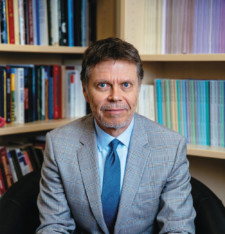
Dr. Wanjiru Njoya is the Walter E. Williams Research Fellow for the Mises Institute, and the author of Economic Freedom and Social Justice (2021), Redressing Historical Injustice (2023), “You Stole Our Land: Common Law, Private Property, and Rothbardian Principles of Justice” (2024) and “Individual Liberty, Formal Equality, and the Rule of Law.”
    Dr. Njoya earned her Ph.D. in Law from the University of Cambridge (UK) and taught law for over 20 years at a number of UK universities, including the University of Oxford and the London School of Economics.
    Her article previously appeared at the Mises blog.

Monday, 8 June 2026

#250YEARS: America's abundance


"America’s abundance was not created by public sacrifices to 'the common good,' but by the productive genius of free men who pursued their own personal interests and the making of their own private fortunes. They did not starve the people to pay for America’s industrialisation. They gave the people better jobs, higher wages, and cheaper goods with every new machine they invented, with every scientific discovery or technological advance — and thus the whole country was moving forward and profiting, not suffering, every step of the way."
~ Ayn Rand from her essay 'Theory and Practice,' collected in her book Capitalism: The Unknown Ideal

Wednesday, 25 March 2026

Super-abundant economic progress

EVER SINCE THE INDUSTRIAL  REVOLUTION in the nineteenth century and ever-increasing global freedom in this one, human progress has been on a roll -- so says author and rational optimist Marian Tupy. He outlined his arguments and data a few nights ago at an enjoyable NZ Initiative presentation.

Tupy is the editor of HumanProgress.org, the world's most comprehensive database tracking improvements in human wellbeing, a senior fellow at the Cato Institute, and co-author of the acclaimed book Superabundance: The Story of Population Growth, Innovation, and Human Flourishing on an Infinitely Bountiful Planet.

He's one of the good guys.

Miserabilist Thomas Malthus famously expressed the idea that while resources would only expand at a linear rate, population will expand exponentially -- a disaster waiting to happen. But Malthus was writing about rabbits, or animals without the brain that humans have; and he was writing before the industrial revolution, when that brain was put to powerful practical use. Malthus was not just wrong, but spectacularly wrong, as Tupy's data abundantly proves.
Take that Malthus!
In just the last four decades alone, commodities across the board have become more abundant thanks to globalisation and increasing freedom. Even in sub-Saharan Africa, long a source of concern, the average calorie intake is now ticking up to 2,500!

Take that Paul Erlich!

THAT FAMOUS PANGLOSSIAN THOMAS BABINGTON Macaulay talked in the nineteenth century about the inevitability of progress: “In every age," said Macaulay, "everybody knows that up to his own time, progressive improvement has been taking place; ... On what principle is it that with nothing but improvement behind us, we are to expect nothing but deterioration before us?” It's still possible to remain optimistic even with the many steps backwards anti-freedom forces insist we take.

I was reminded of Peter Boettke's analogy of the horse race between Smith, Schumpeter, and Stupidity -- the progress of Smith's Division of Labour and Schumpeter's progress in technology (well explained by our presenter) has to continually stay ahead of the various degrees of Stupidity inflicted on us all. It's a tribute to human reason and the power of human freedom to wield it that we have to thank for continuing and ongoing progress.

OUR PRESENTER DID GET A LITTLE  pushback from a questioner who interrogated his concept of abundance. Is abundance always good, asked his questioner? A super-abundance of nuclear weapons, for example, or opioids, is hardly a good thing for human progress, he maintained.

It's a fair point, and it resonates with those who argue that to expect infinite growth on a finite planet you must be either insane or an economist. For both points, I think, economist George Reisman makes a profound point in response: the loss of the concept of economic progress.

Tupy still talks of human progress but of economic growth. Reisman (a student of Von Mises) would suggest he'd be better to combine the two to answer both objections: i.e. to talk of economic progress rather than economic growth.

Growth is a concept that applies to individual living organisms. An organism grows until it reaches maturity. then it declines, and sooner or later dies. The concept of growth is also morally neutral [the point made by our questioner], equally capable of describing a negative as a positive: tumours and cancers can grow. Thus the concept of growth both necessarily implies limits and can easily be applied negatively.

In contrast, the concept of progress applies across succeeding generations of human beings. The individual human beings reach maturity and die. But because they possess the faculty of reason, they can both discover new and additional knowledge and transmit it to the rising generation ... with each succeeding generation receiving a greater inheritance of knowledge than the one before it and making its own fresh contribution to knowledge.
This continuously expanding body of knowledge, insofar as it takes the form of continuously increasing scientific and technological knowledge and correspondingly improved capital equipment, is the foundation of continuous economic progress.

Progress is a concept unique to man: it is founded on his possession of reason and thus his ability to accumulate and transmit a growing body of knowledge across the generations. Totally unlike growth, whose essential confines are the limits of a single organism, progress has no practical limit. Only if man could achieve omniscience would progress have to end. But the actual effect of the acquisition of knowledge is always to lay the foundation for the acquisition of still more knowledge. Through applying his reason, man enlarges all of his capacities, and the more he enlarges them, the more he enlarges his capacity to enlarge them.

He notes here that it Ludwig Von Mises who had first alerted him to this vital distinction.

The concept of progress differs radically from the concept of growth in that it also has built into it a positive evaluation: progress is movement in the direction of a higher, better, and more desirable state of affairs. This improving state of affairs is founded on the growing body of knowledge that the possession and application of human reason makes possible. Its foundation is the rising potential for human achievement that is based on growing knowledge.

While it is possible to utter denunciations of too rapid "growth" as being harmful, it would be a contradiction in terms even to utter the thought of too rapid progress, let alone denounce it. The meaning would be that things can get better too quickly -- that things getting better meant they were getting worse. [Capitalism, p.106]

FYI, Professor Reisman has kindly made his book Capitalism: A Treatise on Economics (in which you can read all his arguments) freely available for reading, saving, and printing. Download the link here.

Friday, 20 February 2026

"It’s training to be an entrepreneur, and an employer—not an employee."

Q: Governments and central banks have inflated asset prices for decades—making housing, education, and healthcare unaffordable for many.

Is the 'system' designed to turn Millennials and Gen Z into lifelong renters and debt-serfs? Is there a way out?


Doug Casey: It’s a natural consequence of Statism.

First of all, taxes are high and have been increasing for decades. After taxes, you have less money left over to save. And if you do try to save, inflation eats away at the dollars that you put in banks or investments. Worse than that, welfare and government benefits make saving feel unnecessary for many people. They feel they don’t need as much because the cradle-to-grave welfare state will cover them. There’s a reason why Klaus Schwab famously said, 'You’ll own nothing and be happy.'

A lot of people believe it. This feeling is abetted by schooling, where everyone is inculcated with this collectivist meme. On top of that, the rich are viewed as parasites. And who wants to be a parasite?

This is all caused by State intervention in the economy. Schools almost always teach students that the State is their friend. It’s not; it’s their enemy. ....

Q: We’re seeing a collision between AI/automation and a credential-heavy job market. Which parts of today’s white-collar economy do you think are most fragile?

Doug Casey: .... The bright side is that while AI and robotics will destroy huge numbers of jobs—starting now—they’ll also level the playing field. A person of less than average intelligence can have AI do things for him that he might otherwise be unable to do. A further benefit is that the world doesn’t need paper pushers and cubicle dwellers who are sitting around doing marginally productive labor. Very much like the world no longer needed people working like drones in textile mills 200 years ago, at the start of the Industrial Revolution.

While AI is going to create some major problems in the short run, it’s going to be a very good thing after those bumps in the road. Just like the Industrial Revolution itself created problems while vastly improving the world. ....

Q: What should a 25-year-old do to build real, durable earning power in the next 5–10 years?

Doug Casey: Ayn Rand answered that question in a speech I heard 40 years ago. When asked, she said: 'The best way to help the poor is not to be one of them.'

I confronted this problem with my friend Matt Smith when we wrote 'The Preparation.' The book explains why young people should avoid college. In fact, it urges them to treat college like the poison that it now is, showing how college has become a serious detriment in almost every way. More importantly, we describe what young men should do instead during the four years between 18 and 22, a time which is critically important, but generally wasted.

We demonstrate—exactly—how a young man can qualify himself with the equivalent of a BA, a BS, and elements of an MBA. That’s in addition to learning practical things in a hands-on way. We divide the four years into 16 quarters. The student will learn everything from flying a plane to sailing a boat around Cape Horn to operating heavy equipment. He’ll qualify in welding and metalwork in Canada. Cooking at a professional level in Italy. He’ll be farming in one quarter and building a house in the next. He’ll learn martial arts skills in Thailand, as well as shooting and scuba. You get the idea. It’s a productive and busy four years.

The critical thing, since we don’t know how the world is going to evolve because of AI, is to become a Renaissance man, enabling students to do anything and go anywhere. To avoid trying to climb a greasy corporate ladder, but build a web where you can reach out in any direction. That’s necessary in the world of AI. It’s training to be an entrepreneur, and an employer—not an employee."

Tuesday, 15 October 2024

UPDATED: "The richest 20 per cent of the world’s countries are now around 30 times richer than the poorest 20 per cent. Why? Differences in a society’s institutions."

"The richest 20 per cent of the world’s countries are now around 30 times richer than the poorest 20 per cent. Moreover, the income gap between the richest and poorest countries is persistent; although the poorest countries have become richer, they are not catching up with the most prosperous. ... Why? ... [D]ifferences in a society’s institutions. ...
    Europeans’ colonis[ed] large parts of the globe. One important explanation for the current differences in prosperity is the political and economic systems that the colonisers introduced, or chose to retain, from the sixteenth century onwards. The laureates demonstrated that this led to a reversal of fortune. The places that were, relatively speaking, the richest at their time of colonisation are now among the poorest. ...
    "In [these] colonies, the purpose was to exploit the indigenous population and extract natural resources to benefit the colonisers. In other cases [however], the colonisers built inclusive political and economic systems for the long-term benefit of European settlers. ... [These] settler colonies – needed to have inclusive economic institutions that incentivised settlers to work hard and invest in their new homeland. In turn, this led to demands for political rights that gave them a share of the profits. Of course, the early European colonies were not what we would now call democracies but, compared to the densely populated colonies to which few Europeans moved, the settler colonies provided considerably more extensive political rights. ...
    "[T]hese initial differences in colonial institutions are an important explanation for the vast differences in prosperity that we see today. ...
    "[This year's Nobel laureates in economics] have uncovered a clear chain of causality. [Mercantilist] institutions that were created to exploit the masses are bad for long-run growth, while ones that establish fundamental economic freedoms and the rule of law are good for it."

~ from the 'Popular Information' released by the Nobel Prize Committee, awarding this year's Sveriges Riksbank Prize in Economic Sciences in Memory of Alfred Nobel 2024 to Daron Acemoglu, Simon Johnson and James A. Robinson. [Hat tip Conversable Economist]

UPDATE: Not everyone's happy that the Prize has gone to what economist Deirdre McCloskey calls "a B+ statist": 

McCloskey of course has her own answer to what caused the prosperity that Acemoglu et al ascribe to good institutions: a cultural change before the Industrial Revolution she calls the "bourgeois revolution." Her ideas are debated here. For what it's worth, I'm in agreement with the great Joel Mokyr who says, "Ideas mattered, but so too did institutions."


Saturday, 14 September 2024

"No culture in history contributed more to human well-being than Western civilisation, nor even as much."


Portrait of Antoine-Laurent Lavoisier and his 
wife and collaborator Marie-Anne Pierrette Paulze, 
Jacques-Louis David (1788)

"The charges against Western civilisation involve slavery, imperialism, and genocide. No doubt, some Westerners and Western regimes have committed such atrocities.
    "The transatlantic slave trade conducted by some Westerners between Africa and the New World was a horror. ... Regarding European imperialism, the cruelty toward indigenous peoples is best illustrated by ... King Leopold II of Belgium in the Congo ... [who] hired an army of mercenaries to enslave the native population, demanded that the enslaved meet high quotas for rubber production and ivory harvesting, had his mercenaries chop off the hands of those who fell short, and had them kill recalcitrant natives and burn their villages. ...
    "All these injustices occurred, and objectivity requires acknowledgment of this fact. But we should identify the full truth—which raises several questions about the anti-Western narrative. ...
    "The claim that European and American powers attempted genocide in the New World is worse than either a severe exaggeration or a gross distortion of facts: It is an outright lie. ... To the extent that slavery has been abolished, the credit lies with the abolitionism developed in the West, ending slavery in its own territories and then applying pressure on non-Western nations to shut down the evil practice. ...
    "Even ... a brief survey of history ... is more than enough to raise the question: Why single out white Westerners for the most virulent moral abuse? But we still have not mentioned the major truth overlooked by ... fallacious arguments against the West. .. We refer, of course, to the enormous life-giving achievements of Western civilisation—life-giving for human beings all over the world. ... I’ll merely provide a few examples of these achievements.

  • Growing sufficient food is and has long been a terrible problem throughout the non-industrialised world. .... The Green Revolution helped people grow vastly increased supplies of food ... saving upwards of one billion lives ...
  • Disease prevention and cure is another critical field for human life in which Western researchers have excelled. [Antoine Lavoisier's pioneering chemistry; Maurice Hillman's and Salk & Sabin's vaccines; Louis Pasteur's germ theory of disease; Joseph Lister's call for antiseptic surgery; Alexander Fleming's discovery of penicillin ... ] How many human lives around the world did these giants of medicine save? An incalculable number. 
  • And Aristotle... the first great biologist of whom we know. His pathbreaking work in the life sciences laid the foundation for subsequent medical advances. Above all, Aristotle married his revolutionary work in logic to his commitment to painstaking empirical research, emphasising that knowledge is gained by logical, noncontradictory thinking about observed facts. He, more than anyone, taught humanity how to think, making progress possible in every field of cognition.
  • And no discussion of Western science, no matter how brief, could omit mention of several of the greatest minds of history—Galileo, Newton, and Darwin ...
  • In literature, from Homer and Sappho through Virgil, Dante, Shakespeare, Goethe, Hugo, Hawthorne, Mark Twain, Jane Austen, and the Bronte sisters to Ayn Rand in the 20th century ... In music, the West has produced such giants as Bach, Mozart, Beethoven, Chopin, Brahms, Verdi, Dvořák, and Puccini. Michelangelo was a towering sculptor, Rembrandt and Vermeer superlative painters, and Leonardo an all-round genius. Film ... has seen such brilliant directors ... as Fritz Lang, Frank Capra, Alfred Hitchcock, Cecil B. DeMille, John Ford, Billy Wilder, David Lean, Steven Spielberg, and Clint Eastwood, as well as a host of talented actors and actresses.
"Even a brief recounting of Western genius must cite John Locke and the birth of the moral principle of individual rights in Great Britain in the 17th and 18th centuries, leading to ... an Industrial Revolution, and stupendous wealth creation and prosperity across vast swathes of the globe ... Starting in Britain, the principle of individual rights led, for the first time in history, to an abolitionist movement that succeeded, to a significant degree, in wiping out the age-old, worldwide scourge of human slavery. Slavery was ubiquitous. Abolitionism was Western.
    "Western civilisation is and often has been profoundly supportive of human life, not because its progenitors have largely been white but because of its fundamental, driving force: reason and all its fruits—freedom, philosophy, science, technology, business, the arts, and other such life-serving values. Skin colour is irrelevant to moral judgment, but reason, individual rights, political-economic liberty, technology and industrialisation—these are vitally important. Western nations export many intellectual and material values to non-Western countries. But its greatest export is a culture of reason and a politics of individual rights; for, to the extent they are adopted, these facilitate immensely life-giving advances in every field of rational endeavour, as they have done in the Asian Tigers.
    "No culture in history contributed more to human well-being than Western civilisation, nor even as much.
    "Why then, do critics single it out for special moral abuse?"

~ Andrew Bernstein, from his article 'The Case for Western Civilisation' [emphases in the original]


Thursday, 29 August 2024

"My Conversion from Anti-Industrialist to Lover of Human Progress'"


"Sometimes when I talk and write about the importance of science, technology, and entrepreneurship to human opportunity and living standards, people ask me why I seem so obsessed with progress.
    "There is a simple reason: I did not use to believe in it.
    "When I was around fifteen, I shared many of the ideas of the people I now spend my time arguing against. I was very unhappy about modern, industrial civilisation. I looked upon highways, cars, trucks, and factories as blights on the landscape. I thought the hustle, bustle, and stress of consumerism and modernity were unnatural and unhealthy. ...

"I thought that there must have been a better time in the past, when we lived in harmony with one another and with nature. ... There, I thought, were the good old days. This view predisposed me to look at technology and construction and consumption only in terms of their negative impacts on traditional lifestyles, livelihoods, and the environment. ...

"I read the Existentialists, Arthur Schopenhauer, and Henry David Thoreau; I read Franz Kafka and plenty of other disturbing fiction, all of which reinforced my sense that something was seriously wrong with the world and humanity. It made me a pessimist, almost even a misanthrope. Such stupid people, to ruin their world like that!

"... I don’t think that I ever became clinically depressed, but as a friend of mine put it, I had made myself 'philosophically depressed.' The world and everything in it just seemed hopeless. And that became a self-fulfilling despair.
    "Two things began to lift me out of the intellectual hole that I had dug for myself: reading about history—boy, was that an eye-opener—and studying politics. ...

"Whatever period I read about, and whichever region I turned to, the 'good old days' were nowhere to be found. ... I found that the desperate struggle to find something, anything, to feed your family and stave off hunger for another few weeks was the defining experience of all previous eras. ... My ancestors in northern Sweden had not lived a good life; they had fought hard for food, shelter, and clothing, and when the weather was bad, the crop failed, and they starved. In bad times, they had to dry and grind tree bark into flour to prepare their daily bread. ...
    "Once I began to pull this thread, I found it hard to stop. I just had to find out what made the difference between their lives and ours. Why is it that for ten thousand years, people did not experience any lasting improvement in their material condition, and then suddenly, in the past five or six generations, we saw an explosion of wealth and technology?
    "For the first time, I started to actually think about the impact of railways, steamboats, international trade, corporations, financial markets, and so on. I had to ask myself: Where would I have been without them? Probably in the graveyard, or never born. ...

"This was the beginning of my obsession with human progress. I could no longer take modern civilisation as a given—or a curse.
    "Step by step, I realised that the modern world was not so bad after all. But my heart was not in it. ... Then some friends in [the freedom] community told me that I had to read Ayn Rand, whom I had never heard of. It happened at an important moment in my thought process. ... 
    "I had yet to experience, in visceral form, the meaning of industrialisation and commerce, and so I was left with a hollow, less-than-inspired ideal. That began to change when I read Atlas Shrugged and Rand’s nonfiction books.
    "For the first time, I read someone who talked about man as a heroic being, with happiness as his moral purpose, and science, technology, and industry his noblest activities. I was appalled. And deeply fascinated!
    "Rand had this annoying ability to get to the bottom of every question and challenge my every belief. ...
    "If scientists and entrepreneurs provide us with the knowledge and wealth that make the world an amazing place, why weren’t they the heroes in my story? And why were the whiners and moaners good guys—just because they dressed in black like me and had the better tunes? Previously, I had identified government intervention as a bad thing and had been involved in libertarian activism against it, but I had not clearly identified or articulated the good that deserved protection against it. Thanks to Rand, I began to shift from fighting against what’s bad to fighting for what’s good—for progress, and not just against oppression.
    "Interestingly, and perhaps ironically, the biggest impact of reading Rand was on my emotional outlook—the part of my personality that had not kept up with my intellectual transformation. She helped me see the beauty in exploration and achievement and that technology and innovation can be romantic adventures. I credit her at least partly with my bright sense of life, my belief in mankind, in progress and the future. In Rand’s novel 'The Fountainhead,' the sight of one man’s achievement provides a young boy with “the courage to face a lifetime.” In time, that’s what Rand’s works provided me.
    "This intellectual journey of discovery is why I am obsessed with progress. It is fueled in part by my gratitude for the people who keep on working and thinking and producing, even when people like my old self denigrate them. I had always taken progress for granted. I did not recognise it, and I did not understand it, and now I am trying to make up for it.
    "As a convert to the cause, I hope you will forgive my missionary zeal. You see, I am trying to get a younger version of myself to see the error of his ways."

~ Johan Norberg from his article 'My Conversion from Anti-Industrialist to Lover of Human Progress'. His most recent book is The Capitalist Manifesto – Why the Global Free Market Will Save the World

Saturday, 11 May 2024

MILEI EXPLAINS: 21 Quotes to explain prosperity and economic freedom


Why is Argentina leading the world? Because, says its president, "while in the rest of the world the ideas of freedom are under siege, in Argentina there is a renewed faith in them.... " Here in twenty-one quotes (courtesy of @MileiExpains) Argentine president Javier Milei explains how the West got rich — and why you should care...
"The West is in danger.
    "It is in danger because its leaders long ago moved away from the ideas of freedom. Ideas that made the West the most important civilisational achievement in the history of mankind. And instead of defending the ideas that generated the prosperity that everyone here enjoys, they listen to siren songs that lead inexorably to socialism, and consequently to poverty."

"In some sense, we Argentines are prophets of an apocalyptic future, which we have already lived. All those discussions of today, based on supposedly well thought out desires of wanting to help our fellow man, based on an erroneous idea about the nature and function of the State, sustained by economic theories that have been long refuted by data and empirical evidence, we Argentines lived them 100 years ago, and unfortunately applying those ideas have led us to ruin."


"Since the 19th century, and as a result of the industrial revolution, the GDP per capita not only increased but did so exponentially. In the last 150 years it multiplied by 15, generating an explosion of wealth that lifted 90 percent of the world's population out of poverty, reaching the point that by the year 2020 only 5 percent of the global population lived in extreme poverty."

"Far from being the cause of our problems, free enterprise capitalism as an economic system is the best tool we as a species have known to end hunger, poverty, and extreme poverty across the globe."


"While the success of capitalism is easy to demonstrate, what is not so accessible to many is the counterfactual, where the systematic choice of a collectivist model leads. As I said before, perhaps the best example is the Argentinean example. Our entire history is a testimony of what can happen when the model of freedom is abandoned and replaced by collectivist experiments."

"Since 1949 the monetary base in the United States has multiplied 16 times, while in Argentina the figure multiplied the astronomical number of 25,000 trillions times. Yeah, it is a real number. I'm not making it up.
    "I repeat it, the monetary base expanded 25,000 trillion times. That is the level of disaster that politicians can produce if they are allowed to deviate from the basic principles of the market economy."

"Those who lead the West have forgotten an elementary truth, and it is the moral responsibility of those of us who still remember it to defend and declaim it. And that inescapable truth is that economic freedom, in pursuit of individual interest, produces collective benefits, and therefore the entrepreneur who risks capital in pursuit of profit is a social benefactor."

"Those who lead the major nations and organisations in the West do not give enough credit to this idea and look at the economy from a theoretical framework that believes the market is imperfect, that it produces failures, and that it requires state intervention to perfect it. The problem with this conception is that it justifies interventions that bring more problems than benefits and undermine economic growth."

"The market, presupposing free competition and a system of free prices with clear signals, constitutes a mechanism for the extraction and transmission of information in which the greater the freedom the better is the performance. In other words, the free market is a process of discovery in which the capitalist finds, on the fly, the right course of action in a constant search for profit, and that translates into offering goods of better quality at the best prices."

"Those who insist with interventionism not only impede the virtuous functioning of the market, but on top of that they congratulate themselves and exchange medals of social responsibility in pompous ceremonies, while they end up promoting an agenda of values that opens the door little by little to socialism and consequently to misery."

"I do believe that the private sector has a very clear mandate of social responsibility, but it has nothing to do with being moralistic or guilty. The true social responsibility of the entrepreneur is a natural effect of the free functioning of his own economic activity. The mandate is to produce goods and services of better quality at the best price, linked to the maximisation of profits. The social responsibility of the entrepreneur is to make money, and he can only do that by serving his fellow man with better quality goods at a better price."

"Entrepreneurs are social benefactors, far from the criticisms usually made of them by spendthrift and profligate politicians."

"Since free markets have existed we have crossed frontier after frontier. We have lifted the whole world out of poverty in 250 years. We have put men on the moon and now we are looking at Mars. And we have done it because of the ambition, creativity and optimism of men like you who partner with each other in pursuit of your happiness."

"We must not lose faith in that primal ambition that we humans have as our guide. We are a species of explorers, of creators, of inventors, not bureaucrats. And it is the adventurous entrepreneur, not the desk bureaucrat, the kind of man who embodies in the present this timeless quality of the human spirit."

"I look at Argentina with all the changes we are undertaking and I see that we are going in the opposite direction that the rest of the world, because while in the rest of the world the ideas of freedom are under siege, in Argentina there is a renewed faith in them."

"While the West turns towards control and imposition, Argentina turns towards trusting its citizens in the exercise of their freedom. While the West turns towards deficit, bureaucracy and the intrusive State, Argentina turns towards austerity, towards savings, and to retire the State from the economic activity. While the West turns towards economic shamanism and unsustainable formats of heterodoxy that endanger the future of all, Argentina returns to the path of reason, to the ideas of common sense."

"Our goal is to give back to the Argentines every peso we save, first by eliminating inflation and then, in the future, by reducing taxes as a consequence of economic growth. And we have as our north, to dismantle the tangle of regulations that Argentina has become, in order to free economic activity and unleash its productive force."

"For us, the only task of the State is to protect the life, liberty and property of Argentines, so that each one can be the architect of his own destiny. This is our vision. It is a vision similar to the one held by all the prosperous countries of the West in the great moments of their history. The task of the State is not to put invented money in people's pockets, but to ensure the macroeconomic and legal conditions so that the private sector can develop on its own."

"I want to conclude these words by inviting everyone here, who are the heroes of the history of the progress of humanity... If you believe as I do in the superiority of free enterprise capitalism. If you believe as I do that the West is walking to a slow but sure retreat. If you believe as I do that merit, ambition, freedom and innovation and optimism are essential values of the human species that should be rewarded. I would like to invite you to bet on Argentina, to help me, you who are human progress personified, to make Argentina the new Rome of the 21st century."

"It is you who can prove to the bureaucrats of the world that they are destroying the West, that the ideas of freedom are the only way to achieve prosperity."

"Let us once again embrace the ideas of freedom with pride, let us be proud to be entrepreneurs, proud to be businessmen, because they are the true social benefactors, they are the ones who create wealth, they are the ones who have taken the world out of misery. To finish, I also ask you to accompany us, the Argentines, in this rebirth of the West."


Friday, 19 April 2024

"The capitalist system was termed 'capitalism' not by a friend of the system, but by Karl Marx" [updated]


"The capitalist system was termed 'capitalism' not by a friend of the system, but by an individual who considered it to be the worst of all historical systems, the greatest evil that had ever befallen mankind. That man was Karl Marx. Nevertheless, there is no reason to reject Marx’s term, because it describes clearly the source of the great social improvements brought about by capitalism. 
    "Those improvements are the result of capital accumulation; they are based on the fact that people, as a rule, do not consume everything they have produced, that they save—and invest—a part of it. 
    "There is a great deal of misunderstanding about this ... [not least that] capitalist savings benefit workers.

"An often unrealised fact about capitalism is this: savings mean benefits for all those who are anxious to produce or to earn wages. When a man has accrued a certain amount of money—let us say, one thousand dollars—and, instead of spending it, entrusts these dollars to a savings bank or an insurance company, the money goes into the hands of an entrepreneur, a businessman, enabling him to go out and embark on a project which could not have been embarked on yesterday, because the required capital was unavailable.
    "What will the businessman do now with the additional capital? The first thing he must do, the first use he will make of this additional capital, is to go out and hire workers and buy raw materials—in turn causing a further demand for workers and raw materials to develop, as well as a tendency toward higher wages and higher prices for raw materials. Long before the saver or the entrepreneur obtains any profit from all of this, the unemployed worker, the producer of raw materials, the farmer, and the wage- earner are all sharing in the benefits of the additional savings.
    "When the entrepreneur will get something out of the project depends on the future state of the market and on his ability to anticipate correctly the future state of the market. But the workers as well as the producers of raw materials get the benefits immediately....
    "The scornful depiction of capitalism by some people as a system designed to make the rich become richer and the poor become poorer is wrong from beginning to end. Marx’s thesis regarding the coming of socialism was based on the assumption that workers were getting poorer, that the masses were becoming more destitute, and that finally all the wealth of a country would be concentrated in a few hands or in the hands of one man only. And then the masses of impoverished workers would finally rebel and expropriate the riches of the wealthy proprietors....
    "If we look upon the history of the world, and especially upon the history of England since 1865, we realize that Marx was wrong in every respect. There is no western, capitalistic country in which the conditions of the masses have not improved in an unprecedented way. All these improvements of the last eighty or ninety years were made in spite of the prognostications of Karl Marx.
    
"We must realise, however, that this higher standard of living depends on the supply of capital. ... A country becomes more prosperous in proportion to the rise in the invested capital per unit of its population."
~ Ludwig Von Mises, from the collection of six of his lectures titled Economic Policy: Thoughts for Today and Tomorrow, and in Brazil under the title As Seis Lições (The Six Lessons) [hat tip Renato Moicano]

UPDATE:  Sad news just in that economic historian Robert Hessen has just died. David R. Henderson remembers him, and quotes from his contribution to the Concise Encylopaedia of Economics on Capitalism. 

"Capitalism,” a term of disparagement coined by socialists in the mid-nineteenth century, is a misnomer for “economic individualism,” which Adam Smith earlier called “the obvious and simple system of natural liberty” (Wealth of Nations).   Economic individualism’s basic premise is that the pursuit of self-interest and the right to own private property are morally defensible and legally legitimate. Its major corollary is that the state exists to protect individual rights. Subject to certain restrictions, individuals (alone or with others) are free to decide where to invest, what to produce or sell, and what prices to charge. There is no natural limit to the range of their efforts in terms of assets, sales, and profits; or the number of customers, employees, and investors; or whether they operate in local, regional, national, or international markets.
Here’s another great paragraph:
In early-nineteenth-century England the most visible face of capitalism was the textile factories that hired women and children. Critics (Richard Oastler and Robert Southey, among others) denounced the mill owners as heartless exploiters and described the working conditions—long hours, low pay, monotonous routine—as if they were unprecedented. Believing that poverty was new, not merely more visible in crowded towns and villages, critics compared contemporary times unfavourably with earlier centuries. Their claims of increasing misery, however, were based on ignorance of how squalid life actually had been earlier. Before children began earning money working in factories, they had been sent to live in parish poorhouses; apprenticed as unpaid household servants; rented out for backbreaking agricultural labor; or became beggars, vagrants, thieves, and prostitutes. The precapitalist “good old days” simply never existed (see industrial revolution and the standard of living).
And:
Despite these constraints, which worked sporadically and unpredictably, the benefits of capitalism were widely diffused. Luxuries quickly were transformed into necessities. At first, the luxuries were cheap cotton clothes, fresh meat, and white bread; then sewing machines, bicycles, sporting goods, and musical instruments; then automobiles, washing machines, clothes dryers, and refrigerators; then telephones, radios, televisions, air conditioners, and freezers; and most recently, TiVos, digital cameras, DVD players, and cell phones. ...

That these amenities had become available to most people did not cause capitalism’s critics to recant, or even to relent. Instead, they ingeniously reversed themselves. Marxist philosopher Herbert Marcuse proclaimed that the real evil of capitalism is prosperity, because it seduces workers away from their historic mission—the revolutionary overthrow of capitalism—by supplying them with cars and household appliances, which he called “tools of enslavement.”Some critics reject capitalism by extolling “the simple life” and labeling prosperity mindless materialism. In the 1950s, critics such as John Kenneth Galbraith and Vance Packard attacked the legitimacy of consumer demand, asserting that if goods had to be advertised in order to sell, they could not be serving any authentic human needs. They charged that consumers are brainwashed by Madison Avenue and crave whatever the giant corporations choose to produce and advertise, and complained that the “public sector” is starved while frivolous private desires are being satisfied. And having seen that capitalism reduced poverty instead of intensifying it, critics such as Gar Alperovitz and Michael Harrington proclaimed equality the highest moral value, calling for higher taxes on incomes and inheritances to massively redistribute wealth, not only nationally but also internationally.

Sunday, 8 October 2023

How your cooking teaches you about progress


Kitchen by Johnny Grey Studios

"THERE'S A STORY TOLD about kitchens since the start of the 20th century: between 1900 and 1960, almost everything about them changed, but since 1960, virtually nothing has. The story is meant to illustrate a wider point about the slowdown in physical technology that seems to have taken place in other walks of life — not just how we eat, but how we transport people and build things.
    "There is a lot of truth to this story ... But it misses another type of technological change that did happen and which might be even more important in determining the quality and deliciousness of the food we eat. ... The kitchen of 2020 looks mostly the same as that of 1960. But what we do in it has changed dramatically, almost entirely for the better—due to a culture of culinary innovation....
    "By 1960, home cooks were no longer surrounded by the noxious fumes of open flames and instead had chilled or canned ingredients and electric tools to prepare them.
    "These advances set the stage for a new way to cook. But that new way to cook depended on more than cooks and their new technologies alone; it required a change in goals and horizons. ...

    "Joel Mokyr, in A Culture of Growth, argues that innovation can be stifled by a fear of 'disrespecting the past' or an excessive adherence to tradition. In the kitchen, ... new cookbooks made it possible for cooks to replicate traditional recipes at home. But focus tended to be on how to best replicate those recipes that were born in professional kitchens, not to figure out what the home was best suited for. By the 1980s, a new idea began to emerge: that home cooks could even best restaurants if guided by a scientific approach....
    "[Cookbooks based on modern scientific home cooking] brought food science out of 'the realms of industrial production and laboratories' and into the home. Armed with [these], recipe writers, and sometimes even home cooks themselves, began to wonder if they could improve on traditional techniques instead of just copying them. After all, weren’t those fancy chefs we used to admire just stubbornly following tradition?
    "So began an explosion of popular food science. ...

"New publications began to popularise food science in the home for those unwilling to dig through [tomes like] 'On Food and Cooking.' 'Cooks Illustrated,' which launched in 1993, created recipes and techniques specialised for home cooks in their test kitchen. 'Serious Eats' joined it in 2006, giving each recipe a 'why it works' section to explain its food-scientific logic. Alton Brown’s 'Good Eats' premiered on the Food Network in 1999 and truly took the food science approach to the masses, with Brown as a funny and entertaining guide through the world of science and cooking.
    "By the 2000s, food science–oriented outlets were debunking dozens of common myths with the new approach. Pasta doesn’t need to be boiled in loads of water. That water doesn’t need to be 'salty as the sea' either. Sea water is about 3.5% salt; 1% is probably plenty. And it doesn’t matter whether the salt is added before or after the water comes to a boil (both sides had proponents). You don’t need to rest steaks before you cook them. Nor do you need to worry about just flipping steak once. Searing doesn’t 'lock in juices,' either, it creates the maillard reaction, and you can do it either before or after roasting a piece of meat for the same effect. Even the practice of marinating itself was called into question. The list goes on.
    "It’s not just little tips and tricks either. Food science created new recipes, and indeed whole new categories of recipes. Mark Bittman and Jim Lahey’s 'no-knead bread' (published in 2006) is an example of this new attitude in action: we don’t need to follow traditional bakers’ three-day sourdough recipes; we can make delicious bread overnight with almost no work ...

"IT'S A FAMILIAR PATTERN in how innovation seems to work. The central thesis of Anton Howes’s 'Arts and Minds,' a history of the Royal Society of Arts, is that the Industrial Revolution was driven by a new 'ideology of innovation.' This ideology held that everything could be improved by careful tinkering and experimentation. And this ideology spread from person to person. People become more inclined to experiment when they see others doing it and succeeding. Copying, not innovating, is the basic human skill.
    "Home cooking culture is now defined by this obsessive tinkering and experimenting. ...

"So kitchens might not have changed their outward appearance much in the last 60 years, but the cooking that takes place in them has been transformed. It’s transformed because of what home cooks have access to: the recipes, techniques, knowledge, and know-how for cooking food better. We’ve built up a vast array of knowledge and technique well tailored to the home, ranging across cuisines, styles, and goals. It’s what Jonathan Haskel and Stian Westlake call intangible capital, all the stuff in the production process we don’t see: our systems, our software, our skills, our techniques. We can’t touch this intangible capital, so it’s easy to underrate. But a new method for making bread overnight can be just as useful as a new machine that does it."
~ Nick Whitaker, from his article 'Better Eats'

Wednesday, 19 July 2023

"The industrial revolution was also a revolution of ideas."


"The conjuncture of growing supplies of land, labour, and capital made possible the expansion of industry; coal and steam provided the fuel and power for large-scale manufacture; low rates of interest, rising prices, and high expectations of profit offered the incentive. But behind and beyond these material and economic factors lay something more. Trade with foreign parts had widened men’s views of the world, and science their conception of the universe: the industrial revolution was also a revolution of ideas. ...
    "It was under [the] influence [of Adam Smith's 'Wealth of Nations'wire] that the idea of a more or less fixed volume of trade and employment, directed and regulated by the State, gave way—gradually and with many setbacks—to thoughts of unlimited progress in a free and expanding economy."

~ T.S. Ashton, from his 1948 classic The Industrial Revolution, 1760-1830, quoted at the 'Roots of Progress' blog [their emphasis]

Friday, 19 May 2023

We are seeing the effects of industrialisation...


More climate scaremongering this morning on news channels, suggesting temperatures in the next five years could reach 1.5 degrees Celsius more than they were in pre-industrial levels. 

Let's say they're right. Let's say we are seeing the effects of industrialised climate change. If so, these are some of the impacts since the industrial era ...


Looks disastrous, doesn't it.

[Hat tip Patrick Moore & Mindsmith]


Sunday, 4 December 2022

There’s No Natural ‘Carrying Capacity’ for the Human Population


You may assume that this planet has a natural "carrying capacity" beyond which the human population just cannot go. Sounds reasonable, right? There are sonly so many billions the planet can support, right? Wrong, says Don Boudreaux in this guest post: for humans left free to produce, the planet has no natural carrying capacity. The reason, he explains, is that the planet's ultimate resource is the human mind ...


There’s No Natural ‘Carrying Capacity’ for the Human Population: An Essay Inspired by the Happy News that the Human Population Has Reached Eight Billion

by Don Boudreaux

The late, great Julian Simon spent decades battling intellectually against biologists and zoologists who were convinced that human population growth, if governments did not hold it in check with draconian measures, would spell doom for multitudes of humans. (I might as well have used the present tense above, because many of the scientists with whom Simon did battle, including the most prominent, Paul Ehrlich, are still alive.) These students of animal development and behaviour insist that every species inhabits an environment with a natural “carrying capacity.” If the population of a species grows in number beyond the limits of its environment’s carrying capacity, the death rate of members of that species will rise, while its members’ birth rate fall, because species members will confront unusual difficulty gaining access to food, water, and shelter. The species’ population is thus confined to the limits of its environment’s carrying capacity by the brutality of uncaring nature.

Simon argued that humans, at least those of us who live in free societies, are a categorically different sort of species. He observed that to the extent to which we, members of the human species, inhabit a social environment characterised by free and innovative markets, our species does not inhabit a natural environment with a finite carrying capacity. Simon’s argument starts with the fact that we humans are uniquely enterprising and innovative. When this fact combines with the further reality that market prices are signals about which specific resources are becoming more scarce relative to other resources, human entrepreneurship and creativity are incited to discover ways both to make currently known stocks of scarce resources go further and, more importantly, to discover either new sources of those resources or more abundant substitutes. When we succeed in these endeavours, as we now normally do, we literally produce more resources.

Simon’s explanation is revolutionary. Contrary to what most people seem to believe, we don’t obtain resources from an existing stock created for us by nature, leaving fewer resources available for use tomorrow each time we withdraw some amount for our use today. Instead, resources are ultimately fruits of the human mind and effort. And so we produce more petroleum, more tungsten, more copper, more bauxite in the same way that, when our demand for apple pies or Apple laptops increases, we produce more apple pies and Apple laptops.

For humans in market economies, therefore, the environment has no natural ‘carrying capacity.’

As Simon tirelessly documented, his account of humans’ relationship with the natural environment is amply confirmed by history, especially by modern history. Over the past few centuries the human population has grown remarkably – earlier this month it hit eight billion. At the same time there’s also been astounding growth in humans’ standard of living. Were there a natural carrying capacity on earth for the human population, history offers no evidence of it. Quite the contrary.

Despite the economic soundness of his argument and its consistency with the data – and despite his famous victory in a 1980 wager with Ehrlich on whether or not a bundle of five natural resources would become more scarce over the course of a decade – Simon’s argument left many biologists and zoologists unconvinced. And biologists and zoologists aren’t alone. Pick at random a professor, student, news reporter, or blogger and ask him if we humans are today threatening our long-term survival by over-using resources. Chances are high that the answer you’ll get is an unhesitating yes. You’ll likely be further told that our only hope of avoiding the terrible fate of billions of us being done in by natural forces is for us, especially those of us in rich countries, to dramatically reduce our consumption.

There is, I suppose, something gratifying in counselling personal sacrifice. Sacrifice often is admirable and worthwhile, as when you sacrifice your time to help a neighbour in distress, or sacrifice your comfort today in order to undergo painful medical treatments that will better ensure that you’ll survive past tomorrow. But sacrifice for sacrifice’s sake is, at best, pointless. Costs are incurred in exchange for no benefits....

If Simon is correct, green-inspired efforts to encourage or compel those of us in market economies to reduce our consumption today yield no benefits. Such efforts conserve no resources; they simply result in our producing fewer resources, an outcome that is utterly useless. The uselessness of this outcome lies in the reality that whenever we “need” new resources, we can produce these.

Was Simon naively pollyannaish? Has history’s apparent confirmation of his thesis simply been a matter of good luck? No.

Consider a recent essay in the Wall Street Journal – an essay whose title speaks volumes: “One Man’s Trash Is Another’s Clean Fuel.” The authors, Nick Stork and Joe Malchow, report very Simonesque news:
In a lesson about how the energy transition is likely to play out, landfill operators’ ability to make use of excess gas has exploded in recent years. New facilities are being created to convert trash into renewable natural gas, molecularly identical to the gas that heats homes. The process cuts down greenhouse-gas emissions while creating a low-carbon energy source…

The potential has spurred major sanitation and energy companies to break into this new market. This year Houston’s Waste Management Corp. announced an $825 million investment to boost renewable natural-gas capture. In October the British company BP agreed to acquire Archaea Energy (which one of us founded and the other invested in), a company that designs, builds and operates RNG plants in the U.S. to convert waste emissions. Archaea produces 6,000 oil-equivalent barrels a day through 13 RNG facilities with plans to construct 88 more to serve rising demand. Our only input is trash.

Quiet, private innovation in gas processing made this possible. Archaea sells largely to voluntary buyers who wish to lock in clean gas at fair prices. RNG still comes at a premium compared with other fuel sources, but driving down the cost of producing RNG will mean more of it is available to buyers on attractive terms. We are working to lower the price of RNG by creating standardized and modular production facilities with decreased operating costs, higher processing efficiency, and uptime rates that start above 90 percent.
Energy – indeed, low-carbon energy – from trash!

If turning trash into energy that’s transmissible over long distances nevertheless sounds either fanciful or likely insignificant in its long-term impact, imagine yourself as a native American roaming 600 years ago through the woodlands of what is today western Pennsylvania. You’re thirsty and bend down to enjoy a drink of water from a brook, only to discover that the water at that spot is undrinkable because it’s polluted with a smelly, oily, noxious substance oozing out a few feet upstream. How plausible would this You of 600 years ago have found a prediction that the icky stuff that pollutes your drinking water would, in just a few centuries, be a much-sought-after ‘natural’ resource that powers much of humanity’s activities?

Julian Simon died almost twenty-five years ago, just shy of his 66th birthday. Were he still alive today, he would surely celebrate our population of eight billion and remind anyone who would listen that, far from pushing humans closer to the earth’s carrying capacity, the creative potential of those eight billion human minds will further expand our access to resources. We need only to allow this creativity to operate freely.


Donald J. Boudreaux is a senior fellow with American Institute for Economic Research and with the F.A. Hayek Program for Advanced Study in Philosophy, Politics, and Economics at the Mercatus Center at George Mason University; a Mercatus Center Board Member; and a professor of economics and former economics-department chair at George Mason University. He is the author of the books The Essential Hayek, Globalization, Hypocrites and Half-Wits, and his articles appear in such publications as the Wall Street Journal, New York Times, US News & World Report as well as numerous scholarly journals. He writes a blog called Cafe Hayek and a regular column on economics for the Pittsburgh Tribune-Review. Boudreaux earned a PhD in economics from Auburn University and a law degree from the University of Virginia.
This post originally appeared at the AIER blog.