Great to see an Auckland mayoral candidate recognising that if house-price inflation be tackled, then the city has to be ready to grow out.
Auckland mayoral candidate John Palino is calling for the removal of the urban-rural boundary to improve housing affordability.
The boundary, known as the metropolitan urban limit, was restricting land supply in Auckland and driving up house prices for ideological reasons, Mr Palino said today.
And he’s right, you know, it does, and is:
- Land just inside this “urban fence” costs around ten times land just outside. For virtually identical land. Nothing else so demonstrably highlights the effect of regulation, nor gives some idea of what might be achieved by relieving it.
- And the reason for the “urban fence” is completely ideological – both “new urbanists” and te apostles of “sustainability” preach higher densities for their own separate reasons, but mostly for reasons of control.
My own position is that to promote affordability the city needs to grow both out and up – which recognises home-buyers have the right to choose, and land-owners have the right to build.
‘Out and Up’ should be the mantra.
But at least one mayoral candidate is loudly saying ‘out.’
[Hat tip Stephen Berry from Affordable Auckland, the only mayoral candidate saying ‘Out and Up.’]
RELATED POSTS:
- “So Auckland can’t grow out, because Auckland’s ‘planners’ and public-transport advocates say so.
“And it can’t grow up, because councillors voted last night that they say so: Auckland Council voting 13-8 to pull new 'denser' maps from the Unitary Plan process.
“So what are would-be home-owners to do who are trying to afford their own home in a seriously unaffordable city?
“And what are property-owners to do who wish to build and sell to those desperate to get on the property ladder?”
Up or out? From both sides council says NEITHER! – NOT PC - “It is not primarily the fault of land developers that the American suburbs are thought to be dysfunctional and mundane. The blame belongs largely to the influence of boiler-plate zoning regulations combined with design consultants who seek the most minimum criteria allowed by city regulations.
“Yet for all its problems, decade after decade 80% of new home purchases are not urban, but suburban. Some (architects, planners, and university professors) suggest we should emulate the dense growth of other nations not blessed with the vast area of raw land within our country, yet most of those countries as they prosper strive to emulate our American suburbs.
“The planning of our cities is about design. Yet, for the past quarter century a highly organized group consisting mostly of architects (acting as planners) have pushed a New Urbanist agenda that is as much about social engineering as it is design.”
Designing suburbs: Beyond 'New Urbanism' – Rick Harrison, NEW GEOGRAPHY - “Auckland Mayor Len Brown’s fear of Auckland sprawling “like Los Angeles” is unfounded, pictures of the city’s growth over the past 30 years suggest.
“A timelapse image of Auckland produced by Google shows New Zealand’s biggest city barely grew out at all between 1984 and 2012 (see pictures), despite its population increasing from 850,000 to more than 1.3 million during that time.
“This is in stark contrast to many cities elsewhere, including the US where the likes of Houston, Dallas-Fort Worth and Atlanta have expanded rapidly.
And critics say this footage undermines mayor Brown’s claim that Auckland is a sprawling city that needs to be contained.”
Google busts Len Brown’s Auckland ‘sprawl’ claims – Niko Kloeten, NBR [via Whale Oil], 2013 - “What’s missing here is choice. In talking about about development on either “greenfield” or “brownfield” sites, both advocates insist that folk do things their way. They completely ignore the fact that people have the right to choose where and how they live, particularly if they own the place on which they choose to settle down.
“Let people live where they wish to, as long as they bear the costs. And let those choices themselves—choices based on people’s own values for which they are prepared to pay the cost—organically reflect the way the city develops.
“Ironically, it’s the very promoters of intensification, the planners themselves, who have done the most to make decent intensification more difficult. Here's just some examples of a few urban housing types that are enormously popular overseas, but could barely be even contemplated here…...”
“Sprawl” versus “intensification” – NOT PC, 2012 - “Sprawl is good. Sprawl is choice. The opponents of sprawl are not just against sprawl, they're against choice -- the proof of this is that if people wanted to live in the way the enemies of choice wanted, they wouldn't need to be forced into it, they'd be doing it anyway.
“The enemies of sprawl are the enemies of choice -- they simply use the power of government and the powers that the Resource Management Act gives local government to force people to live in the way that they prefer, rather than the way the people themselves wish to live. They're just another brand of interfering busybody who want to force their own predilections upon others.
“The result in New Zealand is severe restrictions on building and development, and the result of that is some of the most unaffordable housing in the world.”
Envy is making houses unaffordable – NOT PC, 2007 - “But my point here is that not everyone wants to live that way, and forcing people who would rather live otherwise into the planners' favourite cookie-cutter solutions removes any possibility of their planning their own future the way that they would like to; it removes their ability to make their own decisions based upon long-term considerations; and it's causing something no-one could really celebrate. And that's really the whole point, isn't it?
“When it comes to housing, let's all be Pro-Choice.”
More sprawling arguments – NOT PC, 2007 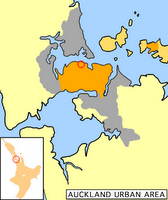 “Most of the planners in New Zealand's major cities have imposed what's called a Metropolitan Urban Limit around the cities. This is sometimes called an 'urban fence,' inside which development proceeds (in theory) according to the planners' whims …
“Outside the urban fence, development only proceeds to the extent that land-owners outside the fence can dodge the planners' desire to make a rural museum of the area surrounding the cities, and to the extent that developers who have built up land banks around the city can encourage their chums on council to relax the zoning, or to release the urban fence just a little. You might call this a sort of 'informal' public-private partnership…
“The sameness and the sprawl that many people object to in our present-day suburbia are in large part due to these regulatory measures that the anti-sprawlists themselves favour. Specifically, the "carpet sprawl" that would have few explicit defenders is created by the very 'Smart Growth' policies considered so progressive by so many planners. Owen McShane explained the process … ”
Message to planners: "Don't fence me in!"- NOT PC, 2007
.


 It looks like Uesifili Unasa has only one problem with Len Brown. He has no argument with Loopy Len’s monuments, only where they’re being built. He looks like a good old-fashioned pork barrel politician who wants to bring the pork home to South Auckland.Not sure how the rest of Auckland’s ratepayers might feel about that one. But it doesn’t sound like a bargain.
