Rather than post the usual Saturday fare of a collection or rambling readings, todayI've got something different for you. Just one thing on which to ponder: Mark Skousen's classic article,
Persuasion versus Force. Read it, savour it, digest it. And when you have, perhaps you will have been sufficiently persuaded to pass it on to others who have need of persuasion in this vein. This is essential reading for every adult who wishes to impose his or her views on other people.
Yes, you know who you are.
You who feel so strongly about whatever you feel strongly about that (you feel) everyone should be bent to your will. You who never understand the difference between
persuading someone to do your bidding, and
coercing them. It is a crucial difference. One appeals to the human mind, to human reason. The other treats people as a subject, as a serf, as a mindless chattel.
The use of persuasion rather than coercion is the recognition that human beings are sovereign individuals, with the right to make their own choices, and to commit their own mistakes.
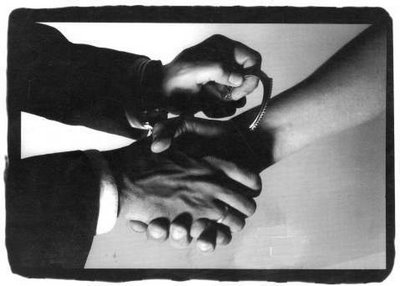
The truth is this: That just because you feel strongly about something that gives you no right to impose your feelings upon others who may in no wise agree with you. Talking about bringing in a ban is not persuasion, it is not a "national debate we should be having." A new law is not persuasion. No matter how many other MPs you can persuade, the effect of that law is the assembling of the vast might of legislative, judicial and police powers to enforce this thing about which you feel so strongly. That's force. That's coercion.
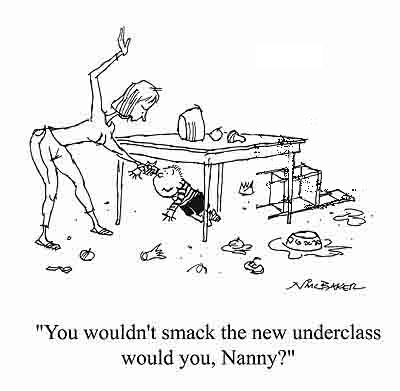
If smacking is bad because it uses force against children, as some people have argued, then why isn't force bad when it's used against adults (who -- unlike children -- do have the full power of reason). If date rape is bad because it takes away a woman's right to refuse consent, and so it does, then so too is every form of coercion in that it too takes away the power of consent.
What's wrong with persuading people, rather than using force? Isn't that -- or shouldn't that be -- the mark of a truly civilised society? If you look for symbolism, you might think of it as reason against brute force, or the mind versus the gun.
Why isn't it wrong for politicians to impose their will on parents, or for planners to impose their views on home-owners? Why isn't it wrong for busybodies to impose their own values on party pill users and gun owners, on Easter holiday shoppers and fireworks users, or on people who smoke in bars, or people who don't save enough, or who spend too much, or borrow too much, or who work too hard or too much -- or too little -- or who drive the wrong car, or use the wrong lightbulbs
, or upon anyone and everyone who just might be doing something the busybody might just disagree with?
Why do we so easily countenance using coercion when we wish to impose our values upon others? Why is individual liberty so thoughtlessly and so easily sacrificed for some feel-good wowser's fix.
What's wrong with persuasion? What's wrong with freedom with responsibility? Isn't that -- or shouldn't it be -- the mark of a truly civilised society?
As Skousen points out,
the measure of a civilised society is the extent to which persuasion is
the pre-eminent coin of the realm, rather than coercion. This is what it means, he says, to have freedom with responsibility.
But persuasion is tiresome you say, and coercion is so much easier? On that, all of the dictators of history rise up in agreement with you -- as too do the corpses of their victims, who rise up in silent protest.
But people will make mistakes, you say, if we who know better aren't there to save them from themselves. But do you know better? How do you know it's not you who is making the mistake; how do you know you're protecting fools from folly, rather than falling into folly yourself? Are you really sure that
you aren't the fool? Do you really know better
for everyone? And if you're really convinced yourself that you do know better, then why not genuinely convince others that you do before trying to simply herd them into your chosen coercive scheme?
In the end isn't it true, as Sir James Russell Lowell said, that even if people are left free to make their own mistakes -- and do -- that "the ultimate result of protecting fools from their folly is to fill the planet full of fools."
As the man says, if it makes sense, then they wouldn't have to force you. And that makes sense, doesn't it.
Skousen argues that there is one sure mark of a civilized society.
Supreme Court Justice Oliver Wendell Holmes once said, 'Taxation is the price we pay for civilization.' But isn't the opposite really the case? Taxation is the price we pay for failing to build a civilized society... The triumph of persuasion over force is the sign of a civilized society.
Skousen, of course, is right. Surely, he says, this is a fundamental principle to which most citizens, no matter where they fit on the political spectrum, can agree.
Do you?
LINK: Persuasion versus Force - Mark Skousen
RELATED POSTS ON: Libertarianism, Politics
 What nonsense. The writer might just as well have said the story evoked the freer, more sunlit experience overseas in which punters are free to choose from the more competitive odds offered by bookies both on-course and off, free to stroll from one to the other and enjoy the many characters, all of them competing for the punter's business. They could have said that, because that would be much closer to the truth.