"On my drive in to work [earlier this week], RNZ's Corin Dann challenged the Prime Minister about one part of his meeting with Australian PM Albanese. They had apparently promised to work toward some kind of joint ID and driver license system. [AUDIO, 04:15]...
"The PM's talk had this as all being about mutual recognition of driver licences. Which is obviously a weird justification. We already recognise each other's licences. And if Oz and NZ makes it tough for bars to recognise each other's licenses as ID, that's far more easily solved by just letting bars use the other country's driver's licence. The rest of it isn't needed for that problem. ...
"There has been Twitter speculation that all of this is about age-gating social media. It looks like this push started well before anyone was talking about that. ... Australia is running trials on ID/age verification setups for social media age gating; it looks like a report is soon due. ...
"[So] - both countries are working toward digital IDs, both countries five years ago agreed that they'd recognise each other's digital IDs, and this seems just to be reaffirming that prior agreement. I'd love there to be more assurance around privacy being important in the design of any of these in NZ. Because there are very bad versions that should not be supported. ...
"When the first a lot of us would have heard about a government digital ID is in context of a trans-Tasman agreement for mutual recognition, in context of Australia wanting to age-gate social media, and nobody particularly trusting that the age-gate system isn't intended to result in the kind of censorship being seen in Australia - not so hot."~ Eric Crampton from his post 'To what policy problem is this the solution?'
Showing posts with label Privacy. Show all posts
Showing posts with label Privacy. Show all posts
Wednesday, 13 August 2025
"There has been Twitter speculation that all of this is about age-gating social media."


Friday, 9 August 2024
"Democracy could not function if politics and the state of the social order were always on everyone’s mind."
“Democracy requires the occasional political participation of most of its citizenry some of the time, and a moderate and dim perceptiveness — as if from the corner of the eye — the rest of the time. It could not function if politics and the state of the social order were always on everyone’s mind. If most men, most of the time, regarded themselves as their brother-citizens’ keepers, freedom, which flourished in the indifference of privacy, would be abolished, and representative institutions would be inundated by the swirl of plebiscitary emotions — by aggressiveness, acclamation and alarm.”~ Edward Shils from his 1956 book The Torment of Secrecy [hat tip Lee Siegel]
Tuesday, 7 March 2023
"Keep The Home Fires Burning - With Your Census Form"
[Reposted from the last time census-takers wielded their clipboards without royally stuffing it up.]
Yes, it's that time again: when officious questioners fan out across the country to invade your privacy with threats, and freedom lovers across the land express their antipathy to their recurrent symbol of bureaucracy and the Nanny State -- the five yearly census form -- by turning it into a carbon footprint.Libertarians object to being told to fill in a census form for two reasons: first, being ordered to fill in a questionnaire (they never just ask nicely, do they) is a violation of a peaceful person's right to be left alone; second, the information obtained via the census is utilised for all manner of central planning by the State.
This central planning prolongs the existence of many government agencies that libertarians believe lie outside the scope of limited government.
By refusing to hand over details of your private life to bureaucrats, even if it doesn't make someone in government sit up and reflect on the violation of civil liberty that the census represents, at least you will annoy a few of them by creating more work.
Should you choose not to warm your dwelling by oxidising your census forms, at least drag your feet on completing them by the due date. Let the lapdogs of the State come running to you and, when they do, refer them to the Privacy Commissioner, whose office "seeks to develop and promote a culture in which personal information is protected and respected". Ultimately, ask them to meet you in a public place where they can kneel down with hands clasped and beg you to fill their forms in. Surely they will if the information is that important.
And when or if you do hand it over, be aware that the only information their own law compels you to supply is your name and address. Which they already have. [But do check the current legislation for yourself.]
* * * *
The Census-Taker-in-Chief tells you why you should fill out your census instead of filing it in the Osama (Bin Liner). [Same mealy-mouthed reasons being used this time.] Let’s see if any hold water:
It will bring about sweeping changes to our lives.
“Changes” effected not by our own wishes, but by the wishes of planners and politicians. Not buying that one.
Some schools will change decile ratings, meaning more or less funding from the Government.
The flawed ranking of schools based on parents’ incomes should be abandoned, not encouraged.
We need your answers so planners can plan.
First off, the only planning I want central planners to plan is how to change careers. The miracle of price signals gives a full daily survey of what people want and where, and they deliver the means by which to meet that demand. “Planners” by contrast try to shoe-horn all of us into plans based on their own values, not ours. And they work with figures long out of date by the time they’re used: have you noticed, for example, that the motorways now being built were actually planned in the sixties, and only just being built now?
We need your answers to plan electoral boundaries, and the number of Maori seats.
I fail to see why boundaries should be changed so regularly anyway—and in any case, most are primarily changed for political rather than statistical reasons. And if they are to be changed, abundant information is available elsewhere and from smaller voluntary surveys. And race-based seats should be abolished, not encouraged.
(Curiously, it’s also suggested that as census-takers prioritise the “Maori” answer if forms have more than one “ethnicity” box ticked, the census continues to overstate the proportion of Maori in the population, maybe by up to ten percentage points.)
We need your answer on ethnicity to allocate health funding where ethnic communities have settle.
Even if one accepts that “health funding” should be “allocated” by government planners, it’s entirely unclear why this should be done on the basis of ethnicity.
Indeed, in that it reflects a barnyard form of collectivism, this question is probably the most offensive on the whole census form. Ethnicity elevates one’s racial identity and associated cultural traditions to a position of supreme importance – a racist version of collectivism, under-pinned by post-modernism in philosophy.
Defining oneself by one’s race and tradition -- things about which one has no control over -- is utterly incompatible with defining oneself by one’s conscious choices, and deriving pride in one's own achievements rather than just those of one's ancestors -- which is the essence of individualism.
One would have thought that the history of recent centuries might have been sufficient cause for alarm to have governments interested in measuring and elevating the importance of ethnicity.
I was encouraged to hear that in the last census, around 250,000 who inadvisably did complete their census form at least crossed out all the given answers and wrote the words “New Zealander” in this box. That, at least, is a start.
Businesses also use the data to plan where to put new retail outlets - and even what items to stock.
Unlike government planners and statisticians, businessmen are more than capable of reading trends and price signals, which give them lightning-like instant information of the whole market before and as it happens rather than long afterwards. And if they’re not, let them do their own surveys.
The figures are also used to compile a "deprivation index" which can map the poorer areas of the country right down to small neighbourhoods. This allows for funding and resources by state agencies to closely targeted to where the need is.
Yet if one were to look at these “deprived neighbourhoods” the greatest correlation one can make with them is with the level of government services there. South Auckland has for decades had more government “services” and “agencies” on every street corner than anywhere else, yet “deprivation” levels there have changed not a whit.
When you are looking at something like rheumatic fever for instance, you can target the low income areas where there is the most overcrowding.
It’s not apparent that government planners have done anything to help the construction of affordable housing—the only way overcrowding will be overturned. Instead, they’ve done everything to make it less possible.
Iwi affiliation: As a basis for the allocation of resources and funds to iwi…
Iwi should earn their own funds. And organise their own allocations.
How did you travel to work?: This helps make plans for roads and public transport.
As I said above, most of the motorways now being built or completed were actually planned in the sixties, and only just being built now. And the public transport around our major cities still feels like it was planned in the 1860s. In other words, it’s not apparent that anything the census reveals today is either useful now or will be used any time this half-century—or would contain information that couldn’t be easily obtained elsewhere.
This will help government and councils work out where to put affordable housing.
It’s not apparent that government planners have done anything to help the construction of affordable housing. Instead, they’ve done everything to make it less possible.
It's for the efficiency of the economy and the better of society.
Clearly, she never has heard of price signals. Or how society is made better by the reduction in the use of force.
AND FINALLY...
If you don’t fill out your form, we’ll prosecute.
See what I mean? The last resort of the bureaucrat: threats. Which only encourages the most common response to threats: Calling people like this by the names they deserve.
If you don’t fill out your form, we’ll prosecute.
See what I mean? The last resort of the bureaucrat: threats. Which only encourages the most common response to threats: Calling people like this by the names they deserve.
Wednesday, 27 April 2022
Privacy...
"But the odd thing about this life is always that you spend half your time trying to get people to listen to you and the rest of the time trying to get them to leave you the fuck alone."
~ musician Tom Waits, from a 2011 interview
Tuesday, 3 August 2021
Sorry, folks. Housing is not a right.
Housing is not a right. In the midst of a housing crisis, it's easy to sympathise with folk who argue that it is a right -- but attempting to make it one, in defiance of logic, will only further abrogate the real rights whose violation has caused the crisis they rightly bemoan.
There is a pattern here: a misunderstanding of the nature of rights that has been helping to wipe out real rights -- and diminishing the possibility of fixing the problem those folk would like to solve.
So how come housing isn't a right? 'What actually is a right?' I hear you ask. Fair question: A right is a moral sanction to your freedom of action in a social context -- your right to pursue the actions necessary for you an loved ones to survive and to flourish; your right to speak out and speak up; your right to make your own choices, to bear the consequences of your own mistakes -- and to keep whatever new values that your actions have produced (this last, your right to property, is a consequence of the first: your right to life).
Simply put then, your right to action is a contextual absolute that gives you the moral space in which to pursue your own values without treading on the toes of other people's equal right to do their own thing in their chosen way. Because, since everyone is morally equal (and rightly equal before the law) everyone does have that same equal right.
So rights pertain to actions (and to keeping the consequences of your actions). But what happens if the Grey Ones pass a law giving you the right to stuff -- stuff like land, food, flat-screen TV ... or a house. The problem here is that someone else has to take all the actions necessary to make that stuff. To make a house. And if well-meaning folk in Wellington simply pass a law giving you the right to that stuff, then that logically makes those people building the stuff your legally-bound slaves -- because if the law demands that you have to have it by right -- if a law says you have a right to a house, say -- then that same law requires that they have to give it to you.
And it's not like building a house is easy work anyway. What's even worse is that taking all the actions you need to build a house these days have been getting harder and harder, and it's all been getting harder precisely because real rights like the right to property have been steadily eroded.
That's been the worst thing about the Resource Management Act (RMA), under which housing in this broad green land has been made the province only of the well-endowed: that in all its several-hundred pages of turgid legalese, there is neither mention of nor legal support for the property rights of land-owners. The result has been to pass the power of decision about land-use to pimply-faced planners, making using that land as difficult as saddling a passing unicorn.
And the worst thing about the Building Act is that, even if the planners do relent, it's been made increasingly harder for anyone to take the actions necessary to build anything at all, let alone anything affordable -- the “regulatory wall” of box-ticking has made innovation rare, inexpensive foreign materials illegal, and cost-saving innovative building systems damned difficult to use. Building ties now have more people on them to do much less than they ever did, even as licensing laws and a knackered apprenticeship system, has made it harder to get a qualified builder on your job.
Only six decades ago, a future Prime Minister built his own house, in his spare time (and, unlike many built by so-called licensed builders, survived recent earthquakes); yet now it's all but impossible even to build a Tiny House on land that you rightfully own -- let alone is it possible for spec builders to profitably flood our cities with houses as they once did, way back before these two Acts when the median price of a house in our cities was just three-to-four times the median annual salary, not the double-digit multiple it is now!
Housing is not a right -- but it is right to demand our property rights back, so that land-owners could make their own decisions about how many Sleep-Outs or Tiny Houses they have on their own land, and spec builders could get on again with flooding our cities with homes.
I said earlier there's a pattern here, and there is: of bogus rights taking over from (and eroding) real rights. In passing so-called Hate-Speech laws, a non-existent "right" not to be offended will help destroy a genuine right to Free Speech. In misunderstanding the right to Free Speech, even so-called free speech advocates have helped to diminish the rights of property owners to make their own decisions about who speaks at their place. In passing laws designed to protect a so-called "right" to privacy, law-makers have helped to undermine genuine rights to property and contract. And in giving "rights" to people and planners to complain about what other people do on their own land, we've been undermining real property rights and turning a housing problem into a genuine housing crisis.
The solution is not to continue this demolition of individual and property rights. It's to protect them. Properly, this time.
Tuesday, 15 December 2020

Wednesday, 17 September 2014
Privacy, Property and the #SurveillanceState
Have you ever wondered why the right to privacy seems to have risen in importance even as rights in property have diminished?
It is not altogether coincidental.
“The ‘right to privacy’,” says legal scholar Arline Mann, “is a misguided attempt to save some shreds of certain [legitimate] rights while retaining a way to eviscerate others.”
Yes, we each of us need privacy. But our need for something is not a claim on someone else. Privacy is a good, not a right. It’s not something to be recognised, it’s something to be earned.
Civilisation itself is the progress toward a society of privacy, argues Ayn Rand. “The savage's whole existence is public, ruled by the laws of his tribe. Civilization is the process of setting man free from men.”
A right to privacy however while a compelling idea, is not persuasive. The right to privacy, if it exists, “stands as a bulwark against meddlesome other people, especially governments,” says philosopher Tibor Machan. And when all other bulwarks are being banished, that is not unimportant.
But while we have the legitimate right to take actions to protect our privacy, and while our own private communications for example remain our property as long as we wish them to, this doesn’t make privacy itself an actual right. The broader concept which a privacy right obscures is our legitimate property rights which, says Arline Mann, so-called privacy rights –which are inherently vague and conflict-ridden – are actually designed to obscure.
“The claim that some information is private (or that some observation is an intrusion) is [itself] a value judgment,” says Amy Peikoff,
often substantially dependent upon the individual’s personal preferences. In contrast, the law should just concern factual, perceptual judgments about whether force was initiated or not… Consequently, upholding a right to privacy means that people cannot protect their privacy to whatever degree they please, but rather must depend upon the government’s idea of a ‘reasonable expectation of privacy,’ as set by community standards and limited by community welfare.
My reasonable expectation of privacy is clearly not John Key’s. Or (since she helped shape today’s system of surveillance) Helen Clark’s. Their standards are not mine, and no law or legal principle should be built on such vagaries.
“Privacy is a good -- like food, music, or love,” concludes Amy Peikoff. “So while we have the right to take the actions required to secure our privacy via judicious use of our property and voluntary contracts with others, we have no direct right to privacy per se. . . Laws designed to protect privacy undermine genuine rights to property and contract.”
Like the property we have in our communications. Protect that – properly protect that – and not just this election but the whole debate about surveillance would be very different indeed.
Wednesday, 21 August 2013
#SurveillanceState: Privacy for me, but not for thee, say National ministers [updated]
The presumption of Westminster Government ever since the 1688 Bill of Rights used to be that anything was allowed citizens except what was prohibited by law, while nothing was permitted government except what was permitted—with one important corollary therefrom that while citizens should be safe from intrusion into their privacy and property except by due process of law, government itself should be transparent.
That presumption is dead.
Apparently when it comes to privacy and property, politicians think they are our masters and not our servants. One rule for them, and another for us, it seems.
This view is confirmed today in the questioning of David Henry by parliamentarians over his cavalier release of emails between Peter Dunne and journalist Andrew Vance.
“I found it quite chilling that the private emails and communications of ministers and staff were treated with a contemptuous attitude,” says Judith Collins, who this afternoon will file into the Ayes lobby to vote to treat our own private communications with unutterable contempt.
“Don’t you realise that communications between ministers and journalists are sacred,” says Gerry Brownlee, who after lunch will shuffle down to the Chamber to make all communications between you and I profane.
These two slugs recognise the chilling effect of making private communications public—they understand their sanctity.
But only when it comes to themselves.
They are, in a word, disgusting.
UPDATE: John Banks compounds the disgust, suggesting during his own line of questioning that the Henry inquiry had “trampled on the rights and freedoms of Members of Parliament and the fourth estate in a very cavalier manner.” This afternoon this sorry excuse for a human being, whose one vote will get the National bill through the House, will confirm his lack of any credentials to lead a supposedly liberal party by agreeing to trample on the rights and freedoms of every New Zealander.”
He is, in a word, a hypocrite.
Wednesday, 26 June 2013
SURVEILLANCE STATE: How to Give the NSA (and GCSB) the Finger
Your government is listening to you—but not in the way you hoped for. Simon Black from the Sovereign Man website offers you a few tips to keep your private communications private.
 On March 10, 1975, a group of US diplomatic and national security officials gathered at the office of the Turkish foreign minister's office in Ankara. Henry Kissinger was among them.
The discussion turned to foreign aid and supply of parts for military equipment, at which point Kissinger (Secretary of State at the time) suggested something that violated the law.
William Macomber, the US Ambassador to Turkey, said, "That is illegal."
Kissinger didn't miss a beat, replying,
"Before the Freedom of Information Act, I used to say at meetings, 'The illegal we do immediately; the unconstitutional takes a little longer."
Then, in an almost cartoon-like reaction, the room filled with laughter. You can practically see the rising cigar smoke and fatcats slapping each other on the back as they stick it to the little guy.
But that one quote, probably more than anything else, sums up the US government's attitude: they will do whatever they want, legal or not, Constitutional or not. Most government in the western world follow the same principle.
Just in the last few months, the US government has been found using its tax authorities to bully political opposition groups. They've confiscated phone records of the so-called 'free press'. And they've been caught, very publicly, spying on... everyone.
It's a sad state of affairs when NSA Whistleblower Edward Snowden has been forced to flee to the governments of China, Russia, Venezuela, and Ecuador in order to avoid rotting away in a US prison, simply for publicizing the government's very unconstitutional crimes.
Now they've revoked his passport-- something typically reserved exclusively for international paedophiles according to Chapter 4, Title 22 of the US Code.
It's as if the government is happy to continue bending or breaking the law in order to destroy someone who blew the whistle on them breaking the law. Very strange indeed.
Back in the Land of the Free, attention seems to have shifted. The discussion in Congress is not "let's shut down these programs," but rather, "how do we crucify Snowden?"
Make no mistake, these spying programs have been around for a long time. And they're here to stay. Which means we all have a choice to make.
Either we can (a) simply accept that the government is spying on us, or (b) we can take some very simple steps to take back some of our privacy. And freedom.
The good news is that it's fairly simple to do this in the digital world. There are a number of tools, many of them free and open source, to help you safeguard your privacy.
Over the last two weeks, my team and I have put together a special report about digital privacy and security; it covers everything from email to text messaging to VOIP. And we're giving it away absolutely free, no strings attached.
There's a lot of really important information in here, and many of these steps are very, very simple to implement. You don't need to be a techie. You just need to care about your own freedom.
You can download it here. And, please do share it with friends and family.
Simon Black
Senior Editor, SovereignMan.com
Thursday, 13 June 2013
SURVEILLANCE STATE: This is, hands down, the scariest part of the NSA revelations
Apologists for the US government’s NSA surveillance program, PRISM, (the system set up to collect every piece of data you and I generate) normally fall back on the same talking points when trying to rationalize the situation. Normally, they'll point out that no one involved actually broke the law, or that the information and "metadata" gathered won't affect American citizens.
Pardon us if we have a tough time believing them. Or forgetting the implications for non-American citizens.
Sure, they can make the claim that no one broke the law--the same way no US government officials in the 1960s broke the law by prohibiting African-Americans from voting. The laws on the books, the infamous Jim Crow laws, prohibited an entire group of people from their constitutional right to vote. (And like the laws over the GCSB soon to be on the books here in New Zealand, it’s easy for new laws to retrospectively ensure there are very few laws for anyone listening in to anyone else to actually break.)  But perhaps the even bigger concern should not be the PRISM system itself, but the “metadata” that they and the GCSB have been collecting. A word that seems foreign to most people, but will probably become more common as this story continues to develop, the collection of metadata is what affects us all. In one way, it's what defines your presence on the Internet. And the related concern is very real: when data on hundreds of millions of citizens are gathered around the world and shared by a whole network of worldwide government agencies, bland assurances that citizens of your particular state agency may not be spied upon are somewhat unassuring.
And as today's Guest Post by Washingtonian magazine writer Shane Harris will show, it's what the NSA and GCSB are collecting, the metadata, that should be the most disconcerting thing to come out of this most recent scandal.

This is, hands down, the scariest part of the NSA revelations
Forget PRISM, the US National Security Agency's system to help extract data from Google, Facebook, and the like. The more frightening secret program unearthed by the NSA leaks is the gathering and storing of millions of phone records and phone location information of U.S. [and non-US] citizens.
According to current and former intelligence agency employees who have used the huge collection of metadata obtained from the country's largest telecom carriers, the information is widely available across the intelligence community from analysts' desktop computers.
The data are used to connect known or suspected terrorists to people in the United States, and to help locate them. It has also been used in foreign criminal investigations and to assist military forces overseas. But the laws that govern the collection of this information and its use are not as clear. Nor are they as strong as those associated with PRISM, the system the NSA is using to collate information from the servers of America's tech giants.
Metadata are not protected by the Fourth Amendment. Content of emails and instant messages -- what PRISM helps gather -- is. An order issued to Verizon by the Foreign Intelligence Surveillance Court instructs the company to supply records of all its telephony metadata "on an ongoing, daily basis." Although legal experts say this kind of broad collection of metadata may be legal, it's also "remarkably overbroad and quite likely unwise," according to Paul Rosenzweig, a Bush administration policy official in the Homeland Security Department. "It is difficult to imagine a set of facts that would justify collecting all telephony metadata in America. While we do live in a changed world after Sept. 11, one would hope it has not that much changed."
By comparison, PRISM appears more tightly constrained and operates on a more solid legal foundation. Current and former officials who have experience using huge sets of data available to intelligence analysts said that PRISM is used for precisely the kinds of intelligence gathering that Congress and the administration intended when the Foreign Intelligence Surveillance Act was amended in 2008. Officials wanted to allow intelligence agencies to target and intercept foreigners' communications when they travel across networks inside the United States.
The surveillance law prohibits targeting a U.S. citizen or legal resident without a warrant, which must establish a reasonable basis to suspect the individual of ties to terrorism or being an agent of a foreign power. In defending PRISM, administration officials have said repeatedly in recent days that the FISA Court oversees the collection program to ensure that it's reasonably designed to target foreign entities, and that any incidental collection of Americans' data is expunged. They've also said that press reports describing the system as allowing "direct access" to corporate servers is wrong. Separately, a U.S. intelligence official also said that the system cannot directly query an Internet company's data.
 But the administration has not explained why broadly and indiscriminately collecting the metadata records of millions of U.S. citizens, legal residents [and non-U.S. citizens and residents] comports with a law designed to protect innocent people from having their personal information revealed to intelligence analysts. Nor have officials explained why the NSA needs ongoing, daily access to all this information, and for so many years, particularly since specific information can be obtained on an as-needed basis from the companies with a subpoena.
Here's why the metadata of phone records could be more invasive and a bigger threat to privacy and civil liberties than the PRISM system:
- Metadata are often more revealing than contents of a communication, which is what's being collected with PRISM. A study in the journal Nature found that as few as four "spatio-temporal points," such as the location and time a phone call was placed, are enough to determine the identity of the caller 95% of the time.
- The Wall Street Journal reports that in addition to phone metadata, the NSA also is collecting metadata on emails, website visits, and credit card transactions (although it's unclear whether those collection efforts are ongoing). If that information were combined with the phone metadata, the collective power could not only reveal someone's identity, but also provide an illustration of his entire social network, his financial transactions, and his movements.
- Administration officials have said that intelligence analysts aren't indiscriminately searching this phone metadata. According to two intelligence employees who've used the data in counterterrorism investigations, it contains no names, and when a number that appears to be based in the United States shows up, it is blocked out with an "X" mark.
But these controls, said a former intelligence employee, are internal agency rules, and it's not clear that the FISA Court has anything to say about them. In this employee's experience, if he wanted to see the phone number associated with that X mark, he had to ask permission from his agency's general counsel. That permission was often obtained, but he wasn't aware of the legal process involved in securing it, or if the request was taken back to the FISA court. - The metadatabase is widely available across the [foreign and domestic] intelligence community on analysts' desktops, increasing the potential for misuse.
- The metadata have the potential for mission creep. They are not used only for dissecting potential homegrown terror plots, as some lawmakers have said. The metadata are also used to help military forces overseas target terrorist and insurgent networks. And they are used in foreign criminal investigations, including ones involving suspected weapons traffickers [and fat German copyright infringers].
For all these reasons, and probably more yet to emerge, it's the metadata that are of bigger concern. By comparison, PRISM is a cool name, a lame PowerPoint presentation -- and business as usual.
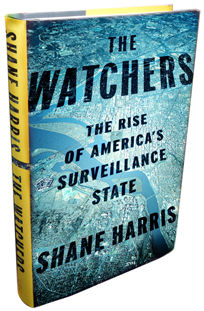
** Shane Harris is a senior writer at The Washingtonian magazine and the author of The Watchers: The Rise of America's Surveillance State. This article originally appeared here.
[Ed. note: What the government does with the data they already have is out of our hands. Asking them to give back your privacy is likely not going to happen. So it looks like it's going to be up to us to make sure that whatever information we give them... is useless.
The way the system is set up makes things difficult. All metadata run through a handful of Internet hubs. So you have to make sure that the information they receive can't be traced back to your computer.
So be careful what you share on the Internet. And stay tuned…]
[Hat tip and permissions Laissez Faire Today]
Tuesday, 11 June 2013
"I Don't Care, I've Got Nothing to Hide"
RADIO NZ NEWS: The US National Security Agency uses a clandestine surveillance operation known as Prism to monitor computer and telephone networks around the world… practically every New Zealander who uses the internet will have data stored about them in the United States and it's not known how much the agency has fed back to security agencies here…
Yeah, they’re listening. Whatever.
Nothing to care about, nothing to think about, nothing to talk about, nothing to hide…
If you’ve got nothing to hide, then take down all your curtains and tear off all your doors.
And you should know that’s true.
[Hat tip Small Dead Animals]
Monday, 17 January 2011
SUMMER SECONDS: Some propositions on the “right” to privacy
Summer. Time to relax, unwind, and take out classic articles from the archives for a second time around. Here’s one from 2009 . . .
People talk about there being a “right to privacy.” But does such a thing exist, or is is the promotion of this “right” above all others merely a convenient means by which to obliterate more genuine rights? Let’s get a few thoughts going on this so-called “right.” Here’s a few to start you off”
“An issue such as ‘the invasion of privacy’ cannot be discussed without a clear definition of the right to privacy, and this cannot be discussed outside the context of clearly defined and upheld individual rights.”
- Ayn Rand“Privacy: it’s a good, not a right. It’s not something to be recognised, it’s something to be earned.”
- PC“Yes, we each of us need privacy. But our need for something is not a claim on someone else.”
- PC“Civilization is the progress toward a society of privacy. The savage's whole existence is public, ruled by the laws of his tribe. Civilization is the process of setting man free from men.”
- Ayn Rand“Social democrats are collectivists of the first order. For them society is a large beehive or ant colony, and they are convinced that they have landed the job of managing it. It is a bit ironic, actually, since it is usually social democrats who champion ‘the right of privacy.’ Apart from that, though, liberal democrats do not acknowledge the existence of individual rights. Most of all, they are nearly unanimous in denying private property rights. . . these people dogmatically assume that "the wealth of the country" is for them to use and dispose of as they see proper. Individuals have no rights to their resources, income or wealth, especially not those individuals who have plenty of them.”
- Tibor Machan“Does a human being have the right to privacy? Well, is human nature such that in their community lives people require their own realm of authority, their own sovereignty—self-government—with respect of various aspects of their lives? Of course they do—that’s what being a responsible moral agent amounts to. So the right to privacy exists. It stands as a bulwark against meddlesome other people, especially governments.”
- Tibor Machan“Privacy is a good -- like food, music, or love. So while we have the right to take the actions required to secure our privacy via judicious use of our property and voluntary contracts with others, we have no direct right to privacy per se. . . Laws designed to protect privacy undermine genuine rights to property and contract.”
- Amy Peikoff“The ‘right to privacy’ is a misguided attempt to save some shreds of certain [legitimate] rights while retaining a way to eviscerate others.”
- Arline Mann
Discuss—especially with reference to the difference between goods and rights.
Wednesday, 5 August 2009
Frightening news from the Big Brother files [update 2]
From the 1984/Big Brother files comes the tale of two former bastions of freedom:
- News from the UK that the British government is now installing its cameras in private homes at a cost to taxpayers of £400million “to ensure that children attend school, go to bed on time and eat proper meals.”
- And from the US, in fact right from the White House blog, comes a call for informants: If you oppose Obama’s socialist health care plan, even in “casual Conversation,” the White House wants to know about it.
[Hat tip Paul McKeever]
UPDATE 1: Apparently the news from the UK is bad, but not so bad as reported. (That’ll teach me for believing the Daily Express.) The real news is the launch of “family intervention projects” that are almost as intrusive, though without the cameras, and not costing anywhere near as much [hat tip Luke H].
UPDATE 2: The Obama Administration is about to use the Trojan Horse of copyright to introduce new law to allow searching of PC’s, Laptops, and media devices.
Thursday, 30 July 2009
NOT PJ: Public Finances
This week Bernard Darnton looks at what happens when you sup with the devil and ask for seconds.

Mses Fuller and Johnston were the stars of a Sunday Herald story histrionically titled “Govt axe destroys dreams.” There are innumerable cases where government axes – or at least sharpened clipboards, suffocating paperwork, and strangulating red tape – do destroy dreams. In some crappier parts of the world the government axes are less metaphorical and more, well, axe-like.
In this case, however, the dream was the dream of yet more free cash from the government. The axe was a budget decision that there would be minutely less money dished out on education subsidies this year – probably because most of it got spent on basket-weaving and similar nonsense. Bennett’s crime was to inform us that the Sunday Herald’s two heroines were already pulling down about $80,000 between them.
Welcome to the welfare state: Give a man a fish and he’ll demand chips too.
Sue Bradford immediately accused Paula Bennett of beneficiary bashing. Mind you, anyone who suggests that it’s not the state’s job to provide free breakfast in bed with extra caviar is accused by Sue Bradford of beneficiary bashing. Listening to her is just extra wear and tear on my eardrums that I can do without.
Somehow, Annette King has concluded that the financial affairs of Fuller and Johnston are private and should remain secret, even after Fuller and Johnston have published details of their financial woes, alongside suitably sad photographs, in the Sunday Herald and also after King herself had discussed said financial affairs in Parliament.
Nope. The way that modern democratic socialism works is that thousands of wannabe beneficiaries gang up every election and vote themselves the contents of each other wallets. This system supposes that the contents of everyone’s wallets are of intimate concern to everyone else involved. So it’s a bit bloody rich for the supporters of this scheme to complain when those of us who pay the bills find out where the cash actually goes.
There is such a thing as the right to privacy but it derives from the right to property. What goes on in my house is my business because it’s my house. But that changes if I invite the Sunday Herald into my house to show them the broken windows and mildew and to have dejected photos taken. And if someone then points out that it’s not as crap as I’d made out I can hardly complain. And if I was using the publicity to try and convince people to chip in and buy me a spa pool I should probably just slink back to where I’d come from.
The details of my income are private because they’re a purely voluntary arrangement between me and my employer. They don’t concern anyone else. Those of Mses Fuller and Johnston on the other hand (and that of Ms Bennett, for that matter) concern everyone who has their pay packets raided by Inland Revenue to fund our gargantuan welfare state.
The debate has been framed as a big, bad government picking on a couple of helpless individuals battling to improve themselves. A big, bad government trying to chill the free speech of a couple of citizens who dared to criticise it. In fact, the ones telling this story are the ones trying to make the government bigger and badder.
If you don’t want the government to tell everyone your income then stop voting for governments that demand to know how much you earn.
* * Read Bernard Darnton’s column every Thursday here at NOT PC * *
Wednesday, 29 July 2009
The strange moral inversion of the welfare state
I’m just listening to a woman on ‘The Panel’ berating all of us for our rudeness towards Natasha Fuller and Jennifer Johnston.
This looks to me like a rather strange inverted moral standard being applied here. To whit, that it’s not rude to take other people’s money by force to buy votes (the government); it’s not rude to accept this money yourself at a rate that gives you a better income than many of those from whom the money was extracted (Ms Fuller and Ms Johnston); but it is rude, according to our woman on ‘The Panel,’ to expect Ms Fuller and Ms Johnston to be accountable to those paying through the nose for their lifestyle.
As it happens, it’s the same inverted moral standard exhibited in Bill English’s 2009 budget.
DOWN TO THE DOCTOR’S: Paula, Laura and the Greenwashed explorer
Libertarianz leader Dr Richard McGrath takes his regularly irreverent look at some of the past week’s headlines.

The report doesn’t say whether the astronaut’s previous voyage was at the same time of the year -- and I could be mistaken here -- but I imagine the ice caps recede and then build up again depending on the season. Two snapshots twelve years apart are hardly the basis for such a pronouncement.
My suspicion when reading this article that it was probably written by some equally Greenwashed media puppet was confirmed when it went on to talk about an air-scrubber stripping “deadly” carbon dioxide from the space station’s air. What utter bullshit. Carbon dioxide is not “deadly.” In fact, a buildup of CO2 in the blood of a living human provides stimulation to breathe more deeply and quickly, which sounds fairly life-enhancing to me. Down here on earth it is the fourth most abundant gas in the air we breathe, at a concentration of 0.04% or 1 in 2600 by unit volume. In higher concentrations carbon dioxide is irritant and harmful, but then again so is oxygen. Of course, in a space station the levels do need to be diminished, but the word “deadly” is being used in a space-station context to allow readers to draw conclusions about earth that they shouldn’t.
2. ‘I Can’t Afford To Eat Healthily’ – From the pages of the Daily Mail, but I just had to share this article with readers: a 25 year old British woman who has never worked, who weighed 38 stone, who was given a gastric bypass costing £8,000 under the NHS system, and dropped to 22 stone. But now she’s unhappy because her “disability allowance” of £340 pounds a month has been cut.
Her response: to sit on her backside watching TV for seven hours a day eating chocolate bars and packets of crisps. When asked why she didn’t eat an apple, she said: “They’re cheap, but emotionally, I don’t always feel like eating an apple.”
Does this entity ever consider the productive people who are taxed to support her indolent lifestyle? Does anyone ever give any thought to those they’re living off? I find it extremely difficult to feel any compassion for this entity who appears to have very few, if any, redeeming features. Never fear, the NHS has offered to bleed more taxpayers to the tune of another £12,000 to pay for an operation to remove the saggy bits of skin left behind after the initial weight loss. Only in Britain!
3. Minister Accused Of Breaking Privacy Law – Paula Bennett is in the firing line for revealing how much the taxpayer is forced to pay two beneficiaries who were complaining about a reduction in handouts to solo parents. There is a simple answer to this: privatise welfare, so that politicians and bureaucrats are no longer privy to this sort of personal information. Thousands of public servants could have access to details of your personal benefit history – why on earth should sensitive information on personal finances be available to state employees? There is ample evidence that private welfare does a much more efficient job at targeting money and resources to those who need it. Most importantly, a private system would not be allowed to extort money from working people as the public welfare system does currently via Inland Revenue.
See y’all next week!
Doc McGrath
Tuesday, 28 July 2009
What gives moochers a right to privacy? [updated]
What’s this “right to privacy” bullshit that Annette King and co are banging on about on behalf of two beneficiaries.
I know about a right to life -- about a right to liberty – about rights to the pursuit of property and happiness. All those are legitimate rights for all of us -- but I'm not so sure about this "right to privacy."
Furthermore, if you come and take my property, my money, my wealth, and then give it to two people who already look to be on a bloody good wicket and are only complaining because they want to be able to take more (or to 121 people who are on a damn fine wicket, and are always grasping for more), then I have a right to know just how much of my money they’re pulling down.
Right to privacy, my arse. How about everyone's right not to be stolen from.
UPDATE: Revised for clarity after a discussion at KiwiPolitico starting here.
Monday, 3 December 2007
Gagging justice
The Attorney General's threat to gag Herald reports on earlier details of the man accused of murdering Emma Agnew highlights again the disturbing trend to hide what's going on in our courts, just as it was highlighted in the orders for name suppression and evidence suppression in the recent 'Urewera 16' bail hearings.
In recent years New Zealand's courts have admitted TV cameras, but at the same time have more and more frequently enforced orders suppressing information about what's going on inside those courts. We can see pictures, but we're not allowed to know who's on trial, and what the evidence against them is. Picture but no sound. We're being treated like children, and there's little justification for it.
Name suppression, evidence suppression -- these recent high profile cases in which the media have been gagged from reporting details that would help we the people ( in whose name the courts are operating) to judge for ourselves whether justice is being done have highlighted this unfortunate predilection for gagging orders.
I've argued before that "It's unfortunate that our courts seem to have forgotten the crucial principle that underpins their work: that justice must not only be done must must be seen to be done. When justice is kept under wraps, all sorts of nonsense appears in the vacuum... Why do the courts consider us so immature that we can't handle hearing the evidence for ourselves in media reports, instead of hearing only the nonsense that its absence has generated?"
Stephen Franks blogs a robust discussion of this "recent fad to elevate privacy and possible embarassment over substantive justice" that's worth considering:
In recent years New Zealand's courts have admitted TV cameras, but at the same time have more and more frequently enforced orders suppressing information about what's going on inside those courts. We can see pictures, but we're not allowed to know who's on trial, and what the evidence against them is. Picture but no sound. We're being treated like children, and there's little justification for it.
Name suppression, evidence suppression -- these recent high profile cases in which the media have been gagged from reporting details that would help we the people ( in whose name the courts are operating) to judge for ourselves whether justice is being done have highlighted this unfortunate predilection for gagging orders.
I've argued before that "It's unfortunate that our courts seem to have forgotten the crucial principle that underpins their work: that justice must not only be done must must be seen to be done. When justice is kept under wraps, all sorts of nonsense appears in the vacuum... Why do the courts consider us so immature that we can't handle hearing the evidence for ourselves in media reports, instead of hearing only the nonsense that its absence has generated?"
Stephen Franks blogs a robust discussion of this "recent fad to elevate privacy and possible embarassment over substantive justice" that's worth considering:
The Attorney General is telling the Herald to suppress its old stories on the man accused of murdering Emma Agnew. I hope the Herald tells the Attorney General to stand up for a change for freedom of speech and open justice.When justice comes with gagging orders, then justice is neither being done, nor seen to be done. It's time to reconsider their popularity.The law around pre-trial contempt of court (and sub judice) is based on the theory that the risk of biasing judges and juries outweighs freedom of speech, including open disclosure of what is known and obtainable by insiders, or those determined to find out.
I am not aware of any balance of evidence to support [this] fear... Indeed the attempt to treat juries like computers, cleansed of any pre-knowledge, and sheltered by evidence exclusion rules from anything a judge patronisingly considers prejudicial, turns upside down the original justification for a jury of your peers.
Monday, 10 September 2007
Stalinist Cindy's promise: An apparatchik in every home
A surveillance system of New Zealand parents proposed by 'Surveillance Cindy' -- the Stalinist Children's Commissar -- will see clipboard wielding Stasis examining every family in the country against criteria set by Cindy Kiro and her children's commissariat.
This is fully consistent with the mentality that "we" are to blame for parents who kill their kids. According to this view it takes a village to kill a child, and it takes 'Surveillance Cindy' and her fellow Commissars to ignore the killers and instead unleash upon good families an avalanche of apparatchiks bearing a presumption of guilt and a clipboard -- delivering a welfare cheque on every plate, and an apparatchik in every home.
The apparatchiks would assume you're mistreating your children, unless you could prove otherwise. Show them the "wrong" video games, the "wrong" books, or discipline them the "wrong" way, and you go on report.
As Liberty Scott reports it's disgraceful that it's taken the mainstream media all of eleven months to notice Surveillance Cindy's Orwellian plan. Says Scott,
This isn't about good parenting, it's once again about increased state control. I reminded you before that Sue Bradford's anti-smacking bill was about more than just smacking; as Cindy Kiro has indicated clearly enough, their programme hass always been about nationalising children.
When will you wake up?
UPDATE 1: Who's coming out swinging on this? Bob McCoskrie, who says Children's Commissioner Promotes Nanny State. Leighton Smith. Whale Oil. Crusader Rabbit. Lindsay Mitchell:
UPDATE 2: I'm pleased to hear Willie Jackson and John Tamihere come out in their afternoon show against Surveillance Cindy's proposal for universal monitoring, albeit somewhat tepidly. Rather than the one-size-kicks-all nannying proposed by Commissar Kiro, Willie and JT suggest "targeting" the nannying. A caller to the show points out the reason neither Cindy nor the Clark Government would go near the idea of targeting: it's the brown question again, isn't it; the knowledge that the child abuse that Cindy claims to be countering is overwhelmingly happening in brown households (as Lindsay Mitchell reports, "the rate of abuse for Maori children is around three times higher," while pointing out that "child deaths due to maltreatment are decreasing.")
So that is the real elephant in the room that Cindy and her supporters and most of maoridom refuse to recognise, and that targeting would highlight.
UPDATE 3: Cactus Kate proposes some targeting of her own:
This is fully consistent with the mentality that "we" are to blame for parents who kill their kids. According to this view it takes a village to kill a child, and it takes 'Surveillance Cindy' and her fellow Commissars to ignore the killers and instead unleash upon good families an avalanche of apparatchiks bearing a presumption of guilt and a clipboard -- delivering a welfare cheque on every plate, and an apparatchik in every home.
The apparatchiks would assume you're mistreating your children, unless you could prove otherwise. Show them the "wrong" video games, the "wrong" books, or discipline them the "wrong" way, and you go on report.
As Liberty Scott reports it's disgraceful that it's taken the mainstream media all of eleven months to notice Surveillance Cindy's Orwellian plan. Says Scott,
I was heartened to see yesterday's response from Mitch Lees, the organiser of last year's anti-anti-smacking rally, and now the CEO of Lindsay Perigo's Sense of Life Objectivists:I reported on this atrocious proposal in October LAST YEAR. It's not NEWs, it's just that the standards of journalism in NZ are often shockingly low.^And what's the headline in the Dominion Post? "$5m-a-year to save our our children" [sic]. I don't care if it is $5 million, $50 million, $5 billion or $50 - THAT isn't the story Keri Welham.The headline should be "Shades of Orwell in plan to cut child abuse."
SOLO Slams Commie Kids Commissioner: "The suggestion that EVERY baby's home must be checked is an indication that Commie Kiro has no idea – or is willfully ignoring – where the real problem lies. Monitoring every home ... promises to be a gigantic waste of taxpayer funds. Funds that would be far better spent on preventing, punishing and sterilising the Kahui twin killers of this world," says Lees.Given that Plunket have been doing for years Kiro claims to be doing with her Stasi scheme, but doing it efficiently and voluntarily and largely on a user-pays basis, it now becomes obvious why the Clark Government's have chosen to have Plunket gutted.
"Child abuse in New Zealand is not 'our' problem, it is the problem of the few unspeakable trash who commit and permit the abuse. Focusing on the whole population only serves to muddy the waters as to who is responsible for these disgraceful actions, allowing more innocent children to be killed in the meantime..
How can you hope to solve a problem, if you can't (or won't) even identify its cause?
"Instead of unjustly assuming that every parent is a criminal in a desperate attempt to not call a spade a spade, authorities need to concentrate their resources on preventing the real threats to children. Taking $5million of taxpayer's money and using it to brazenly intrude on our privacy serves as a strong indication that it is time for Nanny to accompany the child killers to the gallows."
This isn't about good parenting, it's once again about increased state control. I reminded you before that Sue Bradford's anti-smacking bill was about more than just smacking; as Cindy Kiro has indicated clearly enough, their programme hass always been about nationalising children.
When will you wake up?
UPDATE 1: Who's coming out swinging on this? Bob McCoskrie, who says Children's Commissioner Promotes Nanny State. Leighton Smith. Whale Oil. Crusader Rabbit. Lindsay Mitchell:
Can we have some perspective here. Most mothers already willingly let Plunket into their homes. Forcing those who don't to accept state interference is enough to make them go underground.And here's Libertarianz' Peter Osborne:
"Children's Commissioner Cindy Kiro has again shown that her position exists not to defend child wellbeing, but as a mere political tool," proclaimed Peter Osborne, Libertarianz Social Welfare Spokesman.... "Spineless appeasers John Key and David Farrar, meanwhile, both have a bob each way.
"As with the anti-smacking bill, this recommendation will do nothing to stop people from abusing their children. People must ask, 'why have such abusive or apathetic adults given birth in the first place? And why in such large numbers?' The reason is because Nanny State forces us all to subsidise such families. She has also regulated our everyday lives to such an extent that opportunities to provide the means for self-sufficiency have become almost impossible to find. Unbelievably, New Zealand keeps voting for the status quo!"
UPDATE 2: I'm pleased to hear Willie Jackson and John Tamihere come out in their afternoon show against Surveillance Cindy's proposal for universal monitoring, albeit somewhat tepidly. Rather than the one-size-kicks-all nannying proposed by Commissar Kiro, Willie and JT suggest "targeting" the nannying. A caller to the show points out the reason neither Cindy nor the Clark Government would go near the idea of targeting: it's the brown question again, isn't it; the knowledge that the child abuse that Cindy claims to be countering is overwhelmingly happening in brown households (as Lindsay Mitchell reports, "the rate of abuse for Maori children is around three times higher," while pointing out that "child deaths due to maltreatment are decreasing.")
So that is the real elephant in the room that Cindy and her supporters and most of maoridom refuse to recognise, and that targeting would highlight.
UPDATE 3: Cactus Kate proposes some targeting of her own:
It makes far more sense to visit the homes of beneficiaries to make sure they aren't having sex.UPDATE 4: An important new announcement from Dr Zen Tiger:
The NZ Government today signed off sponsorship for a $30 million dollar NGO titled the CFC. The Commission for Commissioners is charged with maintaining the well being of all people serving as Commissioners in this country. The Director of this newly funded organisation, Dr Zen Tiger, said:"New Zealand has taken a major step forward in human rights by ensuring advocacy for Commissioners. It is a fact that some Commissioners do not have the same advantages as others, but this is not always obvious. Therefore, I have launched a plan that will ensure EVERY commissioner has a lifetime plan, with life time monitoring."Dr Tiger's full plan is detailed here: Leave No Commissioner Behind.
Thursday, 23 November 2006
Benson-Dope sleaze just more irrelevant crap from Wishart
Hicky Nager and Ian Wish-hard deserve to get stuck in a lift together. They could spend the time 'investigating' each other instead of trying to fill up the news media with drivel.
I agree almost one-hundred percent with G-man: as I've said many times before, what goes on in David Benson-Pope's private life is just that, his private life. Not my business, not your business, not Ian Wish-hard's business (oh, sorry, peddling crap is his business).
What is my business and yours' is not what Benson-Dope does in the the privacy of his own home or in somebody else's dungeon, but the truly disgusting things he does right out there in the open -- trying to ban Guy Fawkes; administering the awful RMA instead of putting a stake through its heart; helping manipulate the shonky welfare figures of the Orwellian-sounding Ministry of Social Development; attacking Don Brash for his private life (oh, the irony). Concentrate on those repellent things done in the course of his day job, not what he may or may not get up to of an evening.
"I'm too busy to join a sex club," says Benson-Dope this morning. Personally, I wish all 121 MPs had much more time for a private life, achieved by leaving us the hell alone.
LINKS: Race to the bottom - G-Man Inc.
Minister: I'm too busy to join a sex club - NZ Herald
Benson-Pope misleads Parliament - Lindsay Mitchell - Scoop
You want a link to Wishart's sleaze? Go find it yourself.
RELATED: Politics-NZ, Politics-Labour, Nonsense
I agree almost one-hundred percent with G-man: as I've said many times before, what goes on in David Benson-Pope's private life is just that, his private life. Not my business, not your business, not Ian Wish-hard's business (oh, sorry, peddling crap is his business).
What is my business and yours' is not what Benson-Dope does in the the privacy of his own home or in somebody else's dungeon, but the truly disgusting things he does right out there in the open -- trying to ban Guy Fawkes; administering the awful RMA instead of putting a stake through its heart; helping manipulate the shonky welfare figures of the Orwellian-sounding Ministry of Social Development; attacking Don Brash for his private life (oh, the irony). Concentrate on those repellent things done in the course of his day job, not what he may or may not get up to of an evening.
"I'm too busy to join a sex club," says Benson-Dope this morning. Personally, I wish all 121 MPs had much more time for a private life, achieved by leaving us the hell alone.
LINKS: Race to the bottom - G-Man Inc.
Minister: I'm too busy to join a sex club - NZ Herald
Benson-Pope misleads Parliament - Lindsay Mitchell - Scoop
You want a link to Wishart's sleaze? Go find it yourself.
RELATED: Politics-NZ, Politics-Labour, Nonsense
Subscribe to:
Posts (Atom)