Showing posts sorted by relevance for query calatrava. Sort by date Show all posts

Sunday, 3 September 2006

Santiago Calatrava -- see him NOW at a cinema near you

The man's a genius. An artistic and engineering genius.

I've only had the the pleasure of being in one of Santiago Calatrava's magnificent buildings -- many of which bring to architecture the novel concept of seeing buildings as mechanisms, or as organisms that change as a living thing would during the course of the day -- so the film on Calatrava and his work currently on show at the JASMAX Architectural Film Festival was a delight. A real delight. (That's him above with another of my heroes, architect Felix Candela.)

A building that changes and grows as an organism does is a difficult thing to convey in a photograph, particularly when they change with the grace of a Calatrava building (often reminiscent of the scillia of an anenome, or the windswept movement of of a field of corn), so film offers the rare opportunity of capturing this delight.

The photographs here of Calatrava's Milwaukee Art Museum for instance give you an idea of the elegance of the construction when it's embrature is both open (above), when it seems to soar like a great bird, and closed (below), but not of the grace of its movement or the sheer 'organic' ingenuity of its mechanism. If you are at all interested in either architecture or engineering, I would urge you to try and get to one of the remaining sessions of the film showing over the next few days in Auckland, Wellington and Christchurch to see these buildings and the man's work as close to 'in the flesh' as you can see in this country.

And just as a contrast, to help you see how lucky are the people of Milwaukee to have a Calatrava creation for their Art Museum, I've selected a few other recent Art Museums produced by architects fashionable only for being fashionable, all of which have been, not to put too fine a point on this, expensive failures. I give you, Frank Gehry's monumentally ugly (and inordinately expensive) Columbus Art Center, resembling nothing so much as an expensive pile of used tin cans:

Zaha Hadid's disastrous Cincinatti Art Museum (below), erected at huge expense to help revitalise Cincinatti and the arts in that city, only to see patrons staying away in droves:

And Peter Eisenman's recently expensively rebuilt Wexner Art Center (below); at the time of rebuilding "director Sherri Geldin took the opportunity to list, to the obvious chagrin of an increasingly crimson Peter, exactly why the building sucks [and needed reconstruction]: lost patrons, damaging sunlight, useless spaces, etc. 'It would have been easier to start from scratch,' she said, and not in a nice way. Eisenman fled mid-speech." [Reported here at Not PC.] Her comments could just as easily have been reflected by the curators of the other museums above.
In fact, it would have been "easier" and infinitely more delightful if all those Art Museums had hired real architectects like Calatrava, instead of the posturing poseurs they did.

Go and see the film: 'Santiago Calatrava's Travels.' If you've read this far in this post, you'll love it. But be quick. The last showing at Auckland's Academy Cinema in Lorne St for instance is tonight at 6:45pm. Here's another link to the schedule for your city.

LINKS: Santiago Calatrava resources - Frederick Clifford Gibson
Milwaukee Art Museum,Quadracci Pavilion - description and story at the 'Galinsky' site.
Posturing poseur alert - Not PC (Peter Cresswell)

JASMAX Film Festival '06: Celebrating Architecture - JASMAX

RELATED: Architecture, Films, Heroes

Friday, 13 January 2006

'Townhouses in the sky' - Santiago Calatrava

Architect-engineer Santiago Calatrava has unveiled plans for a tower of "townhouses in the sky" for lower Manhattan, immediately adjacent to the Brooklyn Bridge -- itself a pretty inspiring piece of work.

Interestingly, the crystalline "townhouses in the sky" barely picks up on their neighbour, the Bridge, at all, whereas Calatrava's project for a new rail terminal at the World Trade Centre site (below) does almost explicitly, and beautifully.

(You can see a QuickTime video of this Twenty-First Century Grand Central at Calatrava's own site. Look for the WTC PATH Terminal, and click on the 'Video' link.)


Linked Article: Calatrava, Sciame proposed tower sculpture for the Seaport

Friday, 20 April 2007

Santiago Calatrava in Valencia


There may be no wind in Valencia at present, but there is Santiago Calatrava's architecture to enjoy.

Here's some more of his work around his home town, including the City of Arts and Sciences, and the new Opera House (left, below).

Talking about Calatrava's work, Theodor Heuss contrasts it with the technology that some critics disparagingly call it :
The fate, and perhaps the purpose of technology is to grow old ... Art does not age: whatever it is, however old it is, it has an immanent presence and a direct effect on people.
Calatrava's art undeniably speaks for itself. And it speaks beautifully.

Friday, 29 July 2005

Fordham Spire will stand tall


One of the most exciting international architects practicing today is Santiago Calatrava, who has just unveiled his plans for the Fordham Spire, the tallest skyscraper in the US, to be built on Chicago's lakefront (above). When completed, it will be the second tallest in the world, behind the Burj Tower presently under construction in Dubai. The Herald quotes the head of Fordham Co. Christopher Carley, who clearly has a sense of history: Good on him. Chicago's skyline is like an art collection; it's wonderful that Chicagoans value these art treasures so visible in their city. Naturally the design has attracted knockers, from a Donald Trump apprehensive of the competition -- "a total charade" The Donald calls it -- to people suggesting it will be "a target for terrorists." Carley and Calatrava brush off both claims. Of the latter, Calatrava says:
Chicago was America's birthplace for modern architecture, nurturing the genius of Louis Sullivan, Daniel Burnham, Frank Lloyd Wright and Mies van der Rohe," Carley said in a statement. "We want to carry that tradition into the 21st century and give our city a masterpiece by one of today's indisputable geniuses."

"The target was not skyscrapers," he said in reference to the terrorist attacks on the World Trade Center towers in Manhattan on Sept. 11, 2001. "The target was the human lives within them. That's what made it so horrible. But what is my weapon to react against this thing? This building is my weapon! It is a way to say we build in our culture a respect for human life and for a pluralistic society. We have to make an effort to continue inventing the book of life."

Friday, 27 April 2007

Lyon-Satolas Airport Railway Station - Santiago Calatrava


Built for the 1992 Winter Olympics in Albertville, France, this is Santiago Calatrava's competition winning Airport Railway Station for Lyon-Satolas - as a sketch (right), as a model (above), and as the real thing (left).

Thursday, 5 February 2026

Auckland can't afford a second crossing ... or can it?

OVER SUMMER ONE ALWAYS gets a few ideas. Some good, some questionable. Some that just seem obvious once they've occurred to you. 

Here's one of those.

Let's start with three propositions: 

1. Auckland can't afford new infrastructure.

2. But Auckland would like to move its port. (But Auckland can't afford new infrastructure.)

3. Auckland will soon need a second harbour crossing. (But Auckland can't afford new infrastructure.)

Auckland can't afford that new infrastructure. Can't it? Perhaps it can.

Let's see what happens if we put those three problems together. As architects like to say, the solution is often contained within the problem ....

LET'S START WITH A CONTROVERSY from a few years ago when then-mayor Phil Goff complained about the Ports of Auckland steadily encroaching on the harbour with its ongoing reclamation work at the Ferguson container wharf. We joked that if they kept going, the Port would eventually end up in Devonport ...

A good joke.

But what if the wharf—or some part supported by the wharf—somehow did end up there?

Might that be a good thing?

Let's think: at the moment (see below) 

  • the gap between Devonport and Port is just 800 metres -- that's compared to the 1000 metre length of the existing Harbour Bridge
  • the rail line to Britomart passes right beside the container wharf
  • the Grafton gully motorway points in a straight line down to the container wharf
  • RNZ Navy land takes up some of the best land in the country to house the world's most ineffective navy
  • existing tidal wetlands and greenspace on Belmont/Devonport (Charles Reserve, Hauraki Primary, Philomel Reserve, Bayswater Park, Plymouth Reserve, Hill Park, Ngataringa Park) offers scope to avoid simply dumping traffic on Lake Rd, and instead to link up with existing Northern Motorway at Takapuna.

Could we all win?

I think we could.

So the project could feature

  • elegant new 'gateway' bridge for road, rail and foot
  • new spur rail line from existing Quay Street rail line to Devonport
  • new Devonport railway station, with platform under bridge (with a later link to Takapuna as well?)
  • new road connection to existing motorway at Takapuna and at Grafton
  • new apartments and marinas on and around existing container wharf (southside) and on former naval base (northside)
The latter (i.e., apartments) would pay for the former (i..e, everything else) --- and for the port and the naval base to move. They would have to.

The port is important, make no mistake. But viable plans for the port to move have already been drawn up. And there's no reason for New Zealand's Navy, who would be second in a fight with Switzerland's, to be there at all—squatting on some of the country's most expensive real estate rather than hanging out somewhere much less expensive. If you must keep them in Auckland (why?) then dredge the Manukau. Removing them will help to some small extent in removing pressure from Devonport's housing market -- as will new apartments built around what will be a new transport hub there.

IN ITS FAVOUR:

  • very little distance to build the crossing (just 800m at present, compared to 1000m for the existing bridge, which could still be further reduced)
  • done well, the bridge and apartments together become a gateway to the city's inner harbour, framing it and re-defining it
    • curved bridge which, like San Diego's renowned curved Coronado Bridge, would be high enough for ships to pass under, 
    • and/or, like Santiago Calatrava's magnificent structures, delicate enough to enliven the harbour, which would be both structurally elegant and appropriate as a harbour-side gateway to the city
    • even a 'utilitarian' suspension bridge or cable-stayed would suit (we have plenty of great bridge designers here)
  • removes some proportion of traffic from existing Harbour Bridge 
  • easier Devonport road connection, removing congestion from Lake Rd
  • immediate foot, cycle, and rail access to/from Devonport
  • high-density apartment living on former container wharves, enjoying spectacular harbour views, a new marina, and easy walkable access to city wand waterfront
  • high-density apartment living on former naval base waterfront living enjoying spectacular city views, with a marina, an easy commute to city and beyond (and public transport direct to city via new spur rail line!), and easy walkable access to both the waterfront and to Devonport...
What's not to like? Even Wayne Brown should like it, because he'd get to bully the Navy, the Port authorities, AT and ministers of transport and defence.

San Diego's renowned Coronado Bridge

Sharq Crossing, Doha, by Santiago Calatrava
PROBLEMS?
  • Nimbys, of course, in Parnell, in Devonport and in Belmont
    • some property in Belmont and in Devonport will need to be bought, voluntarily -- or perhaps the air rights bought
    • Parnell owners already regularly whinge about the existing container wharf anyway
  • work on coastal wetlands
    • that said, this would be an ideal opportunity to fix (properly this time) some of the drainage issues around these areas
  • new location needed for the container port, and imported cars...
    • not an insignificant cost, but relocation also paid for from apartment sales...
  • bridge needs to allow large cruise ships underneath
    • so it needs to have some height!
  • cost
Cost is always the biggest problem. And too much taxpayer money has been wasted already. But that's the benefit here: these apartments on both sides, sit on over 100 Hectares some of the most valuable real estate in the country -- currently occupied only by cars, containers and a Navy that needs to bugger off. At even just 50-100 dwellings per Hectare that's still between 5-10,000 apartments to be sold. Multiply that number by a few million dollars or so, and you're in the ballpark for your project budget.

The revenue from the new development (apartments, marinas, hospitality etc.) should more than pay for the project -- and have the added benefit further helping intensify the central city (a god thing), and bringing down house prices all over the(a great thing!). 

The only major problems I foresee, apart from the bureaucratic haggling about which branch of government owns what, is that government (central or local) would set themselves up as the developer. Which never ends well. And that, inevitably therefore, given the glacial rate of progress of recent projects around the city, it will be the next half-century before anything is ever completed.

Friday, 10 January 2014

Friday Morning Ramble: The “It’s Colder Than a Ticket-Taker’s Smile” Edition

image

I’m not saying it’s cold in the U.S. right now …. but Niagara Falls is freezing over.

5

I’m not saying it’s cold in the U.S. right now …. but frigid temperatures forced an esacped prisoner to turn himself in.

I’m not saying it’s cold in the U.S. right now …. but Hell is freezing over too.

I’m not saying it’s cold in the U.S. right now …. but don't try pissing outside.

I’m not saying it’s cold in the U.S. right now …. but water from fire hoses turns to ice as it hits burning buildings.

I’m not saying it’s cold in the U.S. right now …. but Lake Michigan is turning into ice balls

I’m not saying it’s cold in the U.S. right now …. but it’s not every day a Frank Zappa song becomes a safety warning.

And let’s just remember to pay tribute to NASA warmist James Hansen, who warned in 1986 we would face warming of up to 5 degrees F by 2010 … and senior British research warmist at the Climatic Research Unit (CRU) East Anglia, who in the year 200 warned “within a few years winter snowfall will become ‘a very rare and exciting event.’ ‘Children just aren't going to know what snow is,’ he said.”

More links on the Polar Vortex here, and from 1974 (when it was global cooling wot done it).

Q: What do the Taleban and Maori tikanga have in common? A: A stone-age attitude towards women.
How people in Muslim countries prefer women to dress in public – PEW RESEARCH
Maori protocol warning – STUFF
Youth Parliament: Gender Segregated Powhiri "wrong" – SCOOP

NZ’s Productivity Commission is talking about NZ and Australian productivity. Unfortunately, bloggers don’t understand them.
What are we asking with productivity in NZ? – Matt Nolan, TVHE

I’ve heard the words “suicide” and “Sea Shepherd” in the same sentence before, but not with this spin.
Support grows for the Paretian Cetacean solution – Eric Crampton, OFFSETTING BEHAVIOUR

The Trans-Pacific Partnership (TPP) from an American perspective.
Everything you need to know about the Trans Pacific Partnership – WONK BLOG

“There is no greater, nobler, more heroic form of devotion than
the act of a man who assumes the responsibility of thinking.”

- Ayn Rand

A look back at the biggest media story of 2013 - Edward Snowden and the NSA surveillance programme.
The Snowden saga: Spies, secrets and security – AL JAZEERA

“The Washington Post is running a terrific article in which former NSA contractor Edward Snowden explains why he revealed how far the NSA and other federal agencies had gone toward constructing a national security surveillance state.”
Washington Post Interview: Edward Snowden Defends the Constitution Against Clapper, Alexander, Feinstein, Rogers, and Obama – Ronald Bailey, HIT & RUN

Snowden story-breaker Glenn Greenwald “wipes the floor” with career statist Ruth Marcus on the argument over clemency.

Number One: “Politicians believe there are no consequences for destroying our liberty…”
”"Four Key Lessons From 2013 – Simon Black, ECONOMIC POLICY JOURNAL

Robert Tracinski looks back at the big (American) stories of 2013, and forward to “The Year of ‘We Told You So.’”
Top Stories of the Year – THE TRACINSKI LETTER

It’s not everyday you find a partnership as odd as this.
Dear Dennis Rodman, Your Friendship With A North Korean Dictator Is Not Funny – THE FOUNDRY

“Always keep an eye on the quiet ones. Robert Gates, a Washington veteran who served as George W. Bush’s final defence secretary and stayed on as Barack Obama’s first, has written an incendiary memoir that belies his reputation as an inscrutable, unflappable team player…”
Everything was political – THE ECONOMIST

“Examples of the failures of government, large and small, are pretty easy to come by… But in terms of both wasted money and human suffering, it’s hard to find a more egregious government failure than the War on Poverty.”
A New War on Poverty – Michael D. Tanner, CATO

How to ensure there will always be an underclass to justify the demand for a War on Poverty.
The War on Poverty kept poor people poor – Stephen Horwitz, MARKET WATCH

Poverty, poverty, poverty. So what’s the greatest achievement of the last century that you never hear about? It turns out that between 1970 and 2010 the worst poverty in the world – actual poverty, not poverty redefined – people who live on one dollar a day or less – people involved in commerce instead of government poverty programmes – has decreased by 80 percent (see chart below and story here). You never hear about that. Certainly not from John Minto.

wordpoverty2

The minimum wage sets two wage rates: Zero, and a minimum mandated by law. Low-skilled workers know this already; it’s economists and politicians who don’t. Everywhere.
The Minimum Wage Forces Low-Skill Workers to Compete with Higher-Skill Workers – GEORGE REISMAN’S BLOG
Why raising the minimum wage is not the best way to help Britain's poorest – Lee Shackleton, IEA
Minimum Wage: This Time It May Be Different – Roger Garrison, CAFE HAYEK

“While there have been all too many lies told in politics, most have some little tiny fraction of truth in them, to make them seem plausible. But the ‘trickle-down’ lie is 100 percent lie.”
The 'Trickle'Down' Economics Bogeyman – Thomas Sowell, CAPITALISM MAGAZINE

Students everywhere …
The Ignorance Of Today’s College Students Shouldn’t Surprise Us – BURTON FOLSOM

Did laissez-faire cause the Irish Potato Famine? Did over-population?
Malarkey – Don Boudreaux, CAFE HAYEK 
Blarney – Don Boudreaux, CAFE HAYEK

It may have never happened.
Easter Island "Collapse" May be a Modern Myth – ARCHAEOLOGY

No, Black Adder wasn’t the last word on the war that started one-hundred years ago this year.
British government minister blasts 'Blackadder myths' about the First World War spread by television sit-coms and left-wing academics – John Ray, POLITICAL CORRECTNESS WATCH

"The central banks are running out of tricks," says David Stockman on the Tom Woods Show.

Most scientific fraudsters keep their jobs …
Weekend reads: Most scientific fraudsters keep their jobs, random acts of academic kindness, and more – RETRACTION WATCH

Meanwhile, there is a gloomy market for academic economists.
Say’s law and academic malemployment – CATALLAXY FILES

“To be yourself in a world that is constantly trying to make
you something else is the greatest accomplishment.”

- Ralph WaldoEmerson

Vinay Kolhatkar at Romanticism Watch recommended the recent blockbuster film Agora –and he was right to. Through the microcosm of the ancient world’s greatest and most intellectual city, and history’s most famous woman philosopher, Hypatia, it illustrates how the collapse of thought preceded the collapse of the ancient world, bringing with it a millennia of darkness and religious oppression – and how the coming of Christianity did for the ancient world what the Taleban did for Afghanistan.
Super-Atheist Gorgeous Epic Film: Agora (2009) – COMMON SENSE ATHEISM (Warning: contains spoilers in the second half)

The relative distribution of the world's wealth in 1500 and 2002. (The bigger the country, the wealthier it is—relatively speaking.)

The moment before the most famous album cover ever was photographed. (Go on, take a look.)

Reasons to love Scotland.
25 Reasons why we love Scotland – IMGUR

“Despite cost overruns and leaky roofs, Santiago Calatrava’s buildings have the power to inspire.”
Give Calatrava a Chance – Fred Bernstein, ARCHITECTURAL RECORD

D’you think it will happen?

Embedded image permalink

Here it is people. The lowdown on how to make money from Facebook.
How to make money from Facebook – DAILY BLOG

I hope you did.
Why it's OK to drink a lot this Christmas – PETE BROWN

Who drinks the most in Europe?
Who Drinks The Most Alcohol? – ZERO HEDGE

Should a man unwilling to be a father have to pay child support? It’s a fair question.

Supplements produce more than just expensive urine.
Vitamins Lack Clear Health Benefits, May Pose Risks – FORBES

Come on people. Eat real burgers.

Jane McGonigal reckons you should play more games.

So here’s one in which architecture is made the central character.

Another Public Health Warning: Don’t strike up a conversation with David Bowie in a bar.

This is fun. Especially after too many involuntary meetings with grey ones.

Yes, Virginia, Joe Strummer did have another band after he killed The Clash.

Could still be my favourite piece of modern blues.

[Hat tips Bosch Fawstin, Paul McKeever, Paul Litterick, History Pictured, The Stateless Man, Jesselyn Radack, David Burge, Richard Tol, Glenn Greenwald, Rob Abiera, The Anti Al Gore, Philosophy Muse, Slate, Noodle Food, 3 Quarks Daily, Barbara Clarihew, Archinect]

Thanks for reading.
Have a great weekend.
And if you’re still on holiday, keep that elbow exercised!
PC

Tuesday, 22 December 2009

Happy 2-million day to me

Since it’s Christmas, and since I’ve only recently celebrated my two millionth visitor to NOT PC, I figured I’d wish myself my own Merry Christmas by blowing my own trumpet just a little. Well, a lot.

Since starting this blog way back in the mists of time--around half a decade ago—I’ve written and published precisely 5000 posts (this is the 5001st).  With an average word count of around 350 words per post that represents . . .  some very sore fingers and around 1,750,000 words—not all of them my own (thank Galt for copy and paste!).

Still, 1,750,000 words is more than the entire recorded output of, say Raymond Chandler.  And his words were put together better too.

Still, as Poneke said when hosting his own self-celebration recently (you see what I mean by the beauty of copy-and-paste),

“Many of my articles over the first [five] years are still frequently Googled and read. Looking back at them, I can see why. Some of them contained substantial information on important issues, or were just plain good.”

And so say all of me. In evidence, your honour, I submit this baker’s dozen of the most popular posts here at NOT PC right from when it were just a wee babbie—or, at least, from when Google Analytics started picking up after me and my various guest posters by telling me who was reading what, and how many.  Here, in other words, are the 0.26% of all those 5001 posts that has risen to the top:

Frank Lloyd Wright: Broadacre City (November 2005)
    "Urban sprawl is one of the greatest enemies of good urban design," say some. I don't agree. The greatest enemy is a lack of choice, created by a lack of freedom. 'Sprawl' gives people choices: the alternative is mandatory slums. Frank Lloyd Wright's 1932 concept of the 'Broadacre City' . . . demonstrated that sprawl is not the enemy. . .
    ”There should be as many kinds of houses as there are kinds of people and as many differentiations as there are different individuals. A man who has individuality (and what man lacks it?) has a right to its expression in his own environment.” (FL Wright, 1908)
    Read here about Frank's 'Broadacre City' concept - everything the planners hate -- and for Frank's own drawings which he prepared to indicate what such a place might be like . . .

The Global Financial/Economic Crisis: The True Causes And Only Long Term Solution (November 2008)
    As financial and market instability persist, as governments flail and fumble, one thing is for sure - we're on the brink of a most serious economic event - a "depression" which is the BUST component of the typical "boom/bust" cycle.
    Popular criticism is centred on blaming the bankers, the financiers, and to some extent the politicians, and the overall lack of "regulation." And above all there is a consensus emerging that it is ultimately the fault of the free market, of capitalism - and that what is needed to "fix" this problem is more regulation, more easy credit (debt), and ultimately more government.
    Nothing could be further from the truth.

Seeing spiders (February 2007)
    Who would have thought that a post on Pitcairn Island’s spiders would have attracted several thousand visitors!

The Rape of the Daughters of Leucippus - Rubens, 1618 (November 2006)
    ”Success glows through his pictures in halcyon color. No one ever caught the rosy
bloom of healthy skin, the shimmering quiver of well fed flesh with such
lip-smacking skill. His women are displayed like great compotes of cream and
exotic fruits from the Indies— kumquats and soursops and apricots, the flesh of
melons and oranges from Seville—that the Dutch merchantmen were bringing back to the ports of northern Europe. It was an overdressed age, of velvets and taffeta
and ornate brocades, when rich men habitually wore three topcoats, when even the
walls of rooms were clothed in gold-embossed Spanish leather and the massive oak
tables covered in heavy tapestries.
    The acquisitive burghers who owned such things would gain an additional frisson to see openly displayed the wide expanse of tender vulnerable bodies, their clothes torn away like the protective skin ripped off a ripe plum.”
    Rubens, as you might have guessed, is not a painter for the politically correct.

Beer O’Clock – Heineken Mini-Keg (January 2007)
A long time ago, in a country just like this one, the beer scene was pretty sad . . .

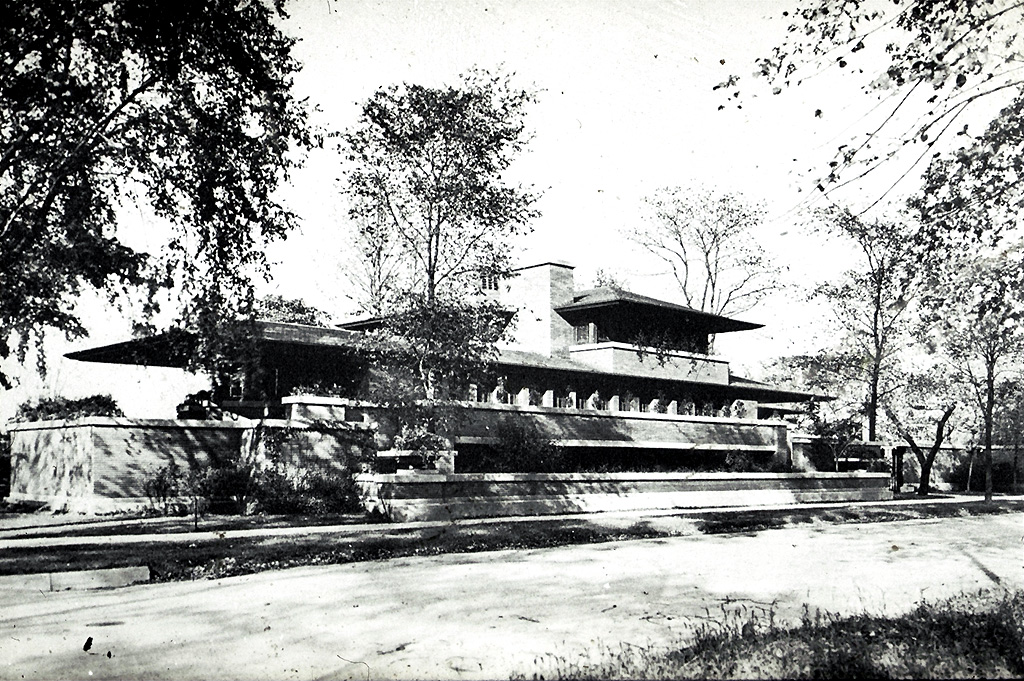
Robie House - Frank Lloyd Wright (May, 2006)
From the Chicago of 1906 comes Frank Lloyd Wright's house for the Robie family.

"The invisible hand of the market doesn't deliver a sustainable nation." True or false? (November 2007)
    IS THAT TRUE? If we assume that "sustainable" means something like "good for the environment," then is it really true to say that the market’s invisible hand doesn't deliver a good environment?
    Well, no it's not. In fact, quite the reverse. As Czech president Vaclav Klaus pointed out earlier this week:

“We know that there exists a huge correlation between the care we give to the environment on one side, and wealth and technological prowess on the other side. It's clear that the poorer the society is, the more brutally it behaves with respect to Nature, and vice versa. It's also true that there exist social systems that damage Nature - by eliminating private ownership and similar things - much more than the freer societies.”

It's indisputably true that the wealthier the country and the better its respect for property rights, the better its environment. Think about the environmental basket-cases that were Soviet Eastern Europe -- those places where the market's invisible and benevolent hand had been absent for nearly a century when the Berlin Wall fell in 1990, and compare that to how Western Europe looked.”

Annette Presley: The face of theft (May 2006))
    Everyone wonders why people keep voting for thieving governments, but at the same time everyone wants a piece of someone else.
Moochers put their hands out for Welfare for Families, and justify it with a chuckle; students put their hands out for grants and interest-free loans, and justify their mooching by invoking 'the public good'; nosy neighbours claim the right to dictate what can and can't go on over their fence, and give impetus to envy-ridden laws like the RMA; and moochers and petty chisellers like Annette Bloody Presley (left) celebrate the just-announced nationalisation of a portion of NZ's largest company, and justify the theft by calling it 'unbundling.'
    Let's call it what it is. It's theft. . .
    And Presley? Instead of building up her own network or investing in Telecom shares in order to have a legitimate say in theirs, Annette Presley and others like her have been given the chance at something they haven't earned by a Government that doesn't care whose property they steal to do it. . .
    Larry Williams put to her tonight on his Drivetime show that this represents a violation of Telecom's property rights. Presley's response: "Bullshit." Turns out she wouldn't know a property right from a prostitute, and doesn’t care who acts as her pimp.

Darnton on Aussie ABC (December 2006)
    Australia's ABC radio sought out Bernard Darnton to find out just what was going on at the last election. Pledge card, misappropriations of public money, lies, retrospective legislation ... it's all right here. [Interview starts about 23:20]
    As Bernard says, I assume that for slagging off the Clark Government overseas he’ll now get charged with treason.

The fatalism of entropy. The dynamism of spontaneous order. (December 2006)
    People often talk as if the Law of Entropy somehow restricts human activity, or is a restraint on human free will. The idea, for example, that "even if human ingenuity is infinite, entropy may eventually put an absolute limit on the amount of wealth that can be created." Things fall apart, you see, the centre cannot hold, and there's not a blind thing we can do about it.
This is both an error of scale -- with entropy happening on a universal rather than a human scale -- and a mis-application. It ignores the very nature of human activity and human free will, and ignores too the very simple observation that confirms there is order all around us.

Sack the social workers (July 2007)
    It's all our fault. Lowlifes being paid to produce children they don't want are killing them, abusing them, hitting them around the head with bats and pieces of wood, throwing them in dryers and against the wall -- all utterly in defiance of the Bradford-Key anti-smacking law which (you'll remember) was going to put a stop to all this.
    And do you know who's to blame for all these incidents: According to all the experts, we all are! You, me, absolutely everyone. Everyone except for the lowlifes and those who take our money to pay for their breeding.
    "They're not to blame," I keep hearing; "WE are."
    What a lot of horseshit. These aren't our babies. “We” aren't killing them. . .

1964 Tokyo Olympic Stadium - Kenzo Tange (November 2006)
    Another stadium, another feat of imagination, this time Kenzo Tange's innovative spiral shell design for the 1964 Tokyo Olympics.

Lyon-Satolas Airport Railway Station - Santiago Calatrava (April 2007)
    Built for the 1992 Winter Olympics in Albertville, France, this is Santiago Calatrava's competition winning Airport Railway Station for Lyon-Satolas - as a sketch (right), as a model (above), and as the real thing (left).

Isn’t it astonishing what Google’s readers, and you, find most enticing.

Saturday, 10 November 2007

Great bridges!


Wow. Here's 32 of the world's great bridges [hat tip Stephen Hicks, who has plenty of other great links]. It's a tough choice, but my pick of the bridges is Santiago Calatrava's Bridge in the Canary Islands, shown above next to his Tenerife Opera House. Magnificent.

Tuesday, 13 November 2007

"Thousands of scientists" supporting warmist mantra?

Two of the primary points that apparently persuade non-scientific warmists that the apocalyptic science of warming science is "settled" is both the increasingly shrill insistence that "the science is settled" (ignoring that if it was settled there wouldn't be so many of those pesky skeptics to whom it needs to be so shrillu insisted), and the related claim that in the UN's Intergovernmental Panel on Cimate Change (IPCC) we have an organisation with "thousands" of scientists of impeccable credibility who independently review the science and by some sort of consensus agree on the best evidence and the best science.

The IPCC’s website makes the point with this ad (using a fantastic Santiago Calatrava design to attract attention):

As Tony Gillard at Sp!ked Online says, "Who could possibly argue with such an array of international expertise all in agreement with one another?" Who indeed?

Even skeptics like Bjorn Lomborg have accepted the line. Writing in the Boston Globe in praise of the IPCC's Nobel Prize he said that the Nobel Peace Prize
‘justly rewards the thousands of scientists of the United Nations Intergovernmental Panel on Climate Change’ who are ‘engaged in excellent, painstaking work that establishes exactly what the world should expect from climate change.
So the claim is "thousands" of scientists? Is that really true?
Answer: No.

According to a study done by Melbourne scientist John McLean from NZ's Climate Science Coalition, there are not thousands of scientists, or even hundreds of scientists endorsing the warmist mantra. After
an extensive analysis of the recent report of Working Group 1 of the Fourth Assessment Report by the IPCC, he found in the critical Chapter 9 there were only five reviewers who explicitly endorsed the claim that humans have a significant influence on climate, none of whom had impeccable credibility.
Not thousands. Not hundreds. Just five. Says McLean in his full report [27-page pdf]
The review of the Working Group 1 report was far less intense than the IPCC has implied.
  • - 308 reviewers examined the chapters of the Second Order Revision (i.e. penultimate draft) of the Working Group 1 report, with the average number of reviewers per chapter being 67 (minimum 34, maximum 100).
  • - 214 reviewers (69%) commented on two chapters or less and 60 reviewers averaged fewer than 3 comments for all chapters they examined
  • - Only 5 reviewers, specifically 3 individual reviewers and 2 government reviewers, commented on all chapters and just 49 reviewers (16%) made more than 50 comments in total...
The critical chapter, that which attributed recent warming to human activity, was reviewed by 54
individual and 8 government representatives but almost 1/3rd of reviewers made just one
comment.
  • - 37 of the 54 had a vested interest in the report, as editors or having papers cited
  • - 26 authored or co-authored papers cited in the final draft
  • - 10 reviewers explicitly mentioned their own papers in their review
Just 7 reviewers of that chapter appear to be independent and impartial but 5 of those made just
one comment for the entire chapter.
Just 5 reviewers explicitly endorsed the chapter in which it was claimed that humans have a
significant influence on climate but not one of those 5 has impeccable credibility.
There is scant evidence of any support for the IPCC's contention that anthropogenic emissions of
carbon dioxide have caused warming...
As Tony Gillard at Sp!ked comments,
Such a tally does not itself demonstrate a faulty peer review process. However, McLean certainly seems to have a point when he draws attention to the gap between the perception the IPCC wishes to create of thousands of scientists in unity in one report, and the reality of a report comprised of many distinct parts, each contributed to and commented on by a far smaller number of scientists with knowledge of a specific field...

McLean argues that ‘simple corrections, requests for clarifications or refinements to the text which did not challenge the IPCC’s conclusions are generally treated favourably, but comments which dispute the IPCC’s claims or their certainty are treated with far less indulgence’. He concludes that ‘the notion of hundreds of experts diligently poring over all chapters of the report and providing extensive feedback by way of peer review to the editing teams is here demonstrated to be an illusion’.
UPDATE: Here's an opportunity that doesn't arise every day. If you're in Christchurch today you get to enjoy New Zealand Cup Day (and for the first time in forty-odd years there's going to be some rain -- due no doubt to global warming), but if you're in Wellington later this evening you can go to Te Papa and make fun of Al Bore's slide show, being presented by Australian "social researcher" Randall Pearce. Report here.

Pearce, who was hand-picked by the Bore to be a "messenger" of the warmist message, promises "a strong focus on New Zealand" in this version, which apparently includes a retraction of The Goracle's fatuous assertion that "climate refugees" are flooding into New Zealand.

If you're going along to heckle, then you've got the nine "errors" found by the British court to look for, the "thirty-five" inconvenient truths found by Christopher Monckton, or the 120 one-sided, misleading, exaggerated, speculative, or wrong assertions that Marlo Lewis points out in his 'Skeptics Guide to An Inconvenient Truth.'

Should be a good night. Who needs fireworks.

Wednesday, 7 July 2010

Vanity Fair’s ‘Top 22’ most important works of architecture since 1980

Vanity Fair magazine asked 52 of the worlds “starchitects” (.e., folk who design expensive boxes that look good in magazines and treatises) to select the five most important buildings, bridges, or monuments constructed since 1980 and the greatest work of architecture thus far in the 21st century.

What they came up with instead was 132 pieces of starchitecture (i.e., expensive boxes that looks good in magazines and treatises), of which these are their top 22. [Hat tip Archinect]

Surprising news from the survey?
Nothing at all by the best architect to to have emerged in recent years, Santiago Calatrava.

Most unsurprising news from the survey? 
Only these four structures out of all the twenty-two are worth a damn.

CLICK FOR STORY Millau Viaduct, France, Michel Virlogeux & Norman Foster

CLICK FOR STORY
Lloyds of London, Richard Rogers

CLICK FOR STORY
Vietnam War Memorial, Washington, D.C., Maya Lin

CLICK HERE FOR STORY Hong Kong Shanghai Bank, Hong Kong, Norman Foster

And the very best news from the whole survey? 
According to Vanity Fair writer Matt Tymaur in his interview with Charlie Rose, “Po-Mo is dead.”

Well, thank Galt for small mercies.

Friday, 16 March 2007

City of Arts & Oceanographic Sciences - Santiago Calatrava

A conscious nod to architect Felix Candela, this 2005 project is set to be "the newest jewel in Valencia's crown." Not only that, it's a superbly expressive use of thin shell concrete hypars.

RELATED: Architecture

Tuesday, 15 August 2006

Architecture Film Festival '06

The Architecture Film Festival '06 kicks off around the country on 1st September.

I tell you this with trepidation because I haven't booked for any sessions yet, and I'm told that bookings are going "tremendously well."

Films this year on Santiago Calatrava, Le Corbusier, Mies van der Rohe (pictured right), Norman Foster's 'Erotic Gherkin,' the energy of Lagos as seen by Rem Koolhaas, Marion Mahoney and Walter Burley Griffin (former Frank Lloyd Wright alumni and the designers of Canberra) and more, much more.

But don't let me persuade you too much of its merits, or I won't get a seat myself.

LINK: JASMAX Film Festival '06: Celebrating Architecture - JASMAX

RELATED: Architecture, Films

Friday, 14 April 2006

Hamilton footbridge: Evolution of an idea

Hamiltonians have been discussing the possibility of a footbridge over the Waikato River at the south end of Victoria Street, linking Hamilton's thriving restauarant, bar and entertainment precinct with the river and with the many people living across the river.

A great idea, that I'm told is back on the agenda once again. Great news.

The possible problem lies in the implementation of the idea.

At present there are two ideas. The first is elegant, playful and adventurous (right, below, in an unfortunately bad image). The second (left below) and the one presently proposed is dull, squat and -- as a friend said -- "looks like a road bridge with a few sheds on it."

Above at right is another foot-bridge, nowhere near Hamilton, which gives an indication of what another city has done in the way of an elegant solution to a similar demand -- a Barcelona footbridge by Santiago Calatrava.

TAGS: Architecture, Urban Design

Saturday, 10 September 2005

Seven things before breakfast

The seven things meme, pinched from Ruth:

7 things I plan to do before I die:
  1. Write a novel. Or two.
  2. Visit every building by John Soane, Carlo Scarpa, Rudolph Schindler, Richard Neutra, Thomas Jefferson, Bruce Goff, Louis Sullivan, Pier Luigi Nervi, Santiago Calatrava, Felix Candela and Frank Lloyd Wright--and then a) write a book about the link betweeen them all, and b) design a building at least as good as all of them.
  3. Attend Bayreuth's Wagner Festival and go to every single session; and then visit the Rodin Museum ... when it's open.
  4. Watch at least one AFL final live.
  5. Own an original Newberry, and an original David Knowles.
  6. Pass a law allowing capital punishment for spammers.
  7. Make it possible to introduce a Constitution for New Freeland.
  8. Drive an E-Type Jag across Europe.
  9. Change the rules of a meme once I've started. :0)
7 things I can do:
  1. Talk nonsense.
  2. Build a house.
  3. Design a house.
  4. Talk nonsense to planners, buiding inspectors, and arborists so someone can build a house.
  5. Edit.
  6. Cook.
  7. Drink.
7 things I cannot do:
  1. Hold a note.
  2. Vote for an authoritarian.
  3. Abide respectability worshippers, clever-dick hairsplitters, cynical nihilists, bigots, poseurs or fakes.
  4. Listen to the Bee Gees without feeling nauseous.
  5. Listen to Nick Smith without feeling nauseous.
  6. Listen to Fidel Castro at all.
  7. Swim to Australia.
7 things that attract me to the opposite sex:
  1. Intelligence
  2. Passion
  3. Energy
  4. A soul
  5. Wit and humour
  6. Insight
  7. Big tits
7 things that I say most often:
  1. Ooh. A Crownie, thanks.
  2. Hey, who stole my [insert object sitting right in front of me].
  3. We hold these truths to be self-evident, that all men are created equal, that they are endowed with certain unalienable Rights, that among these are Life, Liberty and the pursuit of Property and Happiness.
  4. For fucks sake!
  5. Unprincipled arsewipe!
  6. As X said...
  7. Bugger.
7 celebrity crushes:
  1. Diana Rigg
  2. Ingrid Bergman
  3. Audrey Hepburn
  4. ?
7 people I want to do this:
LibertyScott, Julian Pistorius, TinCanMan, Beethoven Pleydenwald, Alan Howard, Richard Goode

Friday, 24 June 2011

Friday morning ramble: The ‘Bleeding Obvious’ edition

Once again, while the world burns and economic fortunes tumble, the local politicians and their commentariat are more interested in a race-based by-election and a bloke who had the temerity to point out the bleeding obvious. So let’s look at more important things, shall we?

  • Don Brash appears to understand the RMA “is the biggest single obstacle to economic growth in New Zealand.” He just doesn’t know how to replace it—or doesn’t care to. But it’s not difficult…
    RMA impeding economic growth: Brash -  N Z   F A R M E R ‘ S   W E E K L Y
    What would 'Party X' do about the environment? - PART 3: Replacing the RMA -  N O T  P C , 2007
    New Zealand's Persecuted Minority: Property Owners  - S C O O P , 2002
  • There are two ways to tackle the mounting welfare crisis. Confront it head on, or lie about it. Which method do you think this govt (helped by an asinine media) have adopted?
    DPB - more going on than leaving – L I N D S A Y   M I T C H E L L
  • Sections in a beleagured Christchuirch are still on the maret $200,000 when they should be around $50,000, if not for the absurd ring fenvcing of New Zealand’s most tragic city. Never has cheap land been so essential, and finally, after years for pressure, we have what High Pavletich calls “ a belated step in the right direction”: The “planners” have released one small part of the ring fence to allow around 5000 plots to be built on.
    Environment Canterbury looks to release land on Christchurch fringes for up to 5,000 homes; up to Environment Court 
    – I N T E R E S T . C O . N Z
  • By the way, here’s something to ponder if you think little old NZ is going to continue weathering the world’s storms while racking up new debt at the rate of more than a billion dollars per month…
  • Here's a thought on the Greek/euro crisis brought to you by Austrian
    economic thinking. As you know, bond yields in the peripheral countries
    are spiking. Greek 10-year bonds are nearly 17 per cent, Irish and
    Portuguese 10-year yields are around 11.5 per cent. Conventional
    thinking says these high yields reflect concerns about default.
    While that's true, they also tell you something far more important.
    That is, there is very little real savings left in the banking systems
    of these economies. Rising market interest rates is
    an indication of scarce savings. Therefore, the price of money
    must rise to encourage saving and discourage consumption.
    When savings are plentiful, the price of money falls to encourage
    consumption and discourage saving. This process doesn't occur
    in a market distorted by central banks and currency unions.
    It only reasserts itself when the money fiddlers
    lose control, as they now have...

    - Greg Canavan, Daily Reckoning Australia

  • This week marks the 40th Anniversary of the "War on Drugs.” Begun by Richard Nixon, everyone’s favourite President. his war has resulted only in failure, misery, violence and death. Isn’t it time to review?
    40 Years of Protecting Us from Ourselves – Valery Publius,  U N D E R C U R R E N T
    War on drugs produced swollen prisons and little else – Zachary Goelman,  R E U T E R S
    Another Admission 'War on Drugs' Has Failed 
    - Charlene Muhammad,  N E W  A M E R I C A N   M E D I A
    Tough birthday for War on Drugs  - C H I C A G O   N E W S
    The Drug War: What is It Good For? – Art Carden,  F O R B E S
  • Warmists constantly claim skeptic scientists make a fortune from their skepticism. They don’t … but warmist James Hansen (who just toured NZ)  does.
     NASA Scientist Accused of Using Celeb Status Among Environmental Groups to Enrich Himself 
    – F O X  N E W S
  • By contrast, here’s a good example of  “principled climate science scepticism.”
    Prof Kelly shows the middle way- Prof. Mike Kelly,  C L I M A T E   C O N V E R S A T I O N
  • Germany shoots itself in the foot (the one they didn’t shoot by joining the European Monetary Union).
     Germany Finds Going Green is Tough Going – N C P A
  • You have one minute on the over-population myth, starting now:


  • Human productivity allows mankind to escape the Malthusian population trap—and with freedom and a greater population, even greater productivity was possible. So why are the anti-industrialists against this? “Today, environmental groups call for a reduction in carbon on scales that would require a gigantic decline in our population numbers: we are told we must self-sacrifice and surrender our standard of living for the general good of a much lower population.  The most extreme voices would send us spinning back to the dark ages and the more moderate would see us stagnating in development.” Why?
    Global Warming: The New Malthusian Scare – Toby Baxendale,  C O B D E N   C E N T R E
  • Just one example of how ingenuity and productivity combined open up whole new areas of the environment in which to live—making even greater population possible: the air conditioner. Hurray for Mr Carrier!
    The Heat Is On! – Mark Thornton,  M I S E S   D A I L Y
  • Shit cars. Cool doors. [HT Tomahawk Kid]

  • “If we pursue another economic stimulus of similar size to the previous one, we may as well condemn the economy to another 10-20 years of recession.”
    "Stimulus is like using morphine to fix a broken arm"
    -  Veronique de Rugy, N A T I O N A L  R E V I E W
  • ‎"It's almost as if Washington envisions the economy not as a complex network of billions of voluntary, mutually beneficial relationships, but as a lawn mower which could be forced to run smoothly if only they'd yank hard enough on the starter cord...
    ”Lawmakers should face the facts: Intervention is hurting, not helping, the economy."
    The One Stimulus Government Hasn't Tried – Jonathan Hoenig, S M A R T   M O N E Y
    [Hat tip Keith W.]
  • Is the US economy worse than Greece? The world’s biggest bond buyer says “Yes!” But is he right? And what does it mean for future interest rates? [No, Bernard Hickey won’t  understand any of this.]
    Is the U.S. Economy Actually in Worse Shape Than the Greek Economy? – P J T V
  • So, ah, just how are those risk signals looking in the European Zone? I know, let’s ask the European Central Bank governor…
    Trichet Admits the Obvious "Risk Signals Are Flashing Red"
    – M I S H ‘ S   G L O B A L    E C O N O M I C   T R E N D     A N A L Y S I S
  • Price controls always raise prices. Latest example: U.S. healthcare.
    Confessions of a Price Controller -  T H E  A M E R I C A N
  • Santiago CalatravA’s Chicago Spire was going to be one of the world's tallest buildIngs. But the financial downturn torpedoed its funding, and now it is all but dead. With other major projects on hold or cancelled, some critics say this is the end of North America's love affair with skyscrapers. Robert Bruegmann, of the University of Illinois, considers the fate of super-tall buildings in the US, and explains why he believes the spire may yet be built. And it’s a beautiful slideshow…
    Audio slideshow: Chicago's doomed spire – Robert Bruegmann,  B B C
  • 4472 (1)A poor interviewer takes on the world’s best apologist for his own mistakes, and fails. Watch the man who brought down the world explain over thirty minutes that it was all someone else’s fault, that he and his friends always knew what they were doing, that basically their shit doesn’t stink—helped by an interviewer who never knows how to ask the right question at the right time.
    Charlie Rose interviews Alan Greenspan – C H A R L I E   R O S E
  • “Alan Greenspan has always cared about one — and only one — thing. Every nerve ending in his body at every moment in his life has been devoted to the promotion of Alan Greenspan.”
    Chairman Greenspan: A Fiat Mind for a Fiat Age
    -  Fred Sheehan,  M I S E S  D A I L Y
  • More broken economic theory coming right up: The Phillips’ Curve is really just a load of old junk.
    The Phillips’ Jumble – C A F E    H A Y E K
  • Wealth in a market economy is not a static quantity of stuff, never an inexhaustible fund that pays out goodies to lucky passive owners; wealth has constantly to be created and re-created; it’s never fixed. But the market “distributes” stuff unequally, you say? Baloney. The market is constantly redistributing wealth far more productively and fairly than any government efforts.
    Ludwig Lachmann on Income ‘Inequality’ -  C A F E    H A Y E K
  • Want a bigger slice of the pie? Then bake your own.
    “When It Comes to Wealth Creation, There Is No Pie”
    • Don’t worryabout (former) All Black Stephen Donald. Stephen Donald is holed up at Peka Peka Beach. Just him, a penguin, and a werewolf. [Note: Parts of this may be satire.]
      Stephen Donald resting up on Kapiti Coast beach – S P O R T   R E V I E W
    • Wow!
      Turning The iPad Into A Weapon  - S T R A T E G Y  P A G E
      [Hat tip Geek Press]
    • The ten best things about smartphones (and you doubted there was even one!)
       Why I Love & Hate Having a Smartphone –  T H E   O A T M E A L
    • Turns out you really can make a silk urse out of a sow’s ear.
       Can Do  -  F U T I L I T Y   C L O S E T
    • In March 1974, Ayn Rand faced the improbable task of lecturing on the crucial importance of philosophy—to the graduating class of West Point. She succeeded magnificently: she attracted three times the expected attendance, she elicited an enthusiastic ovation, and her lecture was reprinted in a new philosophy textbook published by the U.S. Military Academy. Set aside a spare hour to relive this memorable occasion and insightful speech, and (re)discover the irresistible intellectual power of Ayn Rand.
      Philosophy: Who Needs It  - A Y N   R A N D
    • Parents, teachers, anyone interested in education … listen up! Here’s the ideal weekend workshop for you: a Montessori weekend in Matakana no less. What could be a better way to learn about the best philosophy in which to raise your children?
      A Montessori Workshop in NZ – A  M O N T E S S O R I   H O M E
    • Should the state waste time and resources tracking down “deadbeat dads”? Or recognise instead that just as there should be no involuntary servitude, there should be no involuntary parentitude (to coin a phrase).
      Video: Fatherhood Should Be Voluntary –  N O O D L E  F O O D

    • Here’s Paul Kelly’s tribute to a favourite place. You know, he’d give you all of Sydney Harbour, all that land and all that water, for that one sweet promenade.
    • Here’s Billy Strayhorn’s impressionistic masterpiece, inspired by the sight of London’s Chelsea Bridge through the fog, played by the masterful Ben Webster. [HT Jazz on the Tube]
    • And this, a few final moments from another of my current obsessions, takes up where Ben & Billy leave off.
    Final moments of Bruckner’s 4th Symphony, with paintings by Caspar David Friedrich

    Enjoy your weekend!
    PC

    PS: Thanks to all those who deserve a hat tip, and my apologies for not remembering who was responsible for which link. My thanks, and my fault.