NZ HERALD: A Christchurch man claims he is being forced out of his flat due to unwillingness to get the Covid-19 vaccine.
YAHOO NEWS: MAFS star Dean Wells has slammed new lockdown rules for vaccinated and unvaccinated people, saying it's 'segregated' society.
BFD: If my employer makes it clear that if I don't sleep with him I will lose my job then that is no different to a vaccine mandate. In both cases I am being forced to put something into my body that I don't want to.
I could have picked the comments above from almost anywhere -- since this brand of pigheaded unreason is everywhere.
"Force" means something specific;:it means physical coercion; it means someone with a stick, a gun, a whip; the threat or use of violence. So "forced" is a bit strong. More accurate would be: "things that are the result of my stupid choice."
And choice and force are as far from each other as can be. Making choices and acting on them is how we pursue our values --it's how we function as human qua human. Whereas force is how we deny people their choices, and it's precisely why coercion is wrong, and why it's so important that it should be so clearly defined -- because "to the extent that you do attempt to coerce or manipulate another person, you are trying to sidestep their minds and shut down their thinking process. When you do this, whether by a criminal act or by an attempt to deceive them into acting against their best judgment, you become, in fact, the person's enemy."
Confusing choice and its consequences to force and its antecedents is like confusing a tarantula for something you should hug to your breast. But that's what these non-thinkers above are doing.
Consider: Are you being forced to take a life-saving vaccine? No, but there are consequences for you (for employment; for your living situation; for being able to visit a bar without risking the health of others; and possibly -- the primary reason to choose to be vaccinated -- for your own fucking health) if you make the stupid* choice not to.
Is this "akin" to rape (as the fucking stupid poster at BFD went on to say)? No, it's "akin" to being asked to fuck off from politic company if you elect not to wash. Or if you've soiled yourself. Or of you're just demonstrably fucking stupid. In other words, because those who do practice basic hygiene don't, quite simply, want you around.
So are you "segregated" from society because you're unvaxxed? No, you're being excluded by business owners and others because of your own stupid fucking choice. A choice, by the way, which is still reversible. Unlike being permanently fucking stupid.
So is this "apartheid" then that we see before us? No, apartheid at root is the denial of what makes us distinctively human -- of what we make of ourselves from our own choices. What we're seeing here is the full recognition from others that you have made a choice. And that choice is fucking dumb.
* Stupid because, whatever stupid fucking website link to which you send me to tell mw how risky you reckons say it is, your risk of whatever from the Pfizer vaccine is far less that your risk of the virus. Even in NZ.
"'The Government is taking immediate action to support New Zealand’s media and content production sectors, while it develops a long-term reform programme, Media and Communications Minister Paul Goldsmith says.' ... "This is both an unprincipled and a stupid decision. I can handle principled stupid decisions and even unprincipled smart decisions but this is neither. "It is unprincipled because it is forcing successful companies in one industry (social networks and search engines) to fund failing companies in another industry (media). The only rationale for this is that Google and Meta have money and Stuff doesn’t. Will we see Netflix levied money to fund home video rental stores? Will we see Foodstuffs levied money to find Whitcoulls? "It is also a very stupid decision. ... The Government is going to pass a law to fund a media that will oppose almost everything that supporters of the Government believe in. "Even worse, it will set up a structural incentive for the media to become even more left leaning. ... [to] insist the levy be doubled ... [to] create an institutional bias in favour of the parties that will benefit media the most."
Three words strike me as characterising so many of the reactions to Monday's arrest of anti-colonial, anti-industry, anti-globalisation and so-called peace protesters under firearms legislation: humbug, denial, and misinformation.
People in Ruatoki are bleating that the police were unnecessarily harsh on Monday, and (worse apparently) gave them "no warning" about the raids and the arrests.
Are these people stupid? They've been prepared for years to countenance the organised thuggery and the exclusion of visitors and the training camps and the "Tuhoe Nation" crap carried out and espoused by Iti and his idiot comradesin their name -- and they've done nothing at all about it. If you're carrying out a raid then you don't warn supporters or friends of those being raided; that really would be stupid. These people aren't stupid enough not to know that - they think we are. To complain they weren't warned is just humbug, and it evades that far more basic issue of what they're prepared to allow in their own community and in their own name. If they're prepared to countenance violence in the name of the "Tuhoe Nation" or whatever other idiocy Iti's comrades dream up, then they deserve everything they get.
Protest groups have been issuing "messages of support" to those arrested and organising protests against the arrests, meaning we've been obliged to witness the spectacle of "peace activists" apparently in denial about the firearms that have been confiscated and the bombs and the weapon training that's been undertaken down outside Ruatoki. We've seen them make accusations of "police brutality," and admissions that no one at all has been brutalised. And we watched the likes of Francis Mountier from the Save Happy Valley Coalition get all evasive when a tame TV journalist asked her to repudiate violence and to deny all knowledge of what's been alleged about these training camps. Evasion and denial.
We've seen talk of terrorism appear in the press. The protest groups have been quick to object to the "label" of terrorism being used against those arrested, but so far the fact is that the "label" has been used mostly in the denial of it. But the anti-terrorism Act, raised as a bogey by the likes of protestors and commentators associated with the protestors, has not been used against any of the idiots so far arrested. Police Commissioner Howard Broad explained very carefully that the search warrants were issued under the Firearms Act, and charges so far have only been laid under the Firearms Act. Sure, the searches themselves were carried out with the intention of obtaining evidence under the anti-terrorism Act, but protestors need to get their heads around the fact that charges have only been laid so far under the Firearms Act. Their heroes were in possession of weapons that their views would say they shouldn't be.
And like everyone else I look forward to seeing if charges are justified under the anti-terrorism Act.
Two of those who've raised the conspiratorial bogey that the arrests were carried out to provide backing for the forthcoming amendment to the anti-terrorism Act are John Minto and David Small, both of whom have been used by media outlets as so-called independent commentators on the whole affair. Both are in denial about the nature of the charges so far -- that these seventeen people had the means and were undertaking the training whereby to carry out something pretty nasty -- but the media who have invited them on as commentators are either in denial themselves, or else they think we're stupid. The fact is, as Trevor Loudon points out, both Minto and Small are associated with the groups from whom those arrested have been drawn. Minto is an organiser of the ironically named Global Peace and Justice, and umbrella group for at least one of those arrested; and Small is a (former?) Maoist with links to several of the "anti-everything" groups from whom protest has come. [See for example 'Socialist Academic Profile: David Small,' and 'John Minto, Communist Columnist,' and 'Who is Radical Youth?' ]
That these two are presented as "independent commentators" tells you something about the independence of our media, doesn't it? Doesn't it?
Let me make two final reflections, one on the nature of protest, and other on the nature of force. The right to peaceful protest is important, and in a free society that right is protected. While that right is being threatened by the Electoral Finance Bill, it is not under threat either from these arrests, or from the amendments to the anti-terrorism Act. I'd like to invite those who suggest they do to turn their metaphorical guns on the real means by which protest will be squelched for one third of our lives: the Electoral Finance Bill. Opposition to that Bill is a litmus test for genuine opposition to the banning of peaceful protest.
Now to reflect on force. The right to exercise retaliatory force in one's defence is paramount -- if one's right to life is to mean anything under law, then the right to retaliate against force initiated against us or our loved ones must be protected. That said, a primary leitmotif of a civilised society is that retaliatory force is brought under objective control. That job is the job of the police and the law courts, who -- when they're acting properly -- are acting in our name to protect peaceful individuals from those who would initiate force against us. As several recent events have shown us, Our police force is imperfect, but they're the only police force we have. With the arrests this week and what we've heard on the suspects' charge sheets in court, our trust so far in what's left of our legal system is justified. Let's hope we see justice done, and thugs removed from having the opportunity to do us harm.
As I suggested yesterday the Auckland City Council was faced with two false alternatives in their stadium vote last night: stupid, and bloody stupid.
They went for bloody stupid.
But they gave themselves an out: if the bloody stupid bedpan isn't built on Bledisloe and Mallard bulldozes on regardless -- and let's face it, "bulldozing on regardless" is his most characteristic personality trait -- they can try and wash their hands of what they've done.
There's still two votes to go before a billion dollars is directed towards one stadium for two rugby games, but it's worth reflecting on the hangover afterwards for expensive stadiums built for prestige instead of with economic sense. They're currently reflecting on post-Olympic hangovers in London, in Greece and in Barcelona -- and air travellers are still paying for the Sydney hangover.
Is that going to be Auckland's fate in 2012, though without even the undeniable architectural delights those other cities have as compensation?
UPDATE: These are the twelve councillors that Auckland ratepayers need to remember at the next council elections: Scott Milne, Glenda Fryer, Leila Boyle, Graeme Mulholland, Richard Northey, Dick Hubbard, Doug Armstrong, Noelene Raffills, Vern Walsh, Linda Leighton, Toni Millar, Bill Christian.
UPDATE 2: Newstalk ZB's website will be streaming live the ARC's meeting for their own stadium vote later today. As the putative 'owners' of the Ports of Auckland, the ARC should be expected to guard the interests of New Zealand's largest port and our trade gateway to the world. But they are also politicians.
UPDATE 3: Vote expected by midday.
UPDATE 4: ARC seem to be heading towards a "No" on the bedpan. The presentation to them earlier this morning by Ports of Auckland and the lack of solid information on the bedpan both seem to have been highly influential.
UPDATE 5: ARC turns down bedpan unanimously, on a vote of 12-0. Notes Newstalk ZB:
In summing up just before the vote, ARC Chairman, Mike Lee says it all came down to a matter of costs, not just of building the stadium, but on Ports of Auckland and the environment.
He also counted the moral cost of over-riding the Resource Management Act, the precedent and moral dilemma that it would create for councillors. Mr Lee says those costs are just too great.
Attention now turns to Helengrad: How does Mallard spin these two votes to sidestep the resounding "No" vote? What deals can he do? And does he have the numbers to get the necessary legislation voted through? Herald summary here.
UPDATE 6: Mallard has announced a press conference in Auckland for 3:30 this afternoon. I note that Mother Hubbard has already said that she "didn't hear the word 'veto' used this morning" -- is that to be the spin? 12-0 against, but you don't count that because the word "veto" isn't used!
The problem is that while Helen Clark is chanting 'sustainability' like a Hare Krishna her Government's laws and departments are making it harder than ever to advance renewable energy projects.
An amusing soundbite, but perhaps the chief problem here is that while Helen Clark is chanting 'sustainability' like a Hare Krishna seeking electoral nirvana, Nick Smith is chanting the self-same incantation like a catholic trying to buy electoral indulgence.
What's different between them is only the colour of their robes.
The real problem is both of them. The problem with Nick is that he's still to acknowledge that "the Government's laws and departments that are making it harder than ever to advance renewable energy projects" (or any energy projects at all) were put in place by Nick's mentor Simon Upton, and kept in place by Nick without amendment when he was Minister.
He knows that. He hopes you've forgotten.
So it's impossible to take his criticisms seriously. Or him. His criticisms are valid, but there's nothing he's got that's going to make any difference at all.
The Dobson hydro project on the West Coast was blocked by her Minister of Conservation, Chris Carter. Project Aqua was killed off by Minister Marian Hobbs and then local MP David Parker. The Wairau Hydro Scheme in Marlborough, granted consent last month after a tiresomely long 18-month hearing process, has now been appealed to the Environment Court by none other than the Department of Conservation."
All too true, and all too sad, but what's even sadder is that nothing Nick proposes would make a difference. Nothing in Nick's plan to "simplify and streamline" the RMA will make a blind bit of difference to any of the problems he identifies.
Smith claims that as minister he will "streamline and simplify" the RMA, or at least that's what the headline says. But what's needed to fix all the ills he cites in energy production, in tranport, in aquaculture and with housing affordability is not "streamlining and simplifying" the RMA, but actually gutting it, as Russel so erroneously claims is on the table; what's really needed is not softening, tinkering or simplifying (even if it were true) but putting a stake right through the heart of the RMA, burying it for good, and starting again with a property-rights based common law system that protects both the environment and property owners.
But that's not on offer.
What is on offer is Smith's plan to streamline and simplify that's so crucial to so many other policy proposals from the Pink Tories, not least in Key's four-point plan to improve housing affordability. What is the plan? Says Smith, "There are three broad themes that make up National’s proposals." Remember as the read these "broad themes" that the National Party is, in Smith's own words, "a pro-market, pro-enterprise party that hates bureaucracy and stifling red tape."
Firstly, the Act needs greater central government direction. It is the most devolved environmental statute in the world resulting in every Council having to reinvent the wheel. We propose setting up to 20 national environmental goals to clearly guide decision makers on what needs to be achieved and will measure progress towards them. That is also why we are keen on an Environmental Protection Authority.
Greater central government direction. An Environmental Protection Authority. Does that sound like less bureaucracy and less stifling red tape? Is he stupid, or does he think we are? What's next?
Secondly, National wants greater use of price signals, markets and better recognition of property rights.
Well, that would be good, wouldn't it. But what does this mean to Smith? It means "in areas like water permits, greenhouse gas emissions, and nitrogen discharges, we favour cap-and-trade systems over bureaucratic systems of allocation." To Smith, "greater use of price signals, markets and better recognition of property rights" looks like just another form of bureaucratic rationing. Frightening, isn't it. No mention of securing the property rights of land owners, or even of placing property rights at the heart of the RMA. No mention at all, and no chance of it ever happening under a Smith-led environment ministry. To Smith, "property rights" means that bureaucrats can take your land or strip the value from your land by bureaucratic fiat, and you might be able to receive some "compensation." That's the gist of his third "theme":
We also want to improve the compensation mechanisms in the Public Works Act. We want to make explicit that landowners must be consulted over rules affecting their land and believe a net conservation benefit approach would get better environmental outcomes. We want less litigation and more science in decision-making. We propose refocusing the legal aid fund and putting the money into more technical support and into mediation services.
Explain that gibberish if you can (and try to explain to someone like The Castle's Daryl Kerrigan that compensation for their property is tantamount to protecting their property rights).
So much for the "themes"; what about the details? How, if at all, will he go about "simplifying and streamlining the processes of the Act to reduce the delays, uncertainties and costs."
Let me detail some of our proposals for simplifying the Act: 1. We propose to limit the definition of environment to natural and physical resources so as to avoid vexatious arguments over trade competition and where the Taniwha might live.
A small change. A very, very small change that without a substantive change to section 5 of the RMA is all but meaningless.
2. We propose to reduce the number of consent categories from the current five to three, so it is not nearly so complicated.
The number of consent categories were increased so as to make consent applications easier; reducing them is going to make applications harder, not easier.
3. We propose fixing the vague Treaty clause by removing the broad reference to it’s principles [sic] that nobody understands and be quite specific about the consultation requirements with iwi.
"Fixing" would be good, if we could be certain that "fixing" meant removing. Nothing less will do.
4. We propose reducing the number of plans. We note with interest that Northland has adopted a ‘one plan’ policy integrating its Regional and three District Plans into one, and we are exploring applying it nationwide. Eighty-five plans for a country of four million people is excessive.
Irrelevant window dressing.
5. We propose integrating the RMA properly with the Historic Places, Forests, Building and Fisheries Acts, so applicants are not confronted by multiple hurdles.
And just as irrelevant is this last point. Taken together then Smith's five points are a mixture of irrelevant, meaningless, hopeless and more damaging, much like himself really. What about his next five points, which he promises will "streamline the Act:
1. It is a waste of everyone’s time to go through years of double process of a consent hearing and then the Environment Court. That’s why we back the direct referral of major applications straight to the Environment Court.
Small and worthwhile, but hardly a king hit to bureaucracy and red tape.
2. It is wrong that Ministers can veto the process as we saw with the 13-year debacle over the Whangamata Marina. That veto will go under National and decisions will be left with the Environment Court.
A long overdue change, and helpful to those few projects that the minister reviews, but irrelevant to ninety-nine-point-nine percent of resource consent proposals that linger for months or even years, and no help at all in reducing the thirteen years it took for the Whangamata Marina application to even get to the minister's desk. In other words, more window dressing.
3. There should be a penalty when Councils ignore the 20-day timeline for resource consents. Councils charge penalties when the ratepayer is late, as with rates. If it is good enough for the goose, it is good enough for the gander.
This is something that sounds good but will deliver the opposite of the intended result. Councils are already adept at asking pathetic and irrelevant questions to extend that nominal twenty-day limit they have for considering resource consent applications; making "a late consent a free consent" won't make consents arrive any earlier, or save anyone any money: instead applicants will simply be assailed with even more stupid and irrelevant questions to justify those processing applications "stopping the clock" than they do now. And although it's hard to image how much more stupid some of those questions can get, it's clear enough that the stupid questions will increase under Smith's stupid proposal. That he wants to hang his hat on this is a sign of how little he really understands the Kafka-esque problems with making and receiving Resource Consent applications.
4. There should be limits on requests for more information. An applicant should be able to require that a consent be processed, albeit they run the risk of being rejected. They at least then have the option of appealing to the Environment Court.
Few applicants that I know of want to got to the Environment Court at all, as most council planners are aware. As an empty threat, this one is much emptier than most.
5. The Court should have the power to require security for costs, a power taken away by Labour. If an application or objection is weak and likely to involve a costs order, this discretionary power of the Court helps get rid of the vexatious and frivolous.
An improvement perhaps, if only a minor improvement, but given the irrational, unpredictable and (as I described it) Kafka-esque nature of Resource Consent law, no rational submitter on (for example) an overbearing District Plan or on council zoning abuses is going to be risking their houses to stand up against the council, and none is likely to be either solvent or active for very long.
So that's it. This is what Smith calls "streamlining and simplifying" the RMA. This is what Russel Norman calls "gutting" the RMA. This is what Key, in his own speech, says is going to "ensure there is an increased supply of suitable land available to build houses on."
They're all wrong. This is pathetic and ineffective window dressing. Nearly twenty years after its introduction the Resource Management Act continues to destroy wealth creation and savage New Zealander's property rights and home-ownership aspirations, and this pathetic soft-shelled excuse for a human being has yet to learn to identify the solution: a stake through its heart.
If he really believes that his pathetic, weak-kneed ten-point plan is anything other than hopeless drivel, then he's even worse than I ever took him for. No wonder Lindsay Perigo calls him a man with a tongue so forked you could hug a tree with it.
NB: You're not going to find serious environmental reform by thumbing through the bland promises of the mainstream parties. Look out soon for the release of Libertarianz' seven-point plan to begin the deregulation of the environment. That's something that, if implemented, really would recognise individual freedom and personal responsibility, and kickstart a genuine environmental revolution for the better.
My basic idea was, following Smith, that as long as the Smith and the Schumpeter horses were
running ahead of the Stupid horse, tomorrow will be better than today... What I think is important
to get from this illustration that is relevant for today is that we aren’t letting the Smith and
Schumpeter horse run! They are currently locked in the barn, or trapped behind the start gate.
As a way of thinking ourselves out of our multi-week "lock-up," guest poster Peter Boettke invites us to think about a horse race -- a very special horse race ...
Imagine a Horse Race Between Smith, Schumpeter, and Stupidity
by Peter Boettke
Economists have been the object of ridicule for centuries. We supposedly know the price of everything and the value of nothing. The stress on scarcity and choice within constraints is seen as raining on the hope and aspirations for a better world.
In my new book The Four Pillars of Economic Understanding, I try to counter these criticisms by pointing out the message of basic economics; that in capturing the beauty of the complex coordination of commercial society, it provides truth and light to the uninitiated would-be students of society; it conveys the hope that entrepreneurship offers for the discovery of new and fascinating products; and it makes evident the implementation of new rules of social interaction that enable productive specialisation and peaceful social cooperation.
It does so with a sense of deep compassion for the least advantaged, who most benefit from the unleashing of economic forces to alleviate extreme poverty, and raise the material standards of living of people. Economic freedom brings with it progress and peace.
Unfortunately, economics is often taught as an abstract discipline with abstract examples to illustrate. Don’t get me wrong, abstraction is a necessary intellectual tool. Our theories must be logically sound, and as such must be empirically relevant. That requires discipline of thought and expression. Economics is not poetry, and neither is moral philosophy and political economy. We must practice these distinct but related disciplines with the utmost of intellectual care.
Why must we do that, you ask? Wouldn’t it be so much more inspiring to spin fanciful tales of better worlds to inspire the youth?
I want to say NO. James Buchanan, my teacher, argued that what we needed was to articulate a vision in political economy of a “workable utopia”. Hayek earlier had argued that we need a vision of a “liberal utopia,” and that we had to excite the imaginations of the best and the brightest to explore the workings of a free society — a true radical liberalism. But in both Hayek and Buchanan, the idea was to have these “utopias” firmly grounded in the teachings of basic economic reasoning.
As Hayek argued in his 1945 essay “Individualism: True and False,” the idea was to find a social system that relied not on individuals becoming better versions of themselves for its operation, but which made use of individuals as they are — sometimes smart, more often stupid; sometimethies good, but capable of being bad. In fact, the idea was to have a system not where the best and the brightest could rule over others, but where bad men if they were to find themselves in charge could do least harm. In this way, freedom could be granted to all, and not restricted to only a few.
This is why Adam Smith’s critical idea of the invisible hand is so vital to our understanding of commercial life. It is not from the benevolence of the butcher, the baker and the brewer that we can expect our dinner, but from appealing to their self-interest. We cannot rely on friendship and fellow feelings to secure for us the material progress required to lift us from the Malthusian trap of subsistence. We escape that Malthusian trap through expansions of the trade and technological innovations -- spurred by the gains realised from turning scientific knowledge into commercially useful knowledge (as the great economic historian Joel Mokyr has so convincingly argued throughout his career). To put it another way, borrowing from Mokyr, there are always headwinds that resist the forces of progress, and tailwinds that push progress forward, and the economic history of humanity is made up of the story of this battle between headwinds and tailwinds.
That metaphor is a useful one to keep in mind when thinking about our current situation, and where the primary winds are coming from — public sector, private sector, independent sector, or some combination. What are the headwinds that seem to block the timely and honest communication of knowledge about public health issues to us, what are the headwinds that delay testing and medical innovations; what are the headwinds that keep the allocation of scarce yet critical medical resources from being allocated to their most urgent use?
On the other hand, where are the tailwinds coming from that will cut against those headwinds and push us forward to make progress against the reality of the current situation? When the history of 2020 comes to be written, obviously a serious accounting of the headwinds and tailwinds will need to take place.
After 2008, in my effort to try to communicate basic economic reasoning to make sense of the reality we were collectively experiencing, I started to utilise my own metaphors and analogies. One was to look at Michael Phelps, the great Olympic swimmer, and to ask my readers to imagine what would happen to his ability to swim across a pool if we first just tied his hands together.
Well it turns out that Phelps gets across the pool in a slower time using the breaststroke than he does freestyle, but still at amazing speed. How about if we tied his feet together as well? Well, again, Phelps is one of the best butterfly swimmers that the world has ever seen, so that dolphin kick would not be impeded by tying his feet together. But again, much slower than his freestyle. How about if we added a 250-pound weight to his waist?
At that point, he would sink to the bottom of the pool. The point I am trying to make however is that you would never say that under those circumstances Phelps’s failure to get across the pool represents swimmer failure. The failure is clearly due to the obstructions placed on his ability to swim. That, I argue, is the error we make when, in the context of highly regulated market economies, we continue as economic educators in discussing “market failure.”
Adam Smith long ago recognized that individuals can find workarounds and ingenious ways to realize gains from trade and gains from innovation even in the presence of what he identified as hundreds of impertinent obstructions which human folly may put in the way.
In hopes of communicating an important economic lesson, this led me to articulate another example. To capture the idea of gains from trade and gains from innovation in the face of those impertinent obstructions, I asked readers to envision a horse race between three horses — one named Smith (for gains from trade), a second one named Schumpeter (for gains from innovation), and a third one named Stupidity (for those government-imposed obstructions).
My basic idea was, following Smith, that as long as the Smith and the Schumpeter horses were running ahead of the Stupid horse, tomorrow will be better than today. The counter-factual is this: what if the Smith and Schumpeter horses were able to run freely, without that Stupid horse biting at their heels and bumping into them rather than staying in their lane.
What I think is important to get from this illustration that is relevant for today is that we aren’t letting the Smith and Schumpeter horse run! They are currently locked in the barn, or trapped behind the start gate. This is why I don’t think the usual Business Cycle story of a cluster of errors being revealed in the bust, and thus a recalculation of ensuing labor and capital is applicable to our understanding of the current situation. It is important for students of economics to remember that in the Austrian theory of the business cycle, the recession is the correction, and the reason is that during the bust phase there is a recalculation of labor and capital to reflect better the preferences and savings and investment trade-offs that individuals are willing to make.
This is decidedly not what is going on at the moment if for no other reason than that the capital and labor is locked up in that barn with Smith and Schumpeter. Don’t misunderstand me, there are serious financial fragilities in the global capitalist system due to policy errors and the manipulation of money and credit combined with fiscal irresponsibility, but that isn’t what is going on right at this precise moment in my humble opinion.
What we are witnessing right now is macroeconomic volatility caused by an exogenous shock due to a public health crisis combined with a policy response that has shut down the economy. Back to my metaphor, while Smith and Schumpeter are trapped in the barn, or at least stuck at the starting gate, the Stupid horse is running freely and getting a lap lead.
Thankfully, those Smith and Schumpeterian horses are younger, fitter, faster and more nimble. Once they are unleashed, it is my sincere hope that they will burst out and catch up quickly to that dumb old hag of a horse Stupidity. They will leave Stupidity in its wake, the accumulated surplus fund will be replenished, and tomorrow will be better than today.
So, let’s get those tailwinds blowing harder than the headwinds, stop tying down our entrepreneurs, and let those Smith and Schumpeter horses run freely. We have to solve a public health crisis, one that requires creative ingenuity and innovation.
We have to restart a stalled economic system; that requires creative and imaginative entrepreneurs. In both cases, our greatest reason for hope is to be found not in bumbling bureaucrats who attempt to lead from ossified institutions of authority, but in the erring entrepreneurs who have their judgements constantly contested by others and only the most nimble and creative are able to negotiate the turbulent times to provide the solution to our woes.
* * * * *
Peter J. Boettke is a University Professor of Economics and Philosophy at George Mason University, as well as the Director of the F. A. Hayek Program for Advanced Study in Philosophy, Politics, and Economics, and BB&T Professor for the Study of Capitalism at the Mercatus Center at George Mason University. Boettke is a former Fulbright Fellow at the University of Economics in Prague, a National Fellow at Stanford University, and Hayek Visiting Fellow at the London School of Economics. His latest book is The Four Pillars of Economic Understanding.
I hear that this week has been declared Islam Awareness Week, so let's sure that as many people as possible are aware that, as Lindsay Perigo said in a recent copy of Salient, Islam is "a stinking, stupid superstition."
If you object to that characterisation, then let me hear you defend the atrocities committed in the name of this stinking, stupid, life-hating superstition--this so-called religion of peace; let me hear you defend Sharia and Jihad and Dhimmitude. As Perigo notes,
Most tellingly, not once do [Islam's defenders] even pretend to condemn the beheaders, the car-bombers, the suicide pilots or any other variant of stupid, stinking, superstitious terrorist in his ranks. There are well over a billion people in the world now in thrall to this barbarous superstition, and, as noted previously, it is the world’s fastest-growing throwback to the theological ooze. Just imagine if all these folk were committed to enlightened secularism, reason and freedom! What a different world it would be! Instead, they genuflect five times a day to a non-existent god and a paedophile prophet, and surrender their independent judgement to the dictates of bloodthirsty, lice-ridden old mullahs for whom soap and toothpaste are western bourgeois decadences.
It's Islam Awareness Week. Perhaps Islam's defenders could use this week to recognise the true nature of that which they defend. Meanwhile, the rest of us can use it to pour derision on the stinking superstition and the stone age culture it reifies.
UPDATE 1: Looks like the Salient server is struggling to cope. If the link to Lindsay's latest isn't working for you, then the same editorial is posted here at SOLO. But do visit the Salient site later and enjoy all the deliciously vituperative reactions to a spade being called a spade.
UPDATE 2: May I challenge those who haven't read Lindsay's conclusion to breathe through their nose for a moment and then make the appropriate response:
“Let the local Muslims renounce and denounce terrorism, Jihad and Sharia Law, loudly and unambiguously. Let them pledge respect for the rights of non-Muslims to practise their religion, or no religion (like me). I grant them that right; let them show that they reciprocate. If we’re going to have some sort of touchy-feely Kumbaya week, let’s all get together, hold hands, and say in unison, ‘I disagree with what you say, but defend to the death your right to say it.’
“That’s worth dedicating a week to!”
What rational, life-loving person would be against such a declaration, I wonder?
UPDATE 3: You can listen here to the Perigovan delivery of this Islamic Awareness Week editorial as delivered on Radio Pacific. It's a bit scratchy, but to the point. [2.5MB. Courtesy Julian]
UPDATE 4: An obviously gentle soul has sent through this artist's impression of Perigo taking up arms against Islamic Totalitarianism.
Government floats idea of another ten-cent petrol tax to pay for electrification of Auckland's rail for the several dozen people who use it. Dick Hubbard says "make it 60c!" Barry bloody Curtis says it's "obvious." Sue Bradford says, "Bring it on!" John Key says, "Um, ah, ask me later," and he left to talk to his press agent.
North Shore's mayor George Wood was the only politician to talk sense, predicting "dire consequences" should anyone be stupid enough to make already high petrol prices even higher. Liberty Scott, who knows about these things, calls it "really stupid," but he always language that's far too mild for the circumstances. You should read his full analysis of this fatuous stupidity.
This idea is going ahead despite official advice [he says], because Helen Clark wants to electrify Auckland rail – it’s like a toy, a big expensive toy she wants to leave for Auckland and be remembered for it... This is about totems – Helen Clark and Michael Cullen are building a electric network of totem poles in Auckland, paid for by a stupid tax that is probably going to be paid for by all petrol motorists, but not paid for at all by around 15% of Auckland motorists who don’t use petrol.
"By the way," he concludes, "you already pay a 0.66c a litre tax to every territorial authority in the country (it's the same for them all making it easy to distribute), you might ask Auckland City Council and all of the others whether they spend their share on transport?" What do you think?
"Economic methodology, in turned out, demanded a level of respect for humanity that is often missing in other social sciences. In studying how people make choices, for example, economists don’t presume that, 'People drive too fast because (unlike me) they’re too stupid to understand the dangers.' Economists, instead, must ask, 'Why do intelligent people drive too fast, given that they know and understand the dangers of doing so?' It turns out that assuming that people are smart is more challenging than assuming they’re stupid. But assuming they’re smart yields far greater insights."
Nervous? Hell, I know I was, walking down the hill to the ground last night. And I know I wasn’t the only one.
Wearing the same tear-stained All Blacks jersey I’d worn to our 1991 semi-final loss to Australia in Dublin (not jinxed, I hoped!) it seemed to me that night and others like it in Cardiff, at Twickenham, in Sydney, had demonstrated to every AB fan, to all of us, how difficult it is even just to get the right to play off for the big prize. And the short and stupid game the night before had shown how easy it is to have your hopes overturned in one stupid rush-of-blood-to-the-head moment.
There were one and a quarter great semi-finals to enjoy over the weekend. Sadly, rugby’s destructive obsession with command and control* killed off the first one after seventeen minutes, but there were at least 97 minutes in all that were a great advertisement for the game.
And didn’t the boys in black step up in that second game! Apart from the two Williams boys (one of whom was a passenger, the other who was ejected from what could have been his biggest stage looking like an even bigger muppet than his mate Quade Blooper) every single player stepped up to the plate and hit a home run. Even Weepu, playing with flu and the memories of his late grandfather, could be forgiven for missing the kicks that could have put Australia away much earlier. He could be forgiven because the Australian pack were being monstered, destroyed, and finally just blown apart. (Who didn’t feel as thrilled as Brad Thorn when right on cue the black pack blew them apart utterly to deliver the penalty that finally confirmed the victory.)
But think of those great moments; those great “one-percenters.” Cory Jane’s marking of the high ball. Israel Dagg’s line breaks. Cruden’s coolness. Kieran Read’s superbly dashing tackle, backing himself to come off of his man at full speed to snuff out an attack. McCaw’s driving tackle to push Genia back ten, fifteen, nearly twenty metres and then steal the ball. (Is that how it happened? In the stands around me, we were were all starting to get a bit messy by this late stage of the game.)
The pressure of the black machine was just immense. Only one try in it at the death, but in the end there was only one team in it.
Not because Australia played badly. But because they just weren’t allowed to play well. (“Four more years, boys,” every Australian in the crowd was being told over and over.)
Roll on next weekend. **
And yes, I’m already starting to feel nervous again.
But at least I know it isn’t my jersey that has the hoodoo.
* * * * *
* I blame soccer: The rolling on the ground by the felled French winger; the whole ridiculous read card/yellow card nonsense—both entirely inappropriate imports from a game where they do play tiddlywinks. Rugby is a man-on-man physical battle needing all fifteen players to make it a contest. Yes, referee Alain Rolland followed the letter of the IRB’s rules in sending Warbuton off for his adrenalin-fuelled spear tackle (so stop your whingeing about the ref), but they’re bloody stupid rules he was enjoined to follow. Tens of thousands of people travelled many hundreds of miles for a match that was four years in the making, and many months in the anticipating. Millions of dollars, pounds, euros and zlotis have been spent getting these teams and all their fans to this point of the tournament. Millions tune in to watch the drama, and the hopes of whole nations rest on the outcome. So to kill it off as a contest after just seventeen minutes—tokill it stone dead—suggests to me that rugby still needs to sort out its house. My suggestion: abandon the sending 0ff rule altogether. It doesn’t protect players; it only destroys the game. It destroyed this one-and with it, for many, the credibility of the tournament. Instead, do what AFL does in contests of equivalent tension and physicality: instead of sending players off for egregious offences (which is what Warburton’s was, make no mistake) in an AFL semi-final he would have gone on report and his team been marched back fifty metres—earning the French the appropriate outcome from the offence (probably, on the much shorter rugby field, it would have been a five-metre scrum or some equivalent), and earning the Welsh captain the well-deserved ire of his fans and team-mates, instead of (as he has been now) being elevated into the ranks of sainthood for having lost his head when all around him his team-mates were keeping theirs.
** There’s only one game next weekend: the World Cup Final! Who cares about the joke game that is the third and fourth play-off, a game unlived even by those playing in it. Put it to bed, please—or better yet, set it up as a Battle of the Hemispheres, with selected players and coaches from north and south shoulder-tapped to take part as their teams exit the tournament. It’s not like they have anything else booked for the week. And wouldn’t it be great to see Victor Matfield and David Pocock pack down next to each other against Sam Warburton and whatever other northerners could be found worthy of the contest. (Even throw Bryce Lawrence the whistle, to redeem himself in a much more good-natured contest than his last outing.) Like the classic barbarian games of old, it really would be World in Union—and unlike the dreary third-fourth Battle of the Sad Sacks, it’d be a fantastic curtain-raiser for the Big Game!
UPDATE: Best line this morning from an Australian:
Was a week that started with endless [Australian] huffing and puffing over [Gillard’s] carbon tax ever going to end in anything other than a blackout?
Read the rest of Anthony Sharwood’s piece on the All Black Sabbath. I guarantee you’ll love it.
With headlines like these below coming from the States, it's obvious that in the November elections the big issue will be "the economy, stupid." It doesn't look good, does it:
•AIG Plunges After Cut in Credit Rating Jeopardizes Effort to Raise Capital
•Overnight Interest Rate Doubles as Banks Hoard Cash on Failure Speculation
•Barclays Discussing Purchase of Lehman Assets, May Seek Broker-Dealer Unit
•Wall Street Convulsions May Further Erode U.S. Growth, Put Pressure on Fed
•Goldman Profit Slumps 70%, Biggest Drop Since Company Went Public in 1999
•Consumer Prices in U.S. Fall First Time in Almost Two Years as Fuel Drops
Yet if "it's the economy, stupid," it's clear that both US candidates are stupid when it comes to the economy. The collapse of US markets has hit traders, bankers and politicians alike like a hurricane, and to all of them the crisis has all the hallmarks of a natural disaster. But it's not. It's entirely man-made -- yet despite all the primary causes emanating from government agencies, chief amongst them the counterfeit capital created by the US Federal Reserve, all the two leading candidates have to say is to waffle on about "fundamentals" about which they're both fundamentally ignorant, and to try and outdo each other in plans to further "regulate" financial markets.
Obama plans "an overhaul of Wall Street regulations, saying the subprime housing crisis and other problems stemmed in part from lack of transparency and accountability in the financial system." McCain meanwhile promises to "reform the way Wall Street does business, and put an end to the greed that has driven our markets into chaos. We'll put an end to running Wall Street like a casino."
Of the two, McCain sounds the more economically illiterate -- but it's no more than a matter of degree -- but no less illiterate than the Bank of America CEO, who's more than happy to pick up Merrill Lynch for a song, despite being completely unable in the interviews I've heard to explain the process by which Merrill Lynch et al came to this parlous state.
Ignorance, ignorance everywhere ... yet the reason for the crisis is not difficult to identify.
The immediate reason for this economic depression, as Mark Thornton points out at the Mises Blog, "is the bust in the housing market." But this shouldn't have come as any surprise to rational observers, any more than the tulip bubble of the seventeenth century or the South Seas Bubble of the eighteenth century would have been a surprise to rational observers of the time.
While mainstream economists wring their hands now in dismay, Austrian economists were reporting on the housing bubble and its causes throughout the boom. As Thornton notes,
Beginning in early 2003, Frank Shostak, Christopher Meyer, Lew Rockwell, Robert Blumen, Jeff Scott, and others, including this author, were writing and lecturing about the housing bubble. We identified the cause of the bubble as the Federal Reserve and its inevitable consequences of a bust in the housing market and the overall economy.
They weren't listening when the Federal Reserve created this latest bubble. They weren't listening while Alan Greenspan was putting the rocket fuel of counterfeit capital into the economy. They weren't listening when Bear Sterns was bailed out (with yet more counterfeit capital). They weren't listening when Fannie Mae and Freddie Mac were created -- and then nationalised. They weren't listening when the FDIC itself was created and expanded, which helped create the "moral hazard" of removing risk from those who risk your savings. They weren't listening when the "conventional wisdom" of fractional reserve banking, which needs al these smoke and mirrors of government intervention to prop it up, was pointed out to be another Emperor's New Clothes just waiting to be exposed. As banker Christopher Meyer points out about the fractional reserve system on which the whole banking system is now based, "there is always a bubble in the making in a world of fractional reserve." No amount of further regulation can fix that -- what's necessary is the much wider understanding that the single greatest factor in causing booms and busts is the expansion and contraction of the money supply. See.
* * * * *
NB: I can't help but mention a local commentator yesterday about whom I'd had high hopes but who's proved himself, unfortunately, to be almost as bad as all the rest. Trying to summarise the economic situation on National Radio's 'Panel' yesterday, Bernard Hickey said economic booms were "created by greed," and busts are always "characterised by fear" -- and since both are irrational, government regulators are necessary to stabilise the markets...
Never has such an irrational argument for regulation been made by someone so seemingly obvlivious to all the evidence before their eyes.
A Seattle architect recounts his battles with his local bureaucrats when trying to deposit permit applications. Anyone who's ever made such an application will probably find themselves nodding in agreement.
Perhaps you thought that being an architect was all about creativity and drawing pretty pictures? Wrong. I probably would have been better served to go to law school in order to design buildings.
One of my hard and fast rules when preparing documents to present to permitting authorities is this: it is impossible to underestimate the intelligence of a plan reviewer, or to overestimate their inefficiency and lack of work ethic. I drill this rule into the heads of my assistants, and keeping it in mind has served us well on many occasions. Plan reviewers, of course, are inextricably bound by the rules of bureaucracy. Their only accountability, such as it is, is to other bureaucrats. They have essentially permanent job security (it is much harder to fire an assistant land use planner than it is to impeach a President or indict a crooked Congressman). Most of them are shockingly ignorant, even of their own professed specialties, and there are strong disincentives for them to be otherwise. They also have a tendency to be extremely bigoted in a narrow range of prejudice: rabid environmentalism, extreme moral elitism, and intellectual narcissism.
There are exceptions, of course, and we are fortunate that is the case. However, the pressure on these exceptions to conform to the mediocracy is very high, and they tend not to last. Beware the land use planner who has a degree in planning, more than a decade of seniority, and no experience working in the private sector.
Idiocy like he describes is not unfortunately confined to Seattle; it is worldwide. There is no shortage of it here in Auckland -- the same people he describes sit behind the same desks here -- and all you can do as an applicant is smile and nod and grit your teeth. All of us pay the cost for the bumbling and the interfering; for the ignorance and the bossiness and all the stupid rules and guidelines, all administered by morons. Whether you're building or just living or working in a building -- and that of course makes all of us -- we all pay the cost, and we're all poorer for the nonsense he describes. Why, I wonder, do we all just sit back and let it happen?
Every time you clamour for a new stupid rule you give these people power, you add costs, you increase delays, and the unintended consequences of your stupid rule are generally worse than what your rule was intended to solve. Why do we let you do it?
National's Nick Smith released National's Resource Management Act policy yesterday. Smith said within 100 days of forming a new government National would introduce a bill to "streamline" the Resource Management Act.
Responding for the Greens, co-leader Russel Norman says "the National Party's plans to reform the Resource Management Act are a misguided 'business-first, community-second, environment-last' policy:
Dr Norman says National's RMA gutting will undermine New Zealanders' ability to protect our environment..."
Actually, they're both wrong -- although they both gain politically by the ruse.
At the moment the RMA removes from property-owners rights over their own land, including the common law right of recourse over pollution by neighbours or downstream polluters.
It locks up land around the country's major cities, jacking up the price of new housing for new home-buyers.
It gives large polluters a "license to pollute" -- meat processors to dump their wastewater into rivers and oceans; farmers, pulp and paper mills and landfill sites to discharge their waste (with a license to pollute gifted to them by the RMA) into lakes and rivers; a developer to dump sewage effluent directly into an ocean outfall at Akaroa with no recourse in law for those polluted by such discharges.
And the lengthy delays and seemingly arbitrary basis on which consents are granted makes it virtually impossible for producers to plan ahead, adding huge costs to every new project.
'Smith's dream' does nothing at all to address these serious problems, on top of which he wants to introduce two new bureaucracies -- an Environmental Protection Agency to make things even more restrictive, and a toothless "independent complaints mechanism" to give the appearance that someone gives a shit when the council stuffs you around.
The guy's a fool.
Smith's on record as calling the RMA "far-sighted environmental legislation" -- it isn't.
Remember that Smith had three years as minister in charge of the RMA back in the nineties to change things -- he didn't.
He promises nothing fundamental now, either. The policy overflows with buzzwords like "fix," streamline" and "get business moving," but closer examination demonstrated Smith's large print giveth, but his small print taketh away.
Does he promise to put protection of New Zealander's property rights at the heart of the Act? No.
Does he promise to take power over your property away from planners and council bureaucrats? No.
To make it easier for a builder to get a subdivision consent and lower the price of land to buyers?; or for a supermarket owner to build a new supermarket in the face of a competitor?; or a developer to build a new village in the face of council opposition? No, of course not -- not when you read the fine print.
Will they abolish the likes of development levies, and squash the huge delays and rises in consent costs that add thousands, and sometimes millions, to every private project in the country? No, of course they won't.
Will they do anything at all to increase the supply of suitable land available on which to build houses, or to remove council planners the power to zone private land, and the power to set urban walls around New Zealand towns and cities? No, emphatically not.
Not one of these things will happen under National. Here's what they promise instead:
"We want to get business moving again by addressing the needless bureaucracy that is frustrating so many homeowners, farmers, and businesses, and to enable New Zealand to get on and build much-needed infrastructure," he says.
Well adding a new bureaucracy is hardly a good start, is it? And since there's nothing here to kill off planners, consultants and the sundry other needless parasites who leech off the Act and destroy enterprise, there's hardly cause to celebrate. (And don't forget, National have their own Emissions Trading Scheme to roll out as well, and don't think you'll be seeing any details of that before you go into the polling booth in November.)
National supports the underlying principles of the Resource Management Act...
The underlying principles of the RMA uphold the toxic collectivism of kaitiakitanga - or stewardship - while completely ignoring property rights; they uphold the nonsense of 'intrinsic values' while destroying distinctively human values; they tout 'effects-based planning' while prescriptively regulating and prohibiting human activities; they have empowered an enormous army of consultants to interpret and manage it; they protect trees, rocks and mud puddles while providing no protection for human life; they "protect" "future generations" while making it virtually impossible to build the infrastructure these generations will need. The RMA fails to even mention property rights in its 455 pages, while harbouring a savage penalties regime of fines up to $200,000, and up to two years in jail!
These are the underlying principles that the National Party supports.
National will simplify the Act by limiting the definition of environment to natural and physical resources...
Hardly a king hit to bureaucracy and red tape, just a very small baby step that consultants will very quickly learn to exploit.
... and prohibiting objections with respect to trade competition.
The Act already prohibits trade competitors using the RMA to stifle competition. But as North Shore supermarket and shopping centre owners will know, it hasn't stopped them using proxies.
We will also reduce the number of consent categories ...
But the increase in the number of consent categories has made consent applications easier (if only slightly); reducing them is going to make applications harder, not easier.
...replace the broad reference to Treaty principles with specific requirements for iwi consultation...
Which means the present vague references to consultation over taniwhas will be replaced with explicit demands for consultation over taniwhas.
...and remove the ministerial veto on coastal consents.
Which will be retained for much of the northern North Island in the Hauraki Gulf Marine Park Act, introduced by Smith in his previous term as minister.
The ministerial veto on coastal consents adds time and unnecessary uncertainty to applications. This was emphasised by the political interference of the Conservation Minister in the Whangamata Marina.
And as this dickhead is well aware, the Conservation minister's political interference with the Whangamata Marina -- and with the Whitianga Waterways -- was necessitated by his own Hauraki Gulf Marine Park Act. The man has a tongue so forked he could hug a tree with it. What else does he promise with it?
Tens of thousands of people every year apply for smaller consents and are frustrated by breaches in statutory processing times, excessive fees, and unreasonable requests for further information from consenting authorities The bill will provide an independent complaints mechanism for these issues, where there will be a power to discount or waive consent-processing fees where statutory processing times are breached.
This is about as attractive as a chocolate-coated turd; it looks almost edible until the sugar coating is removed. Councils are already adept at asking pathetic and irrelevant questions to extend the nominal twenty-day limit they have for considering resource consent applications without the delays being recorded as such; Smith's proposal just invites more of the same ruses. An "independent complaints mechanism" won't make consents arrive any earlier, or save anyone any money: instead we'll simply have yet another useless bureaucracy, while applicants will be assailed by councils processing their consents with even more stupid and irrelevant questions than they do now just to justify them "stopping the clock." And although it's hard to image how much more stupid some of those questions can get, it's clear enough that the stupid questions will increase under Smith's stupid proposal. That he wants to hang his hat on this is a sign of how little he really understands the Kafka-esque problems with making and receiving Resource Consent applications.
The bill will simplify the process for councils amending and updating their plans... We will encourage regional and district councils to develop a single plan.
Irrelevant window dressing.
We will also encourage greater use of the Internet to replace onerous paperwork requirements.
Even more irrelevant window dressing.
We will provide for a system of approved contractors in areas like tree trimming to reduce the number of minor consents required.
Jobs for the boys.
And now, with the window-dressing out of the way, we come the crux of National's RMA policy -- at least, the crux of the policy for National:
National’s Resource Management Amendment Bill will provide for ‘Priority Consenting’ of major infrastructure projects.
This is what is gets Smith and his colleagues excited -- removing the major legislative impediment to "Thinking Big" -- requiring that projects unilaterally deemed to be of "national significance" to be consented in nine months, or else.
That won't help you or I get our projects built or our property rights protected, but it would allow a National government to steamroll over people's property rights to push through projects like the Waikato pylons.
Which all makes one thing very clear: They don't want to protect your property rights -- they want to promote their ability to steamroller over them. They don't want to make it easier for you to build -- they only want to make it easier for them to build, using borrowed money.
Taken together then Smith's proposals are a mixture of irrelevant, meaningless, hopeless and more damaging -- much like himself really.
Nothing will be fundamentally altered.
The productive will still have to go cap in hand to to ask permission from the unproductive in order to produce. It's just that under Smith's regime the unproductive would be saluting a different coloured flag.
I would give the greatest sunset in the world for one sight of New York's skyline… The sky over New York and the will of man made visible. What other religion do we need? … Is it beauty and genius [religious pilgrims] want to see? Do they seek a sense of the sublime? Let them come to New York, stand on the shore of the Hudson, look and kneel. When I see the city from my window - no, I don't feel how small I am - but I feel that if a war [or destruction] came to threaten this, I would throw myself into space, over the city, and protect these buildings with my body. - Ayn Rand
Obama boasted his primary win would mark the moment "the oceans began to roll back." We rate this claim "mostly false." - Dave Weigel
“The number of deaths in the U.S. attributed to Sandy rose to at least 90, nearly half in New York City, as millions of people in the Northeast continued to confront traffic, gas lines and patchy public transit on Thursday.” Sandy's Grim Toll Rises in Battered East – WALL STREET JOURNAL Live Updates: Sandy - WALL STREET JOURNAL
“Does ‘a big storm require big government’ as the NY Times argues? In fact, nearly every measure to prepare for the storm and to deal with its aftermath is a product of private efforts…” Does a Big Storm Require Big Government? – Ari Armstrong, OBJECTIVE STANDARDMartin Hoerling: As to underlying causes, neither the frequency of tropical or extratropical cyclones over the North Atlantic are projected to appreciably change due to climate change, nor have there been indications of a change in their statistical behavior over this region in recent decades (see IPCC 2012 SREX report). Kevin Trenberth: So we do have a negative North Atlantic Oscillation and some blocking anticyclone in place, but the null hypothesis has to be that this is just “weather” and natural variability. Patrick Michaels: It’s also consistent with a planet with colder temperatures as well as one with warmer ones. More important, events like this are inevitable on a planet that has an ocean with the geography of the Atlantic (meaning a Gulf Stream-like feature), a large north-south continent on its western margin without a transverse mountain range to inhibit the merger of tropical warmth with polar cold, and four seasons in the temperate latitudes. Quoted at TOM NELSON
One of the biggest problems reported by Manhattanites … no power for their cellphones (Yes, #FirstWorldProblems). Midtown Manhattanite Harry Binswanger reports
‘I have whined before (August 2003) about the trauma, for high-rise apartment dwellers like ourselves, of power outages. We're almost trapped in our apartments, with no heat or water. Fortunately, it's better this time than it was in 2003 because the power is on just a few blocks uptown from here. In the mobile age, that has created a new phenomenon: people congregating at publicly reachable sockets, such as inside some banks' ATM centers, re-charging their cellphones, laptops, tablets, and the like. At one socket, there was a guy with a power strip, allowing multiple people to charge up simultaneously. ‘Wandering around this afternoon, I found an outdoor socket at the Met Life building at 44th and Vanderbilt (near Grand Central Station), and started charging along with another guy, but a building employee came up and told us to stop. That's the owner's right, but it's nuts. Met Life loses as lot of good will—to save 25 cents? Most mobile devices use all of 10 watts to charge. If Met Life's PR department had any brains, they would run cables with power out to the sidewalk, provide chairs, and post signs saying:“Charge up, courtesy of Met Life.” ‘Failing that, the few little shops that are open could sell time on their power for high rates. I would certainly pay $5 or $10 for half an hour of charging. And so would a lot of other New Yorkers.’
The local and international alarmosphere is already touting a dramatic Bloomberg cover story foolishly touting Sandy as the work of global warming—complete with blazing headline: “It’s Global Warming, Stupid.” As hurricane expert Roger Pielke, Jr, says, “The only accurate part of this Bloomberg Business Week cover is “stupid.” Helping Bloomberg understand ‘stupid’ – Antony Watts, WATTS UP WITH THAT
“The respect and good will that men of self-esteem feel toward other human beings is profoundly egoistic… In revering living entities they are revering their own life. This is the psychological base of any emotion of sympathy… It is on the ground of this generalized good will and respect for the value of human life that one helps strangers in an emergency…” - Ayn Rand, “The Ethics of Emergencies”
I fear now government is looking to be hands-on that “affordable housing” is going to mean “building the slums of tomorrow.” “It is time, instead, to begin to think about quality not quantity in our urban planning. And that means really thinking outside the compact city box.” Trans-Tasman Blues – the Housing Crisis and Our Future – Phil McDermott, CITIES MATTER
You can disagree with his anti-farmer invective and still realise he’s right: while protesting the suppression of democracy in Fiji, the National Government were following the same model in Christchurch. National's tyranny – Idiot/Savant, NO RIGHT TURN
The Australian PM and Treasurer have now “retreated from what was once a rock-solid, come hell or high water guarantee” of a return to surplus in 2012/13. Watch Bill English and John Key do the same next year. Which is… Budget politics at its most cynical – CATALLAXY FILES Peddling Spin and Paddling Furiously – Niki Savva, THE AUSTRALIAN
Why Hayek matters…
More signs that the writings of Hayek, Mises, and modern Austrian economists are beginning to have some influence even in places where it might be least expected … like China! Austrian Influence: China and the WSJ – CIRCLE BASTIAT
And now, to US GDP figures: “With the figure for the third quarter now in, it puts the growth rate for the year at 1.7%. Wait a minute. As the Wall Street Journal put it, 'we borrowed $5 trillion and all we got was this lousy 1.7% growth.' But it's worse than that. Of the third quarter's growth, at least a third of it is attributable to growth in government spending…. This is described in the press as a "fragile recovery". But it is no recovery at all. It's a scam. The US population is growing at a 0.9% rate. That leaves actual growth per person at 0.4%. And that's a figure that has already been twisted by seasonal, qualitative, substitutional and other "adjustments" that make it meaningless. In other words, there is so much fudge in the GDP figures that you can get tooth decay just looking at them.” The GDP Figures Leading a Scam Recovery – Bill Bonner, DAILY RECKONING
If central banking were a stock, you’d go short. Pity the Central Banker – Ingolf Elde, COBDEN CENTRE
“Despite last week's blowout $6 billion or so profit from ANZ, it turns out all is not entirely well in Australia's financial services industry. For the last five years, the pattern in the markets has been the same. A crisis starts at the margin, with a peripheral player, and then moves its way up the food chain. That's what happened when non-bank US lenders got in trouble in 2006…. The same pattern held in Europe, with a few slight differences… Australia avoided this fate, or has seemed to, but at a cost. The marginal players and non-bank lenders either disappeared or were swallowed by the Big Four banks…. You have less competition and arguably a lot more systemic risk in the home loan market than you did at the beginning of the financial crisis. From a risk perspective, things have actually gotten worse, not better. This is all part of Australia having an over-sized banking industry relative the country's economy. But there is a more immediate worry for 3,000 people in Victoria. About $660 million in savings is in limbo after non-bank lender Banskia Securities Limited called in receivers…” Australian Banks at Risk to the Core – Dan Denning, DAILY RECKONING
There is a fundamental conviction which some people never acquire, some hold only in their youth, and a few hold to the end of their days -- the conviction that ideas matter. In one's youth that conviction is experienced as a self-evident absolute, and one is unable fully to believe that there are people who do not share it. That ideas matter means that knowledge matters, that truth matters, that one's mind matters. And the radiance of that certainty, in the process of growing up, is the best aspect of youth. . . . - Ayn Rand
“To mark Michael Mann’s Nobel Prize, we bought this full-page ad that ran in today’s Penn State student newspaper…” Honoring Michael Mann’s Nobel Prize – Rich Lowry, NATIONAL REVIEW
“And does Prof. Mann fully understand the concept of "discovery" under American law? During this phase of his lawsuit he will be required to release any & all documents that the lawyers of the defendants demand of him. The public release of those will be beyond fascinating!” Michael Mann to Proceed with Lawsuit – Robert W., SMALL DEAD ANIMALS
Climate skeptic Richard Lindzen joins Alex Epstein talk about perspectives on climate change and the loaded questions surrounding the top, including questions about climate, “balance” in nature, the goals of environmentalists , and much more. POWER HOUR: Questioning Climate Science with Dr Richard Lindzen – Alex Epstein, CENTRE FOR INDUSTRIAL PROGRESS
"The destruction of values by scientific error has increasingly come to seem to me the great tragedy of our time." — F. A. Hayek
This is Australia, where folk move to get away from big government. They think. But do you really think New Zealand is any better?
Evil on its own is is impotent. It’s said that all that is necessary for evil to flourish is for good men to do nothing. Even worse if you do for evil what it couldn’t do itself. “Someone designed the furnaces of the Nazi death camps…. This person was an engineer, an architect, or a technician. This person went home at night, perhaps laughed and played with his children, went to church on Sunday, and kissed his wife goodbye each morning… Few men better exemplify this danger than Albert Speer, Adolf Hitler’s chief architect.” The Architecture of Evil – THE NEW ATLANTIS
Obama’s hit was followed up by a dishonest hit piece from Huffington Post’s Sanjay Sanghoee, bizarrely using SuperStorm Sandy to smear Ayn Rand. HuffPo’s Sanghoee Uses Tragedy of Sandy to Smear Ayn Rand – Ari Armstrong, OBJECTIVE STANDARD
So, is fracking good or bad? Director of ‘Frack Nation’ Anne McElhinney debates ProPublica’s Abraham Lustgarten:
Summarising Leonard Peikoff on the election: “The political choice in November is: non-entity vs. anti-entity. Or: a man who is nothing vs. a man who wants to mass-produce nothings. This, in my judgment, is an unanswerable reason to vote for Romney, no matter what the nature and quantity of his flaws. A man such as our current president is far more dangerous to the survival of the United States than any terrorists from the Mideast.” Leonard on the Election – LEONARD PEIKOFF
“A real-life election mystery, with Edgar Allan Poe as possible victim.” Death by voter fraud? – WASHINGTON EXAMINER
"A government which cannot obey any principles must maintain itself by handing out special favours to particular groups." - F. A. Hayek
“The American Association for the Advancement of Science says labelling [genetically modified foods] would “mislead and falsely alarm consumers.” The AAAS – best known for publishing Science magazine – says genetically modified foods are fundamentally no different from conventionally bred foods. In fact, the organization says they are tested more extensively than most new crop varieties… “Civilization rests on people’s ability to modify plants to make them more suitable as food, feed and fiber plants and all of these modifications are genetic,” the AAAS statement says. In case you haven’t been paying attention – Tyler Cowen, MARGINAL REVOLUTION
And now, from our Good News Desk: “A recent study of children’s brains in the UK and the US found that adults who began drinking as children were more intelligent that their more sober peers…” Smart Kids Drink More as Adults, Non Drinkers ‘Dull’ – Dan Denning, DAILY RECKONING
English soccer has been trying to reduce racism and anti-racism to name-calling, handshakes and yellow t-shirts. The phony war over football racism – Duleep Allirajah, SPIKED
“After seeing the Los Angles premiere of Atlas Shrugged, Part 2, the film that opens today based on the 1957 novel by Ayn Rand, a question struck me as I was exiting the theatre surrounded by Hollywood types most commonly stereotyped as liberal: Why don't liberals admire Ayn Rand and her philosophy of objectivism, so forcefully presented in this book and film?” Why Ayn Rand Won't Go Away: 'Atlas Shrugged,' Part 2 and the Motor of Moral Psychology – Michael Shermer, HUFFINGTON POST
Speaking of which, Joseph Schumpeter explains the emergence of a world full of Martyn Bradburys: “The man who has gone through a college or university easily becomes psychically unemployable in manual occupations without necessarily acquiring employability in, say, professional work. His failure to do so may be due either to lack of natural ability—perfectly compatible with passing academic tests—or to inadequate teaching ... those who are unemployed or unsatisfactorily employed or unemployable drift into the vocations in which standards are least definite or in which aptitudes and acquirements of a different order count. They swell the host of intellectuals in the strict sense of the term whose numbers hence increase disproportionately. They enter it in a thoroughly discontented frame of mind. Discontent breeds resentment. And it often rationalizes itself into that social criticism which as we have seen before is in any case the intellectual spectator’s typical attitude toward men, classes and institutions especially in a rationalist and utilitarian civilization.” Schumpeter on the Effects of College on the Willingness to Do Manual Labor – Kenneth Anderson, VOLOKH CONSPIRACY


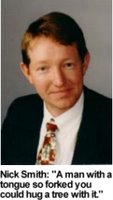


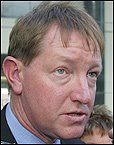 National's Nick Smith released National's Resource Management Act policy yesterday.
 The productive will still have to go cap in hand to to ask permission from the unproductive in order to produce. It's just that under Smith's regime the unproductive would be saluting a different coloured flag.


