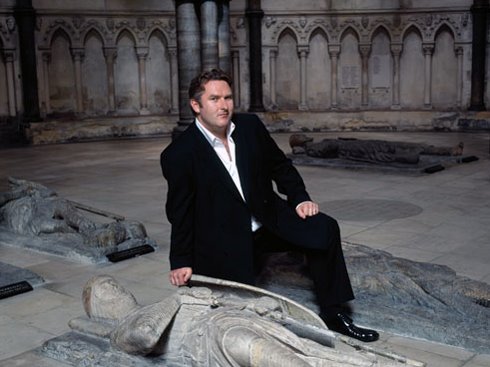
One of New Zealand’s most celebrated opera singers, Simon O’Neill has ... accus[ed] the Government of “a racist agenda” against European arts and institutions ... [saying there is a] “concerted effort, between Labour, the Greens and Te Pāti Māori covertly pushing the agenda of the eradication of great art.”... He suggested the increased support for Te Matatini, the national kapa haka organisation, had come at the expense of the likes of the NZSO and NZ Opera ....
"This is what Mātauranga Māori looks like in real life [he said]: The deletion of Western science and culture and the replacement with some sort of post-stone age fake construct ...
"[They] have absolutely no interest in supporting our cultural cause – the works of Beethoven, Bach, Puccini... [these artists] are, literally, completely foreign to their dangerous racist agenda....
"It would be a shame if ‘to rob Peter to pay Paul’ turns out to be the New Zealand Government arts policy."
[Carmel] Sepuloni said it was “disappointing” to hear O’Neill’s comments, as she had been a fan of his music.... Te Pāti Māori co-leader Rawiri Waititi called for O’Neill to apologise, labelling his views “race baiting and racist”.... On Thursday, he issued a written apology to Sepuloni and Waititi... New Zealand Opera ... Chairperson Annabel Holland issued a statement saying she did not share his views.
If you’ve never experienced opera before then hang your head in shame, then your very best starting opera is Tosca, that “shabby little shocker” whose powerful score and rich drama have thrilled audiences. So opera novices should be thrilled to know that is being given this month and next in Auckland and Wellington respectively. Leading man in the production is NZ's international opera star Simon O'Neill, back from conquering the world and soprano’s hearts, who talks to Lindsay Perigo about life, singing, and how to kiss women properly on stage. Listen closely…
Tenor Simon O'Neill loves coming back to Wellington. He did the Honours year of his music degree here, studying with the iconic Emily Mair, who, "along with my Aunt Eileen," is "my favourite person in Wellington." He says as a cultural hub, "Courtenay Place is second to none in the Southern Hemisphere." He's rapt about the "rehabilitation" of St James Theatre, where he'll be performing as Mario Cavaradossi in Puccini's Tosca from October 10-17, with what he calls "an A-Grade cast." (The opera opens in Auckland a week earlier.)
At 43, O'Neill is among the world's top ten dramatic tenors (“dramatic” being a formal sub-category of tenor, denoting a voice on the heavier, darker side of the spectrum), and in his own estimation among the top five when it comes to his specialty repertoire, German music of the late Romantic period (i.e., Wagner). Arguably he's as good as his pal and mentor, Domingo, only not as famous. Yet.
He hesitates to rank himself equal to his idol, and points out that in any event, where fame is concerned, times have changed. Recordings are what used to get an artist out there, but they're no longer being produced in such quantity as they were in Placido’s heyday; now "it's a struggle to get on Spotify." He does have a solo album out and will be doing another later in the year—but if these don't get him on magazine covers around the world, he's not worried. He loves the adulation he already enjoys; loves getting reviews that say things like, “As Otello, New Zealand tenor Simon O’Neill is tireless and thrilling”; “This is a reading of enormous panache, considerable vocal nuance and some of the most exciting top notes you are likely to hear on an operatic stage today”; and “I’ve never heard so many of the words in a live performance of the role.” He loves being hailed as “the most complete Otello since Domingo," not to mention "a Wagnerian of the first order." But even more, he loves being hailed as "Dad" by Tom, Grace and Violet. "Doesn't matter where I am in the world, thanks to technology I have breakfast with my wife and children every day. And the kids do their piano practice with me on their Ipads next to the piano!"
His path to the top was rough. Starting out as a baritone, O'Neill decided at a certain point to upgrade himself to tenor. The initial results weren't pretty. "I became what we now call a 'bari-tenor' at 24; by 26 my voice was in shreds. It fell apart in a very public way. I was doing La Boheme in Christchurch, but I couldn't get through it. We had to cancel the whole season. I was fired. I had to go home, and then to hospital."
What was the problem?
"I hadn't learned to 'cover' through the passaggio."
??!!
Well, however arcane that may sound, in serious singing it's a big deal. The passaggio is the transition between a singer's lower and middle, and middle and upper, registers. It's the latter "passage" that is relevant here—if a tenor doesn't modify his voice placement (‘cover’ it, as opposed to keeping it ‘open’) as he navigates from middle to upper, usually around the F-sharp mark, he'll end up in major strife. O'Neill has very stern advice for youngsters hoping for a singing career: that they learn from his experience. "If you haven't got your technique organised by your mid-to-late twenties, your voice is going to fall away." He reminds them of another of his idols, Giuseppe di Stefano, to whom this infamously happened, "singing all the way up to a High C without putting the 'cover' on. You can get away with it when you're young, and as brilliant as Di Stefano, but it's not what you'd do if you want a long career. My ideal is to be very, very disciplined in the passaggio area." He cites Carlo Bergonzi, Jussi Bjoerling (“my favourite Cavaradossi”), Mario Lanza and Luciano Pavarotti as master-coverers—especially Pavarotti, with whom he studied, who can be seen demonstrating the difference between a covered and uncovered tone on YouTube:
And here is Mario Lanza, covering on the fourth note of each of his arpeggios:
Still, O’Neill is a committed advocate of the view that such questions of technique are but a means to an end—the communication of emotion. To sit in on one of the master classes he conducts at Victoria University's School of Music is to hear him repeatedly admonish the young aspirants to live the meaning of the words they are singing. I observe to him that some of them seem to find this exhortation novel, strange and even alien, and ask if he agrees that too many—not all, but too many—sound like homogenised outcomes of a factory production line.
I do agree with that. I'd like not to agree, but I do. It’s not that they don’t have top-notch teachers—they do—but somehow ‘generic' has become a sort of 'go-to' place. Everyone all the same. Whereas what we're looking for is something special. Not just a pretty voice—not even a pretty voice, perhaps—but that extra something. And even more than that. Not only the talent, but the mind and the drive and the work ethic. Know your game. Bone up on the greats who’ve gone before. Know the commitment required and go for it. Talent alone is not enough. Our great rugby No.10 can kick spectacular goals, to be sure, and he clearly has a unique talent for it ... but he does as well as he does with that talent only because he studies and practises. Endlessly!
Those not willing to go all-out, he advises, should get some other day job. "Love the music, join the chorus, sing in a choir by all means—but go and get a B.Com!"
Returning to his upcoming appearance in Tosca, I remind him of the diva who threw herself off the parapet as is required at the end of the opera only to reappear several times thanks to a trampoline some miscreant stage hands had placed below. "I don't want to alert the work and safety people at the Beehive about our production, but let me just say our Tosca [Irish diva Orla Boylan] is having to learn to stunt-jump." And the kisses in this sizzler are not mere "stage kisses" either! O’Neill is genuinely enthusiastic about this production, his co-stars and the standard of opera emanating from New Zealand generally. “The flair, passion and imagination it should have—it’s all there! World class.”
Simon O'Neill, Wagner specialist, and Lindsay Perigo, Wagner-despiser, have a running gag where I say to him, "Your Wagner is great, dear—how I'd love to hear you sing some music at some point!" He responds with a regulation groan and a forlorn fantasy that he might have brought me to the cusp of enlightenment. As this conversation closes, I revive the gag, telling him how much I'm looking forward to hearing him perform Puccini, one of the greatest writers of music—one of the most irresistible melody-spinners—of them all. And I truly am. The boy from Ashburton who had to flee Christchurch for want of a cover-up but then found one and conquered the world, will assuredly pull off a Cavaradossi that would do Di Stefano, Pavarotti, Domingo, Bjoerling, Lanza et al—the titans who inspired him into this near-impossible lark in the first place—proud.
Lindsay Perigo is a former television newsreader and interviewer, a present-day professional voice coach, an opera buff and capital music reviewer for Wellington’s Capital magazine, and the author of Total Passion for the Total Height and The One Tenor: A Salute to Mario Lanza(with foreword by Simon O’Neill). He can be found at his blog, SOLO for Sense of Life Objectivists, his website LindsayPerigo.Com, and even—on supremely odd occasions—at Facebook. Make the most of that.
"Tenor is not a voice; it is a disease!" harrumphs a woman who just happens to be a soprano, in the 1951 Hollywood bio-pic The Great Caruso. The movie featured one spectacular carrier of the "disease" playing another, and spawned veritable epidemics of it, most notably in the forms of Pavarotti, Domingo and Carreras. And it didn't stop there:
In 1990, as a 19-year-old music student, I decided the world of opera would be for me. Three things influenced this decision: the first Three Tenors concert in Rome to mark the World Cup and Jose Carreras's heroic conquest of leukaemia; a fellow brass-player introducing me to Jussi Bjoerling's stellar recording of 'E la Solita Storia' from L'Arlesiana; and the purchasing of my first Mario Lanza CD—'The Great Caruso and Other Favorites.' Through this CD I fell in love with Mario Lanza's voice, his artistry—his complete persona. Tracks like 'Parmi Veder le Lagrime' from Verdi's Rigoletto and 'Musica Proibita' sailed out of the speakers into my relatively young operatic head and utterly captivated it. The sense of urgency Mario Lanza brought to everything, the clarity of his diction, the thrilling 'ping' in his voice, the way he unleashed his high notes ... I was enthralled. —Simon O'Neill, Foreword to The One Tenor: A Salute to Mario Lanza, 2014.
Sense of urgency. Thrilling ping. Clarity of his diction. Way he unleashed his high notes. Simon O'Neill might well have been describing his own singing (though he's far too modest a fellow to do so in that way). It was after all of his performance as Otello in Sydney, 2014, that The Guardian wrote:
As for Otello, the New Zealand tenor Simon O’Neill commands from the minute he steps on stage. From his re-entry in Act 1 where he seeks to silence the fray ("Abbasso le spade!"/"Down with your swords!"), O’Neill’s vocal and physical presence never wavers. Taught the role by one of the great Otellos, Placido Domingo, and fresh from a season of Wozzeck at the Metropolitan Opera, it is with single-minded intensity that O’Neill’s Heldentenor pierces through the psyche of the beleaguered Moor.
And all the above qualities were evident in dazzling abundance on Friday night, June 12, 2015, as O'Neill joined stupendous soprano Christine Goerke and the New Zealand Symphony Orchestra conducted by Pietari Inkinen to present a "Wagner Gala" comprising highlights from Wagner's Ring Cycle.
As is well known, Wagner's Ring Cycle is a hundred times more preposterous than life and a thousand times longer, so selecting "highlights" of sufficient brevity to enable the audience to be released the same evening is no mean feat. And for singers, deemed by Wagner to be simply additional members of the orchestra with no special privileges, to make themselves heard above an orchestra that is on stage with them as opposed to being below them in an opera pit, is no mean feat either. To be candid, Siegfried and Brünnhilde were occasionally overpowered, and the charismatic Maestro Inkinen clearly had no intention of holding himself or his rampant orchestra (the magnificent beasts!) back in any way in one of their last performances together for a while—but for the most part the vocalists were sublimely audible above the competing cacophony. Physically and vocally, Ms Goerke is reminiscent of the towering Montserrat Caballe, and I was reminded of nothing so much as hearing Caballe, decades ago, in Tosca, her (and Jose Carreras's) glorious tones spinning off the walls of Covent Garden. O'Neill in turn often sounded like his friend and mentor, Placido Domingo; in fact, were it not for the pesky actual chronology of things, I'd be tempted to say Domingo reminds me of O'Neill! (As a technical aside, I'd add that the purity of Simon's "eeeeeeeeeee" vowel on high notes where opera singers often modify it beyond recognition is a contemporary wonder of the world.)
I am one of those philistines who ecstasise to tunes. When I go to the opera it's largely to hear melodies I can hum rapturously on the way home. I get grumpy with Wagner on account of the years that must pass, full of seeming dirge ("continuous music narrative"), between the tuneful bits. At a delightful, rustic Kapiti lunch the day before the Wagner Gala, Simon eloquently assured me that, au contraire, there is a point to every single note of Wagner's "continuous music narrative"; every note, in fact—even the most seemingly random and incidental—is "pure gold." It was clear to me that Wagner for Simon is not just a way of making a living—he lives for it and lives it. Sense of urgency. Thrilling ping. Clarity of diction. Way he unleashes his high notes. Mario, hardly a Wagner man either, would assuredly approve, so how could I not?!
The next evening, Saturday June 13, the orchestra accompanied the sweet-toned violinist Karen Gomyo, substituting for a pregnant Hilary Hahn, in a nimble rendering of Beethoven's Concerto in D, and then performed the entire Lemminkaienen Suite by Inkinen's compatriot, Jean Sibelius (usually one hears the second movement, Swan of Tuonela, as a stand-alone). This was a fitting finale to the "Inkinen Festival," as the two evenings combined were dubbed, a tribute to a conductor who prided himself, justly, on big, bold projects. He leaves to become Chief Conductor of the Prague Symphony Orchestra. Young, handsome and vibrant, he will assuredly enjoy a future as golden as his recent past: seven stellar years as Music Director of the New Zealand Symphony Orchestra.
If The Inkinen Festival hasn't yet come to a place near you, and there are still tickets available, snap them up. "Continuous music narrative" and all, these are some of Western Civilisation's finest moments, past and present.
Lindsay Perigo is a former television newsreader and interviewer, a present-day professional voice coach, and a capital music reviewer for Capital magazine.
This post first appeared at his website, SOLO for Sense of Life Objectivists.
Before the Three Tenors, there was just one. Lindsay Perigo tells thestory of the overpoweringly charismatic singer of screen and record whom today’s singers still revere, and who has somewhat eluded biographers hitherto. From the new book’s Amazon description….
The One Tenor is a labour of love for life-long Mario Lanza devotee, New Zealand radio and television broadcaster Lindsay Perigo.
It is the bringing together of his best Lanza-related essays, critiques and interviews over the years, with significant new material exclusive to this book, including Perigo's take on the theory that Mario Lanza suffered from Bipolar Disorder. This theory was first touted in the biography of Lanza by Roland Bessette, with little explication. In The One Tenor Perigo interviews Bessette, who elaborates on his theory for the first time. Perigo responds in his stellar chapter, "Mario's Magic Madness."
The author stresses in his Introduction that The One Tenor is not a biography, but a chance to meet the overpoweringly charismatic Mario of screen and record who, in Perigo's opinion, has somewhat eluded biographers hitherto. Perigo argues that the uniqueness of Lanza lay in both his voice and soul, and that any portrait that fails to capture the latter is significantly incomplete. Soul abounds in The One Tenor.
The book is exceptional for its musical literacy. Perigo uses his own background as a singing student and connoisseur of voices to maximum advantage. In his time as a broadcaster, Perigo presented a series for New Zealand's National Radio called “Singers of Renown,” devoted to the great recordings of all great voices. He conducted extended interviews for that show and on TVNZ with Joan Sutherland, Sir Donald MacIntyre, Dame Malvina Major, Luciano Pavarotti, Jose Carreras, Licia Albanese and Anna Moffo, along with Mario Lanza's conductor and accompanist, Constantine Callinicos. (The Callinicos, Moffo and Carreras interviews are below.) His wealth of knowledge about the vocal art permeates this entire collection.
Among the diverse features of The One Tenor are Perigo's critiques of several Lanza CD releases of recent times, including the very latest, out just this month, Mario Lanza—The Toast of Hollywood. Youngsters studying voice will find Perigo's observations about Lanza's technique and style illuminating, but these observations are not so technical as to baffle the layman.
Perigo's insights into Lanza are further informed by his friendship for many years with Mario's son, the late Damon Lanza, of whom Perigo writes movingly here in “Remembering a Buddy.”
Another gracious feature of the book is that Perigo makes way for another Lanza-buddy and internet radio personality, Jeff Rense, to write a touching guest-memoir.
The One Tenor boasts two Forewords, both by outstanding singers: Perigo's co
mpatriot, pre-eminent contemporary Wagnerian tenor Simon O'Neill, and one of the Irish Tenors now enjoying a distinguished solo career, Honorary President of Lanza Legend (see Lanzalegend.com), Anthony Kearns. Both speak glowingly of being awed and inspired by Mario Lanza.
Coinciding as it does with the release of the new CD capturing what Perigo calls simply "The Voice" in some of its
most dazzling performances, The One Tenor is a worthy addition to the Lanza literature and timely salute to Mario's magnificent voice and spirit.
It’s always a pleasant surprise to discover that someone you admire adores something that you do too.
So imagine my pleasure on discovering that Stephen Fry has had a life-long love affair with the music of Richard Wagner (which long pre-dates my own twenty-year obsession), and that he wanted to tell the BBC all about it!
Watch and enjoy. [7 parts, 25 minutes in total]
And then maybe you’ll be in a position to better appreciate New Zealander of the Year nomineeSimon O’Neill’s debut in Milan’s famous La Scala Opera House in Wagner’s magnificent opera Die Walkure (even if he was ill for the first performance).
Here he is singing the role in 2008 with both the same conductor and singing partner with whom he made the La Scala debut:
AUCKLAND: Reminding readers that tomorrow night is the first Thursday of the month—which as everybody knows means the monthly B3 (Bloggers Bar Bash) at Galbraith’s !
What: Auckland Bloggers Drinks When:Thursday 4 March from 6.30pm Where: Galbraith’s, 2 Mt Eden Road, Mt Eden, Auckland Who for: Bloggers, blog readers, blog trolls.
Or just come along and buy Cameron Slater a drink. After paying for his lawyers, he’ll need one.
WELLINGTON: And I’ll be making a flying visit to Wellington to see NZ’s Wagner hero Simon O’Neill singing in the Wagner Gala on Friday night at the Michael Fowler Centre—so if any Wellington blog readers would like to meet up for swift drink straight after work on Friday (I’m assured some folk actually do work in Wellington), there’s a very good chance you’ll find us over the road at the West Plaza bar on Wakefield St from about the time their taps start working. So why not join us for a couple.
I enjoyed a delightful evening last night at the launch of a CD of Wagner's piano music by New Zealand musical legend Terence Dennis, a chap who's accompanied every major New Zealand vocalist from Kiri Te Kanawa to Donald McIntyre to Simon O'Neill, and for whom this is his first commercial recording.
Terence played a huge role in mentoring Simon O'Neill and a whole generation of NZ singers, and Simon was on hand last night to pay tribute and then pin us to the wall with a thunderous rendition of Siegmund's 'Ein Schwert werhiess mir der Vater' from Wagner's Die Walkure, before rushing off to catch a plane to New York to take the starring role of Siegmund in the Met's new Ring Cycle. The boy is in demand at all the world's opera houses, and it's easy to hear why!
Terence's CD is playing now on my stereo, and is on sale now at Marbeck's. [NB: Marbeck's picture shows the wrong CD, but fear not, their excellent staff will ship you the right one.]
Congratulations to NZ tenor Simon O'Neill who in October stepped on to the stage at London's Royal Opera House at Covent Garden in the role of Siegmund for the first of three performances of Wagner's opera Die Walkure. A richly deserved success. The playbill is here. Reviews are here. The best is from Bloomberg's Warwick Thompson who says of the performance,
The singing varied from good to great. For my money, the star was Simon O'Neill as Siegmund. His tenor voice was heroic and burnished, and he looked young and virile. If he graduates to the role of Siegfried in the future, I hope I'm there to hear it.
Me too.
UPDATE: Singing Siegmund in the next three Covent Garden performances was Placido Domingo, whom Simon has been understudying in this role at The Met. So you can see what it's all about, here at YouTube is Placido and the stunning Waltraud Meier burning up the stage as Siegmund & Sieglinde (Wagner's 'Adam & Eve) in the 2005 Proms -- six minutes described by writer Chris Brodrick as "so hot I suggest you turn on your air conditioning or sit by the open fridge. Be careful you don't get blown out of your chair by the roar at the end. Absoutely stunning!"
The reviews I read of Bob Dylan's weekend shows in Wellington and Auckland were mostly pissy too-cool-to-move monologues full of jokes about zimmer frames, ageing baby-boomers and how disgusting it was to hear a geriatric rocker singing (in 'Just Like a Woman') about his sex life.
Pathetic. Aside from the knowledgable Graham Reid's measured Herald review, the other juvenile reviews said more about the reviewers and their milieu than they did about the man and the artist they were reviewing.
Don't those reviewers understand what they were seeing? Has their taste--or lack thereof--been so permanently poisoned by their worship of braindead next-big-thing teenagers that they don't appreciate a craftsman somewhere near the top of his game? Do they think that it's only teenagers who can produce music? Or is just that it's only music made by teenagers that they listen to, and they've never heard of John Lee Hooker, Miles Davis or Beethoven.
Most of the complaints in the reviews were about what Bob didn't do--in other words, what he didn't do that juvenile rock bands normally do. He didn't do what the reviewers are used to? Too bloody bad for the reviewers, I say.
There was no dry ice, explosions or fancy stage sets (thank Galt), just a man and a band who were there to play music. That wasn't what the reviewers were there for.
The reviewers weren't happy because there were too many old, bald guys in the crowd ("old" meaning older-than-the-reviewer). And so what if there were? This was music for adults.
Because Bob had "a strange, odd look" when he played his organ--perhaps, I have to wonder, the reviewers have never seen a musician concentrating on his work before?
Because he didn't leap on stage and say "Yo, Auckland! Are you ready to rock!"? No, and neither did Simon O'Neill in Friday night's Fidelio, or Michael Houston when he played Beethoven's sonatas a few months back. What Bob did do, which was apparently too difficult for most ADHD reviewers to focus on, was come on stage and play genuinely moving intelligent music with a band that knows his musical chops and his back catalogue like the back of their plectrums--which they need to, because he can change direction at the drop of a Stetson, and which most of the audience who had paid for their tickets wanted him to do. He could have played longer; he could have played more guitar and better harmonica, but mostly what he did play was as good or better than most of us were hoping for.
What he played was adult music. Music with a brain performed by a man who has spent a lifetime learning his craft--a troubadour with a number one album strapped to his hipsack and a sackful of killer songs old and new to sing--but in this Age of the Braindead things like craft, brain and even (with the braindead thumping that is today's substitute) music and genuinely moving songs are just soooo out of fashion, aren't they.
Several years ago Bob was asked whether he was going to retire. Why would I, he said; he wanted to be like those old bluesmen who learn their trade and just travel the country and plug in and play. And that's what he now is with his Never Ending Tour, and that's what most of the crowd enjoyed on Saturday night in Auckland. Pity the reviewers were mostly too cool for genuine adult music.
UPDATE1: Here's three hot YouTube links I was going to post for you last weekend, but the time is right now:
First, Bob in his 1966 heyday, chained to his keyboard and singing 'Ballad of A Thin Man.' Even back then he was playing adult music. (Clip is unfortunately cut short.)
Bob in what I think is the first rock music video, for 'Subterranean Homesick Blues.' The two losers in the background are Alan Ginsberg and Bob hanger-on Bob Nuewirth.
Annamia Eriksson plays Siegfried's Horn Call. As the clip says, "super woman plays the horn." Magical. Wagner, who was "old" when he wrote this lietmotif, would surely have approved.
UPDATE 2: 'Stuff' readers have their say about the concert(s), and about one of the worst reviews. Looks like I'm not alone in my sentiments.
Forget "Opera Guy" Paul Potts, here's the real thing on You Tube:
For the girls and those who like steel in their singing, Mario del Monaco singing Puccini's Nessun Dormaas it's supposed to be sung. Strong. Bold. Terrific. Now you can maybe understand why although Paul Potts might want to sing opera, he isn't an opera singer.
For the boys and those who think Mozart always has to sound like so much passionless tinkling, here's Dianne Damrau as a showstopping Queen of the Night from The Magic Flute. [Singing starts about two minutes in.]
For those who enjoy orgasms -- and let's face it, apart from the Pope who doesn't -- here's the best, if not the only, ten minute orgasm in music: Richard Wagner's Transfiguration from Tristan and Isolde, sung by the incomparable Jessye Norman, and conducted by God. Delicious.
And here's what I'm looking forward to tonight: Simon O'Neill and the Auckland Philharmonia doing a show called 'Rome - The Eternal City'. If those Tosca excerpts they're promising include most of Act III (perhaps the best thirty or so minutes in opera), I'll be a very happy man indeed.
Hope that gives you some pleasure over your lunch hour.
'The Met' in New York and London's Covent Garden are two of the world's leading operatic stages, and New Zealand tenor Simon O'Neill (last here in March to sing Parsifal) is scaling the heights of both.
Already booked to sing the role of Siegmund in the Covent Garden performance of Wagner's Die Walküre in 2007, in which role he has understudied Placido Domingo at 'The Met' for the last two years, he has just received confirmation that this leading role at The Met is also to be his. You heard it here first.
When Domingo reminisced for TVNZ in 2005 about the time he covered Franco Corelli (and ended up making his own Met debut), he concluded by speaking "glowingly" of O’Neill: “Now it’s his turn,” he said. And now it is.
Currently singing in Mozart's Magic Flute in Salzburg, O'Neill is naturally delighted at this exciting news, as I'm sure are all New Zealand Wagnerians will be when they hear.
It's NZ Music Month and a few bloggers have already posted their worst NZ 'pop' songs -- naturally Tim Finn deservedly over-achieves on most lists -- so as I've no wish to follow the herd and I've already posted a 'ten-most-overrated' list, instead of a 'worst ten' here's a favourite dozen:
Gun Hungry -- Luke Hurley
Billy Bold -- Graham Brazier
Gutter Black -- Hello Sailor
Don't Catch Fire -- Toy Love
Squeeze -- Toy Love
Crush - Tall Dwarfs
GMT -- Hello Sailor
True Love -- Scavengers
Taking the Weight Off -- Penknife Glides
Not a Victim -- Chris Knox
Saturday Night Stay at Home - Suburban Reptiles
The Jinx - Swingers
Special mention, a few special non-pop NZ musical moments:
Bailero, from Chants d'Auvergne (J.Canteloube) Performed by Dame Kiri Te Kanawa and The English Chamber Orchestra, and perfectly used inlast year's superbly atmospheric film NZ film In My Father's Den. Beautiful.
It is telling that Wagner did not call Parsifal, his last stage work, an opera or a music drama, but rather a stage-consecrating festival drama. Unlike earlier works, Parsifal does not center on redemption through love; it is fixed on redemption through suffering, atonement and compassion in the context of a religious drama. To Wagner, this drama was not an entertainment; it was sacred theater similar (in his mind) to that of ancient Greece, where philosophy, religion and ideals were consecrated through words and music.
The seeds for this culminating work were first sown when Wagner read Wolfram von Eschenbach's thirteenth-century poem, Parzifal in 1845. For years afterwards, this powerful text both intrigued and puzzled him with contradictions and dramatic problems. Finally, on a visit to the Wesendonck estate near Zurich in the spring of 1857, he awoke and looked out upon the garden. As he recounts in his autobiography, "The garden was breaking into leaf, the birds were singing, and at last, on the roof of my little house, I could rejoice in the fruitful quiet I had so long thirsted for. I was filled with it, when suddenly it came to me that this was Good Friday, and I remembered the great message it had once brought me as I was reading Wolfram's Parzifal ... out of my thoughts about Good Friday I swiftly conceived an entire drama in three acts, of which I put a hasty sketch on paper."
While the music for this drama was not finished until 1879, Good Friday remained the emotional and spiritual crux of the entire drama, and evoked some of Wagner's most sublime music
Gurnemanz is the key -- it's for him we must feel compassion; that is, him as Everyman -- or perhaps every good man who deserves favour.
Compassion: emotional cognition through music; and throhugh our emotional cogntion WE - the audience - must achieve wholeness and completion.
Overwelming
emotionally draining the climax of Act II, with Simon O'Neill's Parsifal holdinf off the seductive advances of Kundry's electrifying -- you could almost feel the sir crackling with the raw xxxx
Difficult, but immensely rewarding
Landmark - singers, auditorium (timber, interior) Arrival of some major international talents (al NZers)
I'm off to Helengrad early tomorrow to see 'Parsifal' and catch up with friends, so blogging may either be intermittent or non-existent until at least Monday. Try and cope without me.
"What's Parsifal?" I hear you ask, "and why is it on St Patrick's night?" To the second question I can only assume someone stuffed up, but a St Pad's Parsifal does give a good excuse to slip a few cans of Guiness into the auditorium.
To the first question: it's an opera by Wagner -- which means a long one -- described by Nietzsche as a “sell-out” to the Christian faith, by Tchaikovsky as a long, boring experience, and by Debussy as “the greatest monument in sound ever raised to the glory of music.” Of the all New Zealand cast featuring Donald McIntyre, Simon O'Neill and Margaret Medlyn, Bayreuth producer Keith Warner declared "you wouldn't expect to get a better cast in most opera houses in Europe."
So I'm looking forward to a great night or two.
If you want to know more (and to see the source of those quotes), this link has details of a talk on 'Parsifal' by the always illuminating Heath Lees tonight on Concert FM; this site has all the lietmotifs you need to know, and this site has almost everythelse a Parsifal-goer might need.
The head of the Gods is a New Zealander, and he's returning home.
Best known for the role of Wotan the chief of the Gods in Wagner's Ring Cycle, a role which for many years he made his own around the great opera houses of the world, Sir Donald McIntyre (left) is returning to appear in Wagner's Parsifal in Wellington in March.
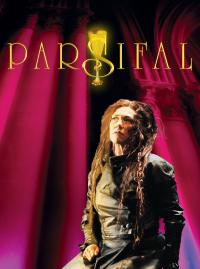
He's "looking forward to a swim at a Wellington beach," he says, and to joining a "knockout cast" which includes another accomplished New Zealander, tenor Simon O'Neill playing the title role, and Margaret Medlyn as Kundry.
"It's extraordinary that New Zealand has five singers in this cast," says McIntyre. "In the hands of Anthony Negus, it could be an absolute sensation."
Simon was raised in Ashburton and now lives in the opera houses of the world. He recently understudied Placido Domingo's Siegmund at the New York 'Met's' Walkure, and 'The Independent' declared of a recent appearance in Susannah that " the best music came from the Irish (sic) tenor Simon O'Neill's splendidly sung Sam."
I'm looking forward to seeing Simon back in New Zealand in March for Parsifal, for which he's singing the title role (and for which I'd better get on with buying a ticket before they're all gone). Appearing on stage with him will be international Wagnerian legend Donald McIntyre in the role of Gurnemanz, himself a 2003 Arts Foundation Icon.
In honour of New Zealand Music Month I've added three New Zealand musical friends to my 'Good People' Links down there on the sidebar-- and good people they all are.
Tenor Simon O'Neill is currently conquering the world. Most recently he's been understudying Placido Domingo in the Met's production of Wagner's 'Walkure' in New York. You can see him in the Kiri and Friends DVD from last year's Ayatollah Centre concert in Auckland with live-wire Helen Medlyn and Newmarket-based Opera Factory Chorus, and I've just discovered you can hear him next year in an NZSO Parsifal! Can't wait!
Soundtrack composer Marc Chesterman has composed music for Florian Habicht's films Woodenhead and Kaikohe Demolition, as well as collaborating in the improvisational trio Audible 3. Currently preparing to tour Europe with the Mau Dance company, I can confirm that Marc can produce "insanely cheerful" music as if he was born to it.
Hello Sailor are New Zealand's under-rated rock music legends. Variously considering themselves either a South Pacific Rolling Stones or a South Pacific Velvet Underground -- the latter well before such a tag was even fashionable -- at their best Hello Sailor sounded and sound like they can beat the world and it's brother. And quite apart from being a thoroughly decent chap, Sailor's Graham Brazier has written New Zealand's only real 'rebel song', Billy Bold. Graham's latest album 'East of Eden' comes highly recommended, as does fellow Sailor Dave McCartney's latest, on which 'Drunk With the View' finally gets recorded.
I heartily commend all the above to your eager attention.


.jpg)


 In 1990, as a 19-year-old music student, I decided the world of opera would be for me. Three things influenced this decision: the first Three Tenors concert in Rome to mark the World Cup and Jose Carreras's heroic conquest of leukaemia; a fellow brass-player introducing me to Jussi Bjoerling's stellar recording of 'E la Solita Storia' from L'Arlesiana; and the purchasing of my first Mario Lanza CD—'The Great Caruso and Other Favorites.' Through this CD I fell in love with Mario Lanza's voice, his artistry—his complete persona. Tracks like 'Parmi Veder le Lagrime' from Verdi's Rigoletto and 'Musica Proibita' sailed out of the speakers into my relatively young operatic head and utterly captivated it. The sense of urgency Mario Lanza brought to everything, the clarity of his diction, the thrilling 'ping' in his voice, the way he unleashed his high notes ... I was enthralled.


 What: Auckland Bloggers Drinks