"Is the government in the car business?” “Hell, no,” says Yaron Brook in this video interview at Pajamas TV:
Obamanomics vs. GM & Chrysler, and The Proper Role of Government.
Tuesday, 31 March 2009
"Is the Government in the Car Business?”


Bailout bingo with ‘South Park’ [update]
As Tim ‘The Weasel’ Geithner announces plans to bail out even more over-leveraged banks, Stan from ‘South Park’ discovers how Team Obama and the Treasury Department decide to spend all their trillions [hat tip Samizdata].
[NB: The churlish blogger mis-named “Adam Smith” points out in the comments he posted this before Samizata. So there.]
UPDATE: A reader points out another Southpark connection to Geithner: that of The Weasel’s striking resemblance to the character “Squeak” (right) in SouthPark creators’ movie Baseketball. “Tell me Squeak doesn’t look like a young Geithner,” he says.
Squeak plays a loser that everyone shits on, a dork and can do nothing right. (So the resemblance isn’t just paper thin.) Here is a short clip of the movie to give you a taste of Geithner’s … I mean Squeak’s … character. See what you think. Is Geithner Squeak?

Free Speech vs Russel Norman
The Greens’s Russel Norman makes it abundantly clear in an email to researcher Bryce Edwards why the Greens under Norman’s leadership were, and are, such enthusiastic supporters of the free-speech-killing Electoral Finance Act. The reason is simple enough: because the ginger whinger is so violently opposed to free speech.
Perhaps Green supporters should be changing both their leaders, instead of just one?
Whuck me, it’s W(h)anganui
Has there ever been a time when so much whucking whoolishness has been spoken at such length about a subject that could be less important?
Whrankly, Mr Mair, I couldn’t give a damn. If this is really the most important issue on which you have to whocus, then there can’t possibly be very much of any importance going on in your world.
Get a whucking life.
Put a bag over it & call him done

Albeit this is a bag that is still open: "My preference is to find a voluntary and industry-led solution," says John Boy – which is hardly the primary objection to Nick’s nannying; nor is it the most fundamental objection that the bag tax would go to help supermarkets’ bottom lines. It would be no less iniquitous if it were going to pay for minister’s trips overseas [on which more here].
Nonetheless, I join in Cactus’s call that someone else, anyone else, should now be given the environment, RMA and climate change posts. “No more namby pamby Ministers. Nick Smith can go and hug a tree with women sporting houstaches.”
Earth Hour follow up: the ‘Atlas’ point
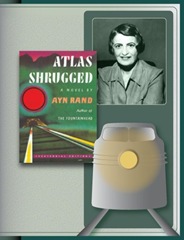
Consider the phenomenon of Earth Hour . . . which I criticized in a recent op-ed. During Earth Hour, participating cities turn off the lights of major skylines and landmarks to signal a commitment to fighting climate change. In my article I discuss why I think this is a travesty.
So how does this relate to Atlas Shrugged?
Read on here and find out: Earth Hour and Atlas Shrugged. And listen to Keith on ‘The Schilling Show’ discussing the real meaning of Earth Hour’s events. Check it out here. (Keith’s interview starts just over halfway through.) He makes his points very clear:
The notion that we face some sort of planetary emergency that goes beyond anything we’ll ever be able to cope with – that is not supported by scientific evidence. . . The kind of threats we face from government policies that people want to impose in the name of fighting ‘climate change’ pose a far greater risk to liberty and to our enjoyment of life than anything that might ever happen to the climate. . .
The biggest threat is our forced reduction in our use of energy . . . the claim is we’ll somehow make it up with windmills and solar cells, but the physics of that just doesn’t work out. . .
The 2 biggest obstacles to economic recovery . . . [update]
I an article I linked to yesterday, George Reisman explained how falling prices, far from being deflation, are actually the antidote to deflation. They are the antidote, he explained,
because they enable the reduced amount of spending that deflation entails to buy as much as did the previously larger amount of spending that took place in the economic system prior to the deflation.
Despite the fact that the freedom of prices and wages to fall is the simple and obvious way to achieve economic recovery, two fundamental obstacles stand in the way. One is the exploitation theory of Karl Marx. The other is the doctrine of unemployment equilibrium, which was propounded by Lord Keynes.
Both bad ideas have been embraced by the world’s politicians and economic advisors. Read on here to see both briefly explained, and resources offered to have them thoroughly debunked: The Fundamental Obstacles to Economic Recovery: Marxism and Keynesianism.
UPDATE: “Keynesians are witchdoctors,” says Peter Schiff.
LIBERTARIAN SUS: Missing the Point
Susan Ryder discovers that never have so many so often missed the point . . .

Nothing has changed in the interim. When it comes to penning this weekly post, I usually have a few ideas floating around. Occasionally though, they’re all discarded for something completely different by the time I sit down to work.
And so it is today.
I’d been toying with a piece on advertising – painful television ads in particular – but the lovely Bernard Darnton beat me to it, or at least acknowledged it in last week’s terrific post, “NOT PJ: Wheel of Misfortune.” (If you missed it, I highly recommend it - after this!).
And lately I seem to have done nothing but run into Che Guevara. Not literally, of course – that would be silly – and not only that damn image from 1960 either, but repeated mention of the odious communist in books, newspapers and magazines. As such, I felt a rant coming on, but not today, Josephine. The ads and Che will keep.
Yesterday’s Newstalk ZB programmes had callers consumed with the notion of One Council to Rule Them All in Auckland. Most appeared to be against the plan, preferring to retain the status quo, but all were vehement as to their respective opinions.
Nobody proffered the idea of, God forgive me, a third way. A real alternative. Nobody thought of questioning state control altogether via the abolition of councils with subsequent services being conducted by private enterprise. To weigh up the pros and cons of one big council versus several regional councils is like discussing the pros and cons of Stalinism and Maoism.
The truth is that both are disastrous. It is not a question of "which" council is better. It's whether the state is better at delivering services than private enterprise. And that question was answered, definitively, when the Soviet Union fell over and didn’t get up again. Next!
A bit earlier, ZB breakfast host Mike Hosking was singing the praises of paper shopping bags in light of Nick Smith’s touted 5c tax on plastic bags. “Groceries look good in brown paper bags!” he cried. Well, the man has a point. Heaven forbid that my groceries don’t ‘look good.’ Sports reporter Tony Johnson, announcing a preference for reusable bags, went even further suggesting a 10c tax on paper bags and an outright ban on plastic bags, citing that “Ireland doesn’t allow plastic bags at supermarkets and we shouldn’t either!!” So there.
But hang on a minute. Tony can’t have been paying much attention at high school. He’s forgotten that back then the Sandalista parents of today’s Greenies waged war against the paper bag for its notorious tree-chopping crimes, which went on to play a part in the subsequent growth of … plastics. Holy renewable forests, Taxman! There’s just no pleasing tree-huggers!
Of course Mike, Nick and Tony could all just mind their own business and leave others to do the same, but that would be too simple. Next!
Smoking and Smacking. The banning of a) smoking in privately-owned commercial premises and b) smacking one’s children, quickly developed into arguments over the issues of a) second-hand smoke for patrons and staff alike, and b) smacking or not smacking one’s children as a means of appropriate discipline.
Wrong again and wrong again. The issue; the only issue; is and always was one of state interference. It’s the same with arguments regarding the teaching of creationism in schools, the location of a new sports venue or the ‘merits’ of various forms of taxation.
Privatise education and let individual institutions dictate their own curricula. Remove the government from sport and allow private investors to construct their own facilities. And “fair taxation” is an oxymoron – not that you’ll find that particular example in high school English classes.
The point of today’s Gospel is the question of why we seem to so often miss it.
* * Susan Ryder writes every Tuesday here at NOT PC * *
London City Hall – Norman Foster [updated]

Margaret Thatcher abolished the Greater London Council in 1986, and with it the job and power base of the loathsome ‘Red Ken’ Livingstone -- a popular move that began the neutering of what she called later “the left-wing municipal socialists and their front organisations,” “returning their functions (which we had already limited) to councils closer to their people.”
Auckland is just about to do the reverse.


Naturally, the 440 stickybeaks and paper shufflers which the building was designed to house have exploded in number since then.
And this political model of wretched profligacy is now to be replicated in Auckland. With, undoubtedly, an architectural one to follow.
Rust never sleeps.
London’s new City Hall . . . suffers from fatal delusions of grandeur. . . It is a medium-sized office building on steroids, pumping itself up to landmark scale. Trying to look like something else. And of course it is something else, another phenomenon of our times: a camera-friendly visitor attraction.
Because this is also architecture as set design.
Very, very expensive set design.
Monday, 30 March 2009
No wonder builders, home-owners and designers are FRUSTRATED!
From the Why-Did-We Bother-File come these two reports from home builders on the comments section of NBR’s website, in a post on falling building consent numbers. I think the prevailing emotion is . . . frustration.
Building
I’m doing my bit and building a house. I can see why people are not bothering, you are seen as a cash cow by everyone. Gst, council fees, contractors, building firms everyone looking to make a buck takes a shot. Then you have the uncertainty of RBNZ. Thought at least I would have a cheap mortgage.........not any more. . .Lacking of consents
In November 2006 I instructed my architect to draw up plans for 2 minor additions.
1st, an increase of 28 sq M on the 2nd story so with no increase in "site coverage" so no problem? Well it took a year to sort out all the "new" boxes that needed ticking.
2nd, a small canopy to protect the entry from the west that required about 12 sq M of concrete (impermeable) BUT we were up to the arbitrary limit so that required a "Building Consent" (at TWICE the cost of the bloody concreting) and the consent of neighbours (WHY???) Then "Tech Drawings" This is where ACC "advisors" became involved and started "looking" for problems to justify their snout being in the trough. They had no problem with the canopy, BUT they could find all sorts of (minor) "difficulties" well outside of their reference. Like trying to redesign the turning circle for vehicles, and vague references to the already approved (and completed) upper story as - now somehow - it contravened the (new) height to boundary ratios. If the original upper story (built ~ 1960) contravened the latest code. WHO BLOODY CARES NOW. Nobody has ever complained. And to cap it off this contravention was only a couple of cm!!!
Now I'm required to concrete about a 70 sq M area to suit their 'turning circle' crap, adding further to the impermeable area on the site.
Is it any wonder the "consents" are reducing.
None at all. I’d wager every one of the 1089 new holders of residential consents would have a similar story, not to mention the thousands of us who are still waiting to get one (and if you think consents from Auckland are hard to get now, just wait until new “super” city makes everything more “efficient”). Frankly, when the construction costs so high of a new house (so much of it inflated by regulation) is still more than the selling cost, it’s a wonder anyone’s venturing out at all.
The government is still killing building. And they’re still ignorant as hell that they are.
Come in Frank Gehry, your time is up
You can just imagine how disappinted I was to hear that for purveyor of egregious architectural megalomania Frank Gehry, 2008 was something of an annus horribilis.
"For years the architect has been lauded for ushering in a new cultural era," says Nancy McDonald in Maclean's magazine. "But the climate appears to be shifting... Either the guy's a genius, or he has us all fooled."

"For years the architect has been lauded for ushering in a new cultural era," says Nancy McDonald in Maclean's magazine. "But the climate appears to be shifting... Either the guy's a genius, or he has us all fooled."
This is only a partially rhetorical question. As Robert Tracinski noted a while back:
For a man feted as the greatest living architect, Gehry's style is surprisingly one-note. Almost all of his buildings look like giant piles of crumpled tin foil. Their most interesting feature -- the interior spaces tend to be giant blank boxes -- is an exterior cladding of titanium sheets folded into wild, discombobulated shapes. These are supposedly works of "abstract sculpture," but in fact they are carefully designed to achieve a specific effect: not to look elegant or graceful, but to look jumbled, chaotic, nonsensical. . .
Nonsense only sells for so long. Turns out that you really can only fool some of the people some of the time.
Nanny Nick taxes bags [update 3]
National Cabinet Minister Nick Smith intends to impose a new tax on the modern world’s cheapest, cleanest, most efficient form of packaging: the supermarket plastic bag.
As Liberty Scott says, Nanny Nick is just “the Green Party's Cabinet Minister in drag.”
UPDATE 1: Good to see opposition around the blogs:
- “I thought Nanny had got the sack!” says Fairfacts Media.
- “Fantastic Plastic” says MacDoctor.
- “Has the government not realised that Nzers are sick and tired of government telling them what they can and cannot do in their daily lives. It will be just like the light bulbs and showers issue,” says Whale Oil.
UPDATE 2: Susan points out the obvious to Fairfacts:
"I thought Nanny had got the sack".
Whatever gave you that idea? John Key thinks Nanny State starts and stops with lightbulbs.
Hate to say we told you so, but your blue glow was always decidedly mauve ...
And from Cactus: “Nick Smith pollutes New Zealand with yet another stupid namby-pamby idea
Save the world - one plastic bag at a time. Spare me the gibberish.”
UPDATE 3: "Just like a bad sitcom National has its own token greenie, MP Nick Smith," says Madeleine.
Nothing to fear about falling prices
Imagine a place where producers are surging ahead and everyone’s benefitting – a place where technology is making more and more and better products; where food is coming out of the ground in increasing amounts thanks to improved agricultural techniques; where access to housing is getting easier and easier thanks to radically improved construction techniques; where new inventions and new technologies are making travel easier and cheaper.
This would be a great place to be, wouldn’t you think?
Well, not if you’re an economist it wouldn’t. At least, if you’re an economist like Neville Bennett, writing today at Bernard Hickey’s place, you’d be wringing your hands and talking about “deflation.” To an economist like Mr Bennett, the world of the late nineteenth century, in which we experienced gently falling prices for most of the four decades to 1914 – which means gently rising real wages -- is not something to embrace, but something to fear.
Sad but all too true. This is what real prosperity actually looks like: goods becoming more abundant, while the price of goods becomes ever cheaper: 

Paul Walker at Anti Dismal rightly banishes the anti-‘deflationary’ foolishness, explaining the difference between “good” deflation and “bad” deflation.
And George Reisman explains why even in bad times falling prices is not a bad thing – that falling prices are not in fact deflation but the antidote to deflation.
Please recommend the reading to someone you know, before they’re put wrong by the likes of Mr Bennett. And when someone tells you that falling prices are always bad, just think back to that graph above, and remember what was happening to real wages over that period.
One city, one neck, one noose [update 3]
With one-third of the country’s population under imminent threat of peremptory amalgamation -- everyone from Port Waikato in the South to Kaipara in the north all answering to one group of busybodies -- I can only agree with Lower Hutt Mayor Wayne Guppy, who says this isn't a “local” government issue any more, but almost a separate state.
A “super” state, with a super bureaucracy. Taking the “local”out of government, and replacing it with a centralised behemoth.
It’s argued one behemoth will improve our lives. “That is a big step forward,” says David Farrar, getting one word out of six right. “One level of rates. One district plan. One set of resourcing consents. One set of bylaws. One Council to decide things.”
He says all that like it’s a good thing. The eight councils in the Auckland region are already out of control – since the passing of Sandra Lee’s Local Government Act a decade ago (which, without any sense of irony, gave them all a “power of general competence”) not one has managed to restrain themselves from increasing the rates burden every year. If they can, they will. So we can expect:
- One level of rates increases . . . with even less prospect of protesting the imposition.
- One district plan . . . under which Nick Smith’s RMA reforms will make it even harder to protest the intrusions.
- One set of resourcing consents . . . with not even competition between regions to keep down the enormous cost and delay in these consents.
- One council to decide things . . . one council deciding things for one million people. With the “local” taken out of government, how much listening do you think the decision-makers will be doing with those on whom their decisions will impact?
“One council to decide things” sounds to me like one city under one ego-driven set of councillors telling one million people what to do: one city, one neck, one noose – with nowhere in Auckland to which to escape.
And who’s kidding whom about “efficiencies”? You really think any of the planners, bureaucrats and jobsworths will lose their jobs in amalgamation? You really think a bigger bureaucracy will be more efficient?
North Shore mayor Andrew Williams is not known for saying anything worth a pinch of shit, and once again he’s off the money in saying “job losses may be inevitable” because of the “overlapping” that would occur with an amalgamation. If he really thinks that then he’s a bigger cock than even Whale Oil previously thought.
And so are all those who agree with him.
Jobs and efficiencies in bureaucracies advance in reverse order to the increasing size of the bureaucracy, with the factor of increase being squared.
When Auckland’s borough councils were amalgamated back in the late eighties, they were reduced only in the number of councils, but not in the virulence of their bossiness or the number of bureaucrats with their feet on our throats. The number of councils was reduced by around a quarter, going from around thirty or so to eight, but the factor of intrusion and aloofness was advanced by at least sixteen. Applying the same formula to the now proposed amalgamation – the factor of reduction being squared -- there’s a frightening prospect in store for Aucklanders.
Absolutism limited only by inefficiency.
No wonder that the man responsible for the late eighties amalgamation, Michael Bassett, is against the utterly misnamed “super” city idea.
Apply that same factor to everything involved with the council. To the size of the new building they’ll need to occupy. To the number of bureaucrats infesting the place. To the speed and general snottiness with which your resource and building consent applications are processed. To the size of the ego of the new “elected mayor”-- who will effectively be the second most politically powerful person in the country, but with even fewer restraints on that power than the Prime Minister.
Imagine your own personal political hate figure occupying that throne, and examine how you feel about it.
When London got their first “Mayor of Greater London,” a position barely accountable to the Greater London Assembly, it was the newly resuscitated Red Ken Livingston, whose first move was to ban driving in and out of the central city while embarking on an orgy of monument building. The next (and current) “Mayor Greater London” is an ego-drive cock in a urine-coloured fright wig whose first move was mini-prohibition on the tube – an illiberal, intolerant buffoon with his own authoritarian agenda.
I don't think we want that here, do we?
I know, and you know, what we can expect out of this.
We can expect a bigger city.
With a bigger rates bill.
A bigger bureaucracy.
And with a bigger cock on top than even North Shore can currently manage.
UPDATE 1: Turns out I was wrong about Bassett. About more than one thing. You can’t take the ‘big government’ out of a former cabinet minister.
UPDATE 2: Corrected London information.
UPDATE 3: Liberty Scott offers Yet another reason for Auckland not to be a supercity: “Gary Taylor likes the idea.”
Sunday, 29 March 2009
The Earth Hour scam [update 3]
Since the most popular post over the weekend (by the power of Google) was a 2007 post on Sydney’s first Earth Hour, I’ve reposted it here for regular readers:
The Earth Hour scam
Wednesday, April 04, 2007
 Earth Hour! The Shut-Your-City-Down-Hour. What a lot of self-aggrandising, warmist blather. Mark Steyn gets it right:
Being on Eastern Time (US) rather than Eastern Time (Oz), I’m afraid I slept through the excitement of Sydney’s “Earth Hour” when, from the Lord Mayor to the lowliest rummy lying in the gutter belching incandescent meth fumes, the entire city turned out its lights for one whole hour in order to stop global warming. You can see a satellite picture of it here. No, wait, that’s North Korea by night. Now there’s a guy who’s really doing his bit to save the planet. . .Shut down Sydney for an hour, and supposedly make a point about global warming? Yeah, they made a point all right: the point that gesture politics sucks arse. Bruce at Salmon Sheets looks at the "before and after" photo scams published in The Age (see pictures above) which purported to show the huge effect of the shut down -- presumably if the effect was so great, they wouldn't need to tart up their photos to fit the news? And in a second scam, as Andrew Yanderlou notes [hat tip Tim Blair],
So neither real, nor effective then. But on top of these two scams, there's an even bigger one that an uncharacteristically pointed Ed Hudgins highlights in his piece The New Cult of Darkness, which begins this way, a much deeper and more philosophical scam that is rapidly becoming all-pervasive: the idea that human life and human flourishing is un-natural, and something for which we must seek expiation from today's prevailing nature gods.The chart [pictured right] demonstrates that during the "Earth Hour" itself, Sydney used around the same amount of electricity as it had the two nights of similar levels of electricity use at the same time.
However, "Earth Hour" spectacularly caused a massive spike in electricity use in the two hours preceding the "Earth Hour" revealing the whole concept to be little more than a public relations scam and a contributor to global warming.
Presumably this occurred as people brought forward the electricity using activities they had wanted to avoid during "Earth Hour."

Since early men ignited the first fires in caves, the unleashing of energy for light, heat, cooking and every human need has been the essence and symbol of what it is to be human. The Greeks saw Prometheus vanquishing the darkness with the gift of fire to men. The Romans kept an eternal flame burning in the Temple of Vesta. Our deepest thoughts and insights are described as sparks of fire in our minds. A symbol of death is a fading flame; Poet Dylan Thomas urged us to "rage, rage against the dying of the light."It was only a symbolic shutting down of a city, but what it symbolises is much darker than those photo-shopped pictures of a great city with its lights out. Unlike other animals who adapt themselves to their environment, human survival demands that we adapt the earth to ourselves; brightly lit cities are the greatest and most exciting symbol of our civilising success, of the life-affirming success at the production of our habitat. Hanging our head in shame at that success, however symbolically, is not heroic. It's not life-affirming. It's not something to celebrate. As Hudgins concludes:
Thus a symbol of the deepest social darkness is seen in the recent extinguishing of the lights of cities across Australia and in other industrialized countries, not as a result of power failures or natural disasters, not as a conscious act of homage for the passing of some worthy soul, but to urge us all to limit energy consumption for fear of global warming.
This is not the symbol of the death but, rather, of the suicide of a civilization. . .
The spectacle of a city skyline shining at night is the beauty of millions of individuals at their most human. Energy is not for conserving; it is for unleashing to serve us, to make our lives better, to allow us to realize our dreams and to reach for the stars, those bright lights that pierce the darkness of the night.Too right.
UPDATE 1: By the way, Al Gore didn’t join in the general “Earth Hour” hysteria at his house, reports Drew Johnson, president of Tennessee Center for Policy Research, who drove past at the appointed time to see what the Goracle was up to [hat tip Anthony Watts, who has more on the Bore’s snub].
UPDATE 2: Tim Blair makes fun of an Earth Hour noob, and another one, and adds a few links – including one of Sydney 2009 during and after Earth Hour.
UPDATE 3: Belated congratulations, by the way, to Dave Mann and Mr Dennis, who managed to slip photos of their well-illuminated residences into the Herald’s wretched gallery of Saturday night ludditery.


And congratulations too to the Flannagans, who lit up their own place, and promise to upload links to everyone else who did.

Quote of the Day: Peter Schiff
“Printing money is merely taxation in another form. Rather than robbing citizens of their money, government robs their money of its purchasing power. “
- Peter Schiff, from his article ‘The Fault Lines Emerge.’
Greentache
Yes, Stephanie Mills does have a moustache.

It’s standard issue with all the women at Greenpeace.
Saturday, 28 March 2009
NOT PC’s blog digest, to 28 March
If you missed a few visits to NOT PC this last fortnight, here’s what readers visited most often these last fourteen or so days:
- Shop owner cleared . . . but to police he’s still a criminal
My congratulations to sop owner Virender Singh not just for being cleared in a depositions hearing at the Manukau District Court, but for having the gumption to defend himself and his young nephew when the police have already made it perfectly clear they view anyone who does as a criminal. . . Read on. - Barack O’Prompter
The Obamessiah has a new title. He's now President Teleprompter. . . Read on - Gordon Brown: “The devalued Prime Minister of a devalued Government”
Watch Euro MP Daniel Hannan explain to Gordon Brown the way things really are. As of today, this is the most popular video in Britain . . . Read on. - Stephen Schneider: A stranger to honesty
After hearing him speak at the so called “climate change inquiry, expect to hear the name “Professor Stephen Schneider” used frequently around the local warmist traps in days, weeks and months to come. Don’t expect the media, however, to remind you of what Mr Schneider has said before . . . Read on. - NOT PJ: The None-Day Fortnight
Bernard Darnton finds a government scheme so good it should be made ten times bigger. . . Read on. - There must be 50 ways to be a creationist?
Here’s 50 reasons you shouldn't believe in evolution. PZ Myers reckons “the list pretty well covers all the real reasons people are creationists” . . . Read on. - Beer O’Clock: In praise of the eloquent insult
Not for us the simple four-word drinking epithet, not at least when a more silver-tongued sally could prove more devastatingly effective. Brush up on your withering invective here . . . Read on. - ‘Trillion’ is the new billion
Another week, another trillion dollars. The Obamessiah has been busy – but even in his busiest moment the country’s chequebook is never far from reach. . . Read on. - Atlas sells
Over fifty years after its publication Ayn Rand’s novel Atlas Shrugged is at number one on Amazon’s best-seller lists for Fiction and Literature. And no wonder. . . Read on.
Enjoy!
Peter Cresswell
Friday, 27 March 2009
Beer O’Clock: “You forgot the hops, bro.”
A couple of expat Australians living in Hawkes Bay have some friendly advice for NZ’s mainstream brewers: You forgot the hops, bro.
Dear Brewers,
There are four ingredients in beer: water, malted barley, hops, and yeast.
Sure, some of you, especially the bigger operations, probably add a whole bunch of preservatives and other additives that I’d rather remain ignorant of, but basic beer brewing requires just those four things.
Water, malted barley, hops, and yeast.
Notice anything?
No? Then let me point it out to you.
HOPS.
Please use some.
Regards,
Fush ‘n’ Chups Admin
 You’d think the friendly advice would be appreciated. A “spokeswoman” from DB, however, took the bait.
"They can't be serious," she said. "We've got some of the best beer in the world."
DB, by the way, are the “brewers” of Tui. That’s how “serious” they are.
So in honour of our Australian friends, tonight I’m drinking Coopers.
How ‘bout you?
Clever and creative billboard advertising
Billboards don't have to be as boring as National's blancmange offerings last year, as some of these examples demonstrate.


Miele vacuum cleaners, on a billboard near a flight school:
Kill Bill. Crap film, inventive billboard:
Tide Detergent. After a few weeks the background becomes progressively dirtier . . .
A "bright idea" for The Economist magazine:
Bic razors, in Spain:
Extra strong sellotape, in Malaysia:
Paint ad on a building in Columbus, Ohio:
Many more of these here. [Hat tip Stephen Hicks]
Déjà voodoo
We’ve all had them, those déjà vu experiences where we’re sure we’ve been somewhere before. New Scientist magazine writes on research that dismisses the mystical descriptions of these experiences as being due to “past lives” or “telepathy,” or the equally unlikely ideas that they’re due to confusion in the sensory signals in the brain, or else “some sort of distortion in time perception.”
The prosaic, though far more sensible, suggestion, is that it is nothing so much “as similarity between the configuration or layout of two scenes.”
Makes sense, you would have thought. The human method of concept formation consists of identifying and integrating “concretes” based on their similarities, while omitting their particular details. So in this sense, déjà vu would simply be an example of this cognitive process coming into our conscious awareness.
Something to keep in mind during ‘Earth Hour’ [update 2]
A mainstream writer writes in the New Yorker magazine this month about "the environmental benefits of economic decline," insists that governments must "discourage people from sprawling across the face of the planet," and warns we all must learn "to accept policies that will seem to nudge us back toward the [economic] abyss."
This is a call for a return to an earlier era ruled by irrational fears and religious fervour. I refer of course to the appropriately named Dark Ages – a world in which people were not just discouraged from sprawling, but were positively shoved into the economic abyss.
Our writer, a Mr Owen, who writes for all the best magazines (Atlantic Monthly, Esquire, Harper's, etc) would no doubt welcome such a rerun of history – for us, if not for him.
In any case, he seems blithely unaware that his colleagues in the world’s central banks have already been running such a programme, but he does rather tip the hand of the enthusiasts for so called renewable energy, and for their embrace of “reducing carbon emissions.”
If economic prosperity is “environmentally unfriendly,” then all the better for economic decline (those enthusiasts presumably think). If we are restricted to using energy that is untried, uneconomic, and unsuccessful at producing energy in the quantities that economic prosperity requires, then economic decline is certain. If our industrial emissions are “capped,” then our arrival in the economic abyss is assured.
Keep this in mind during the nonsense of ‘Earth Hour’ this weekend, as you celebrate the fruits of the Industrial Revolution while all around you the luddites are huddling around candles -- that the goal of environmentalists is not prosperity, but its opposite: poverty.
UPDATE 1: Hilton Holder has a reminder about Earth Hour: Edison Hour: "On March 28, Celebrate technological achievement and Switch the Fucking Lights Back On Again"!
UPDATE 2: Tim Blair notices an "army of dim" is assembling:
Twitterers, bloggers, podcasters and Facebook users are getting behind Earth Hour in unprecedented numbers as event organisers embrace the explosion of interest in online social networking …Just as well none of that pointless dark-chatter requires electricity. . .
“People can really do whatever they want on the web,” [Earth Hour’s John Johnston] said. “We take the attitude that the more activity there is on the web and the more people there are talking positively about Earth Hour, the better it is.”Organisers of Human Achievement Hour – a sister event to the already-established Hour of Power – count among their supporters the Kennedy Center, the Smithsonian Institution, WMATA, Target, George Washington University Hospital, Wal-Mart, the New York Times, and the United States Marine Corps. More about Human Achievement Hour here. Greens don’t like it.

Thursday, 26 March 2009
Gordon Brown: “The devalued Prime Minister of a devalued Government” [update 2]
Watch Euro MP Daniel Hannan explain to Gordon Brown the way things really are. As of today, this is the most popular video in Britain:
“Prime Minister, you cannot carry on for ever squeezing the productive bit of the economy in order to fund an unprecedented engorgement of the unproductive bit. You cannot spend your way out of recession or borrow your way out of debt. And when you repeat, in that wooden and perfunctory way, that our situation is better than others, that we’re ‘well-placed to weather the storm’, I have to tell you that you sound like a Brezhnev-era apparatchik giving the party line,” says Hannan, as Brown smirks.
UPDATE 1: No, of course you won't be seeing this tongue lashing on Campbell Live tonight. No, of course you won't see Simon and the Petrie Dish dissecting (or even reporting on) Topolanek's statement. Of course not. Doesn't fit their "narrative." As Butler Shafferl says:
In times as critical as these, when moral and economic analysis is so badly needed - such as one hears from the likes of Peter Schiff, Ron Paul, and Messrs. Topolanek and Hannan - how do we see the mainstream media responding to this criticism at the EU? On CNN's "Situation Room", one of that network's foreign correspondents, Richard Quest, could do no more than smirk and giggle at such comments. I suspect that, like other members of the lapdog media, the CNN people will fail to understand why the MSM is rapidly collapsing into a black hole.UPDATE 2: The Fairfacts Media Show has followed reaction to the speech going "viral," including a great interview with Hannan and Glenn Beck. And he has this great quote from Hannan hmself, commenting on the tidal wave of reaction:
Breaking the press monopoly is one thing. But the internet has also broken the political monopoly. Ten or even five years ago, when the Minister for Widgets put out a press release, the mere fact of his position guaranteed a measure of coverage. Nowadays, a politician must compel attention by virtue of what he is saying, not his position.
It's all a bit unsettling for professional journalists and politicians. But it's good news for libertarians of every stripe. Lefties have always relied on control, as much of information as of physical resources. Such control is no longer technically feasible.
Obama’s “Road to Hell” mistranslated, says Czech blogger [updated]

 Reports in Google News and The New York Times that Czech Prime Minister Mirek Topolánek described the ObamaMessiah’s “rescue” plan as a “road to hell,” in a speech to the Strasbourg parliament, are inaccurate, says Czech blogger and Free Radical writer Luboš Motl:
If you're an open-minded reader who is actually interested in reality, you should know that Mr Topolánek probably didn't say that the policies were a "road to hell." I guess that at least in the private context, he may have said that the combination of the stimuli and the protectionist & "Buy American" policies (and their declared "permanency"!) repeat the mistakes of the 1930s and are a "road to the asshole" ("cesta do prdele") or "a way to the crapper" ("cesta do hajzlu"). And he's damn right! :-)
This is what I could predict based on my extended linguistic knowledge of the prime minister's opinions and colorful vocabulary. :-) Incidentally, Barroso's EU Commission seems to agree with Topolánek. . .
Luboš has a video clip of the comments at his site (along with the “mistranslation”). He also puts into context the kerfuffle over the “no confidence” crisis in the Czech parliament that Obama friendly media are talking up.
Today, the foreign media have written a lot about the "political crisis" in the Czech Republic. Well, there's no "crisis."
The government just failed in a no-confidence vote which is a standard … situation described in the constitution. The constitution is being followed literally and [President Václav Klaus], seems pretty happy about the no-confidence vote. . .
[Klaus]will accept Topolánek's resignation tomorrow and he will have the right and the pleasure to choose a new prime minister who will try to pass another confidence vote in the Parliament. That's a standard sequence of events that is not surprising in our political system in any sense. Also, it is completely unrelated to the current global economic havoc, despite loads of stupid or downright dishonest journalists who suggest otherwise . . .
And that’s the memo direct from the Czech Republic, without the deluded intermediary of the NY Times.
UPDATE: Oops. Says Luboš in clarification:
“No! I was joking about the slang language. That's what our PM uses in different contexts but in the EU speech, he surely said "hell". Sorry to disappoint you by his being very diplomatic and moderate in this case.”
Shop owner cleared . . . but to police he’s still a criminal
My congratulations this morning to stabbed shop owner Virender Singh, who fought back against intruders into his shop only to have to fight back against police who charged him for having the temerity to defend himself.
Just as they did when Greg Carvell defended himself and the occupants of his family’s gun shop.
Just as they did when Paul McIntyre defended his property and his family.
Just as they did when Michael Vaimauga was arrested for assault after he stopped a burglar breaking into a shop.
And just as they would have if the late Navtej Singh had managed to fight back successfully against the armed intruders into his bottle store.
As an Avondale dairy owner said when a colleague was stabbed in the neck and back by a robber, “When we protect ourselves, we get charged - and if we don’t we get stabbed. What do we do?”
So my congratulations to Mr Singh not just for being cleared in a depositions hearing at the Manukau District Court, but for having the gumption to defend himself and his young nephew when the police have already made it perfectly clear they view anyone who does as a criminal .
Make no mistake, Virender Singh’s exculpation yesterday by Manukau JPs was not a ringing declaration of your right to self defence – despite the Crimes Act allowing it, and basic human rights demanding it. No, his case was not dismissed based his right to self defence, but only because there was insufficient evidence to charge him.
And it was backed up by hand wringing Retailers Association president John Albertson who simpered “he would be concerned if retailers started arming themselves” – which is to say, he’d be happier if it were only their robbers who were armed – and from Singh’s own lawyer who said that this was “not a licence for shop owners to take unwarranted retribution in the course of their business” – indicating that even he has no conception of the fundamental distinction between one who initiates force, and one who defends against it.
So what do you think about his chances of an apology from the police?
NOT PJ: Wogs, Wops, and Chinks Need Not Apply [updated]
This week Bernard Darnton investigates whether or not human rights apply to darkies.

The Department of Labour is investigating “concerns” that a number of migrant workers were retained by a Christchurch company that has just made some New Zealanders redundant. Perhaps the Department’s time would be better spent investigating whether badgering companies to retain more expensive or less skilled staff is likely to make the recession better or worse.
Union secretary Phil Yarrall went whining to the Department of Labour asking for the migrant workers’ work permits to be revoked. He might like to explain how solidarity with the brotherhood of man is furthered by firing workers because of their ethnicity. Perhaps he should swap his job at the Manufacturing and Construction Workers Union for a nice spot on the board of the Ku Klux Klan.
There’s a disturbing degree of nationalism creeping into advertising too. Kiwibank has been at it since its inception, hence the name. Its advertising is based around the fact that they aren’t all nasty and foreign like those – horrors – Australian banks. Market research shows that this campaign has been wildly popular. Which just goes to show that there are a lot of fuckwits out there.
Air New Zealand is advertising that they’re “truly Kiwi” because they fly to Gisborne and Timaru unlike those Aussie-owned airlines, who are not from round here and are therefore crap.
What is it with government-owned companies and economic nationalism? State sponsored slagging-off of foreigners has been tried before and it ended up no fun for anyone. Thank God that New Zealand First was killed off at the last election. Now isn’t the time for a foreigner-hating Foreign Minister. Actually it’s never the time for a foreigner-hating Foreign Minister, and fortunately only 4.5% of the population disagrees with me.
Speaking of idiots who get het up about airport sales, last year a Canadian pension fund was prevented from investing in Auckland Airport because it’s a “strategic asset.” As if they were going to sneak over one night, stick the runway in a suitcase, and take it back to Toronto.
You get the same sort of economic nonsense from the Green Party – witness the now thankfully defunct Buy New Zealand Made campaign. American mega-corps with their refined-this and their detransfatulated-that are out to poison us. Chinese manufacturers of milk, sweets, canned strawberries, lead-painted Thomas the Tank Engine characters – pretty much anything in fact – are also out to poison us – and our children, the heartless bastards. Only good old New Zealand businesses (except those run by businessmen) are safe.
Not that economic nonsense from the Greens is a surprise; it’s just that you’d think a crowd of hippies would be a bit nicer and not get so down on our comrades of exotic extraction. But it turns out that foreign trees don’t deserve a hug.
If I were an employer (which I thankfully am not – I would rather be waterboarded with filthy foreign melamine-tainted milk) the absolute last person I would employ would be some whiny ignoramus who thought that his best qualification for a job was an accident of birth rather than, say, talent.
* * Bernard Darnton writes every Thursday at NOT PC * *
UPDATE: Matt Nolan follows up. So does Eric Crampton.
Dale and Margo Seymour Residence – Bart Prince


An existing residence had been on this site for nearly 50 years when the Seymours first bought it. After living there for several years they began to notice that with each temblor or minor earthquake, a portion of the house was moving down the hill. When they contacted me they were interested in saving as much of the house as was structurally sound and replace the rest with new living areas, kitchen and master bedroom suite. The site is covered with mature trees which were carefully retained as a part of the final design. The large curving glu-laminated wood beams work in conjunction with the vertical and diagonal steel structure to create a large interior volume within which are suspended the various living area.
It’s one of those houses where so much of the architecture is in the section.


Wednesday, 25 March 2009
Clark UN [updated]
Reports suggest that later today Helen Clark will be confirmed in her United Nations sinecure [hat tip Motella]
Cometh the departure, cometh the by-election.
UPDATE: First out of the blocks saying good riddance is Whale Oil. Helen and the UN will make a good match, he says, since they're both venal and corrupt.
"Clark is a natural for that sort of work," says Idiot/Savant, in a slightly different sense.
New blog
New blog, but not a new blogger: Fairfacts Media has flown the No Minister coop, and now has a blog all of his own called (no surprises here) The Fairfacts Media Show. Check it out.
Are *you* taking free speech for granted? [update 2]
We in the West take free speech for granted. Well, many of you do. It’s a more rare and precious thing than many people realise.
- In Iran, a blogger on traditional Persian music and culture, Omidreza Mirsayafi, has just died in prison – jailed for speech that “insulted” the regime. Killed for a lack of free speech. Don Watkins has the story.
- In Malaysia, popular blogger Raja Petra Kamarudin (RPK) was locked up for in a high security prison for “postings in the Malaysia Today blogsite were prejudicial to the security of the country.” Unrepentant after his release due to public pressure, he has now been charged again under Malaysia’s Internal Security Act (ISA) “in connection with articles posted on his Malaysia Today blog” and faces the possibility of being imprisoned again. “If I have to lose my freedom so be it. That is the price we pay for opposing the powers-that-be,” says RPK. “But I shall not go quietly or make any deals to secure my release with those who walk in the corridors of power. (Oh, and the Malaysian government has banned two opposition party newspapers for three months.)
- In Morocco, blogger Hassan Barhoum was jailed for circulating a petition accusing a local prosecutor of corruption.
- In Burma, young blogger Nay Phone Latt was imprisoned for twenty years after publishing a cartoon of junta leader General Than Shwe, and “possession of a film regarded as subversive by the military government,” and a poet was sentenced to two years for Saw Wai, was sentenced to two years in prison for a poem containing a coded criticism of Than She. (Reporters Without Borders have a petition calling or Nay Phone Latt’s release.)
- In Syria, cyber-dissident Habib Saleh is jailed for three years for criticising the government in online articles, his third conviction in seven years. He was convicted under article 285 of the criminal code of “weakening national sentiment.” Reports RSF: “Five cyber-dissidents are currently detained in Syria because of what they posted online. Seven young activists have also been held in Saydnaya prison for nearly three years for creating an online discussion group and posting articles. They include Omar Abdallah, the son of Syrian journalist Ali Abdallah, who was held for six months in 2006 for criticising the government, above all in an article describing the Syrian economy as ‘weak’.”
- In South Korea, blogger Park Dae Sung faces a five-year sentence for blog posts that “affected foreign exchange markets and the nation’s credibility.”
Free speech is a more rare and precious thing than we sometimes imagine – even in the West. Says Don Watkins:
During the Danish cartoon crisis, our leaders did not champion our right to speak freely–they criticized those who “offended Islam.” Years earlier, during the attempt to silence Salman Rushdie, our leaders did not denounce Iranian intimidation and assure Americans that our right to free speech would be protected–they issued meek and empty protests while bookstores were firebombed. That’s to say nothing of the countless other restrictions on free speech we tolerate (or champion), such as limits on political speech through campaign finance laws.
So how do we stop taking free speech for granted? By learning what it is, why it is important, and then defending it unwaveringly.
UPDATE 1: Why do authoritarians hate free speech? Because ideas have power.
Graphic novelist Bosch Fawstin is using the power of free speech against Islamofascism in his new book ProPiganda: Drawing the Line Against Jihad [hat tip SOLO]. Says Bosch at 'Big Hollywood':
Though I was born into a Muslim family, I became interested in Islam only after 9/11/01 when 19 Muslims murdered 2,996 human beings in the name of Islam. Those who always gave a damn for the truth did their homework and found out first hand what Islam really meant before they said one word about it. But then there were the politicians and the ideologues. Even before the smoke cleared, Western politicians and intellectuals who knew nothing about Islam could not wait to exonerate it by uttering the anti-reality check of our time: “Islam means peace” . . .
In a world where men fly planes into towers and are celebrated as heroes by the vile culture that breeds them, we need a new kind of hero that symbolizes our battle against such evil. An icon against jihad who does the right thing no matter how bad it looks, and who brings an unprecedented ruthlessness to the enemy. A hero who is a great villain to all those who had a good day on 9/11/01.
Ready or not, here comes Pigman.
For those who don't know, Pigman's suit is made in part with pigskin leather, exploiting the enemy's pigotry.
UPDATE 2: Another one from the Fighting Back files is this report from Roar Prawn:
Brave and dogged blighters in Tibet are finding their painstaking way around China’s overbearing internet firewall making contact with their Mandarin speaking brethren, person by person, using chat channels. In the face of China’s massive population it’s a staggeringly Sisyphean task, but one that has to be admired.
Lessons in govt meddling [updated]
Phil Goff is upset about the current government not renewing the terms of several Labour appointed member of broads of state-controlled companies, but as Paul Walker points out, “the problem seems to me to be that governments make these appointments in the first place.”
Here's a simple answer to the problem of government appointments to state boards: privatise the companies. That way there will be no appointments for governments to make and the whole problem will go away.
Simple enough, eh?

Simple really, eh.
And if you don’t like the “scale of risk taking” taken on by companies like AIG, Mr Geithner, then give some thought to the moral hazard created when the government and all its agencies backstops private risk (as they’ve been doing) and then rewards all the risk-taking when the risk-takers have overdone it. That way private companies will know in advance that they and they alone are responsible for the risks they choose to take.
Simple, huh.
And if you fail to heed these lessons, then don’t use the results of your meddling as an excuse to seize private companies, which is exactly what you now want the power to do.
In fact, if there’s a lesson in all of this –- one you, Mr Geithner, are undoubtedly already too morally impugned to grasp – it’s one that the rapidly increasing number of Ayn Rand readers are slowly realising:
“If the critics of capitalism had bothered to read Ayn Rand, they would know that their attacks are part of a historical trend of blaming capitalism for the sins of government intervention--a trend that needs to stop if we are to prevent further economic damage.
“In The Voice of Reason, Rand wrote: ‘One of the methods used by statists to destroy capitalism consists in establishing controls that tie a given industry hand and foot, making it unable to solve its problems, then declaring that freedom has failed and stronger controls are necessary.’
“Is this not exactly what is happening?
“In Capitalism: The Unknown Ideal, she wrote: ‘If a detailed, factual study were made of all those instances in the history of American industry which have been used by the statists as an indictment of free enterprise and as an argument in favor of a government-controlled economy, it would be found that the actions blamed on businessmen were caused, necessitated, and made possible only by government intervention in business. The evils, popularly ascribed to big industrialists, were not the result of an unregulated industry, but of government power over industry. The villain in the picture was not the businessman, but the legislator, not free enterprise, but government controls.’”
UPDATE: More news on the “rapidly increasing number of Ayn Rand readers” from James Valliant:
Atlas Shrugged is now #19 in all books at Amazon.
#1 in Books > Lit. & Fict. > Contemporary,
#1 in Books > Lit. & Fict. > General > Classics,
#1 in Books > Lit. & Fict. > World Lit,
#1 in Books > Literature & Fiction > Classics > United States,
#1 Authors, A-Z , and
#1 General > Classics.
Looks like the more that American Government destroys capitalism, the more people are desperate to learn about it.
Subscribe to:
Posts (Atom)